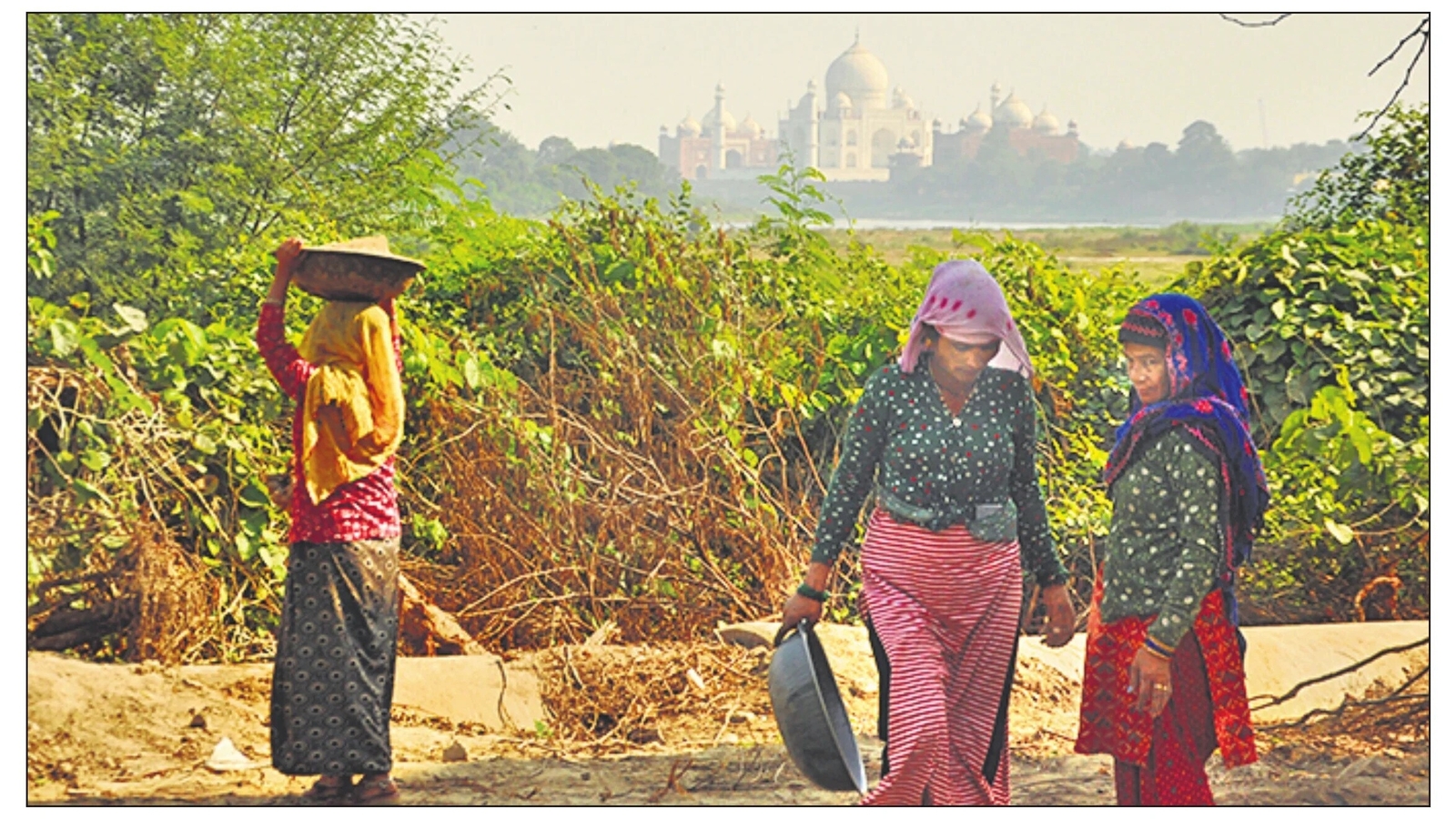
A 40,000-square-metre stretch of land along the Yamuna between the Agra Fort and the Taj Mahal, lying fallow for two decades after the Taj heritage corridor project was shelved, is being developed into a landscaped garden by the Uttar Pradesh horticulture department. Minister Dinesh Pratap Singh said the garden aims to protect the Taj from dust and pollution by increasing green cover and to give tourists a more serene setting to view the monument. About ₹1.5 crore was initially allocated and work is likely to be completed in the next few months.
Agra horticulture department superintendent Rajnish Pandey said the patch, which reflected the remains of the unfinished corridor project, is being developed on the pattern of three existing lawns in front of the Agra Fort. Existing trees will be preserved and made part of the landscaping, while ornamental and seasonal plants will be added. Work began in September. Pandey said cultural events may be held with due permission if things go as planned, and that the green cover will help hold suspended particulate matter in the air around the Taj Mahal. The Agra Development Authority said it was backing the project at every stage.
An ASI official said the agency's gardens, spread over about 10 to 12 acres towards the Yamuna, are coming up in compliance with Supreme Court directions in the Taj Trapezium Zone matter to develop greenery and keep the air clean near the monument. In all, about 26-29 acres between the two monuments is being developed, with the ASI holding about 10-12 acres and the horticulture department about 16-17 acres, including its existing garden of over 25,000 square metres and the new patch.
The Taj heritage corridor, proposed in 2002 under then chief minister Mayawati, envisaged diverting the Yamuna to reclaim about 75 acres of riverbed for food plazas, shops and amusement facilities. Environmentalists and a Supreme Court-appointed expert panel said it was rushed through without ecological or structural studies and could endanger the two heritage sites; it was stayed by the Supreme Court in May 2003 and a CBI probe into irregularities was ordered that July. Activist KC Jain said expert committees constituted on the court's instruction found that developing greenery on the affected patches was the best way to safeguard the reclaimed area, and the court approved the plan.