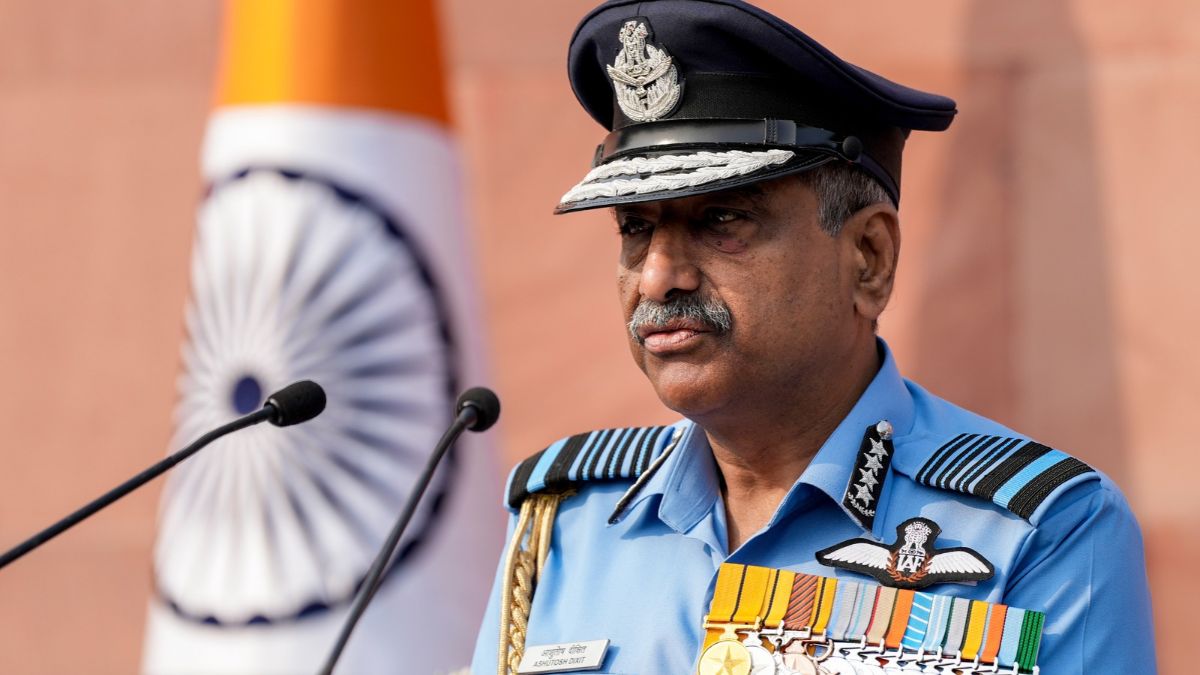
Chief of the Air Staff Air Chief Marshal Ashutosh Dixit has said India's defence industry faces espionage risks through multiple channels, including cyber means, honey traps and insider threats, and that the challenge extends well beyond honey traps. He was speaking at the ANI National Security Summit 3.0 in Delhi, where he was asked whether the defence industry was susceptible to honey traps and how such threats could be handled.
Dixit said honey traps were only one part of a larger espionage problem, which was increasingly being carried out through cyber means and other forms of inducement. "It is not a honey trap thing. It is basically cyber espionage. It is an espionage issue," he said, adding that espionage now happens through cyber means and through various means and enticing. He also pointed to multi-level marketing schemes and loan sharks as other channels that could be used to target individuals, and said the defence establishment was aware of these risks and keeping a close watch on potential threats.
The Air Chief said there was a systematic effort to control such activities and prevent sensitive information from being compromised. He said the Indian Air Force's networks were air-gapped, meaning they were isolated from external networks to prevent cyber attacks through direct connections, but cautioned that insider threats remained a concern, with the possibility of individuals within an organisation being targeted or compromised being recognised. "We are aware of that. Some technical solutions and some institutional solutions are already in place," he said.
Dixit said security measures were also being implemented across public sector organisations, DRDO laboratories and parts of the private defence industry. He stressed the importance of awareness about the use of appropriate software and following security guidelines while operating networks, and said an agency provides guidance to private sector organisations on securing their networks. "If they just follow that, I think most of the time we will be safe in this," he said, highlighting the need for a broader approach to counter-espionage that combines secure networks, institutional safeguards and awareness among personnel and private sector organisations in the defence ecosystem.