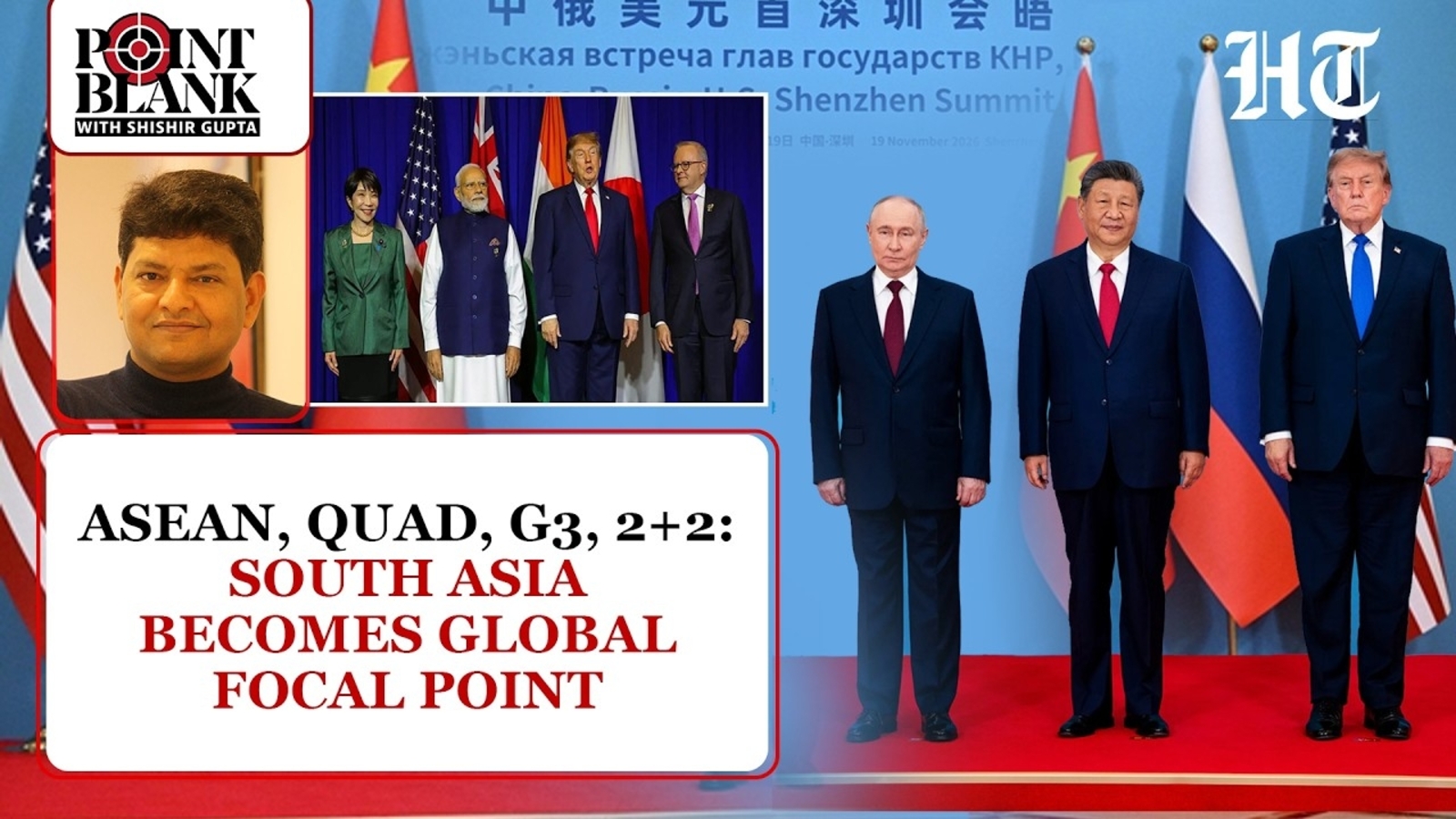
A busy diplomatic calendar can suggest a shifting world order, but the true test of any summit is what follows it, Shishir Gupta said in a conversation with Senior Anchor Aayesha Varma on Point Blank. Discussing ASEAN, the Shenzhen trilateral, the Quad, India-Japan defence ties and Nepal's outreach to New Delhi, he drew a distinction between diplomatic spectacle and strategic substance, offering grounds for cautious optimism along with a warning that dialogue alone cannot settle competing ambitions.
On Southeast Asia, Gupta said ASEAN countries seek enough peace and stability to keep their economies growing, engaging China, India and the United States to preserve commercial opportunities rather than to pick sides. He noted that China's expanding footprint is creating friction with countries including the Philippines, Indonesia and Japan, which are hedging by maintaining ties with Beijing while strengthening links elsewhere. He argued that a durable equilibrium will remain difficult unless China moderates its behaviour.
Gupta rejected the view that the Shenzhen trilateral involving the United States, Russia and China was only talk, while cautioning against calling it a breakthrough before its understandings are tested. He identified the future direction of the United Nations, oil-market stability, nuclear restraint and the treatment of state officials by international judicial institutions as significant areas, describing the discussion as an opening whose value depends on implementation.
On the Quad, he highlighted a proposed business forum, with its first meeting expected in Mumbai the following year, and maritime cooperation involving American-origin patrol aircraft, including India's P-8I, to improve interoperability and shared awareness at sea. On the India-Japan 2+2 dialogue, he pointed to missile testing at India's Pokhran ranges as a potentially significant area of cooperation.