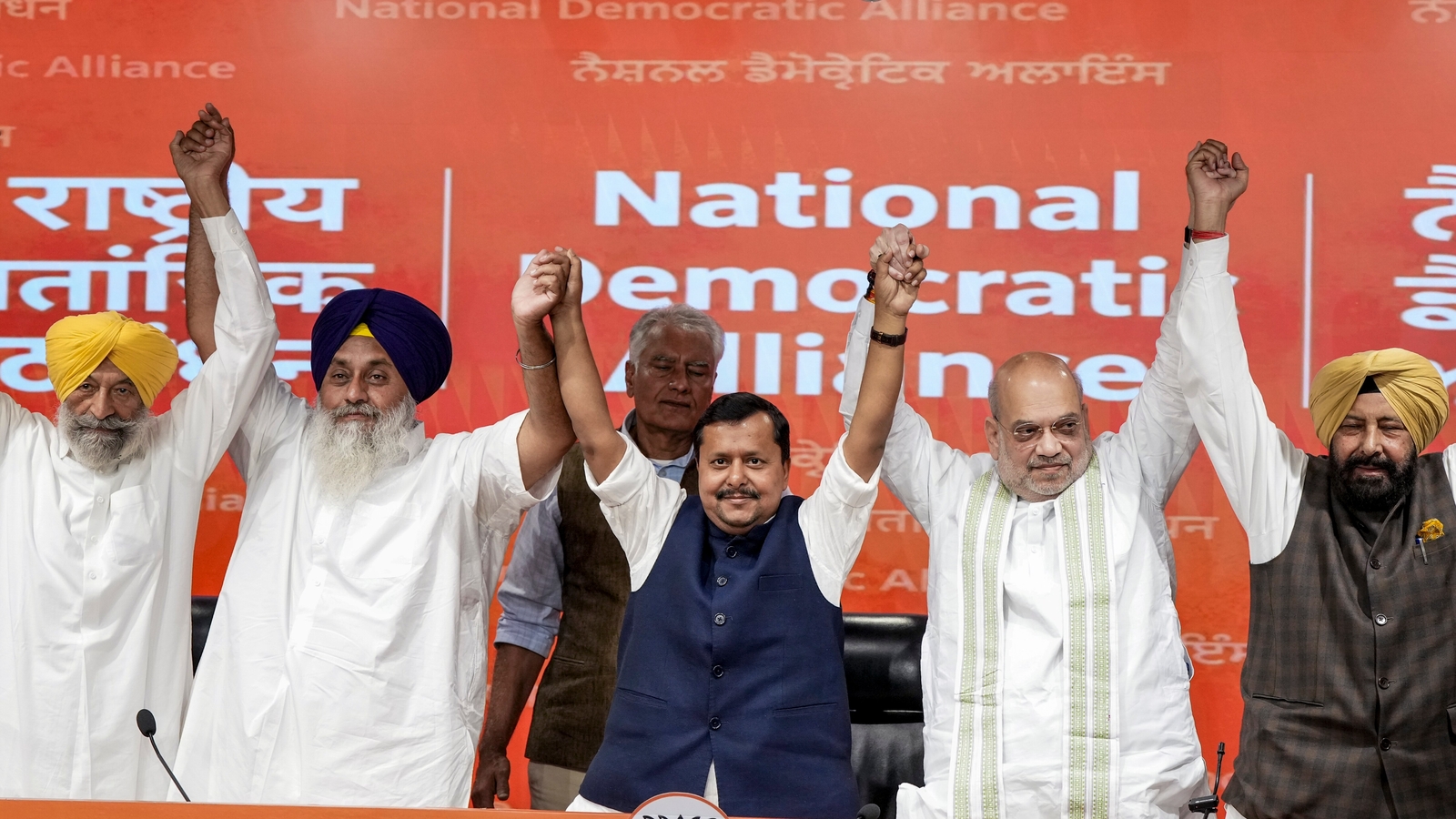
The Bharatiya Janata Party and the Shiromani Akali Dal on Tuesday revived their alliance ahead of the Punjab assembly elections, six years after the Akali Dal left the National Democratic Alliance over the now-withdrawn three farm laws. The two parties first joined hands for the 1996 Lok Sabha elections, and the alliance formed governments in Punjab in 1997, 2007 and 2012, with Parkash Singh Badal becoming chief minister.
The split cost both parties heavily. The BJP-SAD alliance won the highest number of assembly or parliamentary constituencies in six of the 12 elections held between 1996 and 2019, but together the two parties won just 4.3% and 7.7% of constituencies in the 2022 assembly and 2024 Lok Sabha elections respectively, their worst performance in a long time. The 2020 breakup followed back-to-back losses in the 2017 assembly and 2019 Lok Sabha elections.
Punjab's politics has also become more fragmented. The state's median Effective Number of Participants in the 2022 assembly elections was 3.23, the highest among all states and union territories with at least seven parliamentary constituencies, up from 2.4 in 2007. The rise followed the Aam Aadmi Party's entry in 2014 and grew further after the BJP and SAD parted ways.
At this level of fragmentation, the Congress can gain disproportionately. It won seven of Punjab's 13 parliamentary constituencies in the 2024 Lok Sabha elections with a 26% vote share. Adding BJP and SAD votes at the constituency level in 2024 would give a hypothetical alliance a 32% vote share and 48.7% seat share when disaggregated at the assembly level. However, the report notes that politics is not always driven by arithmetic, and animosity among farmers towards the BJP during the farmers' agitation may persist. Infighting in the Congress, until the announcement seen as the principal challenger to the incumbent AAP, might also help the alliance.