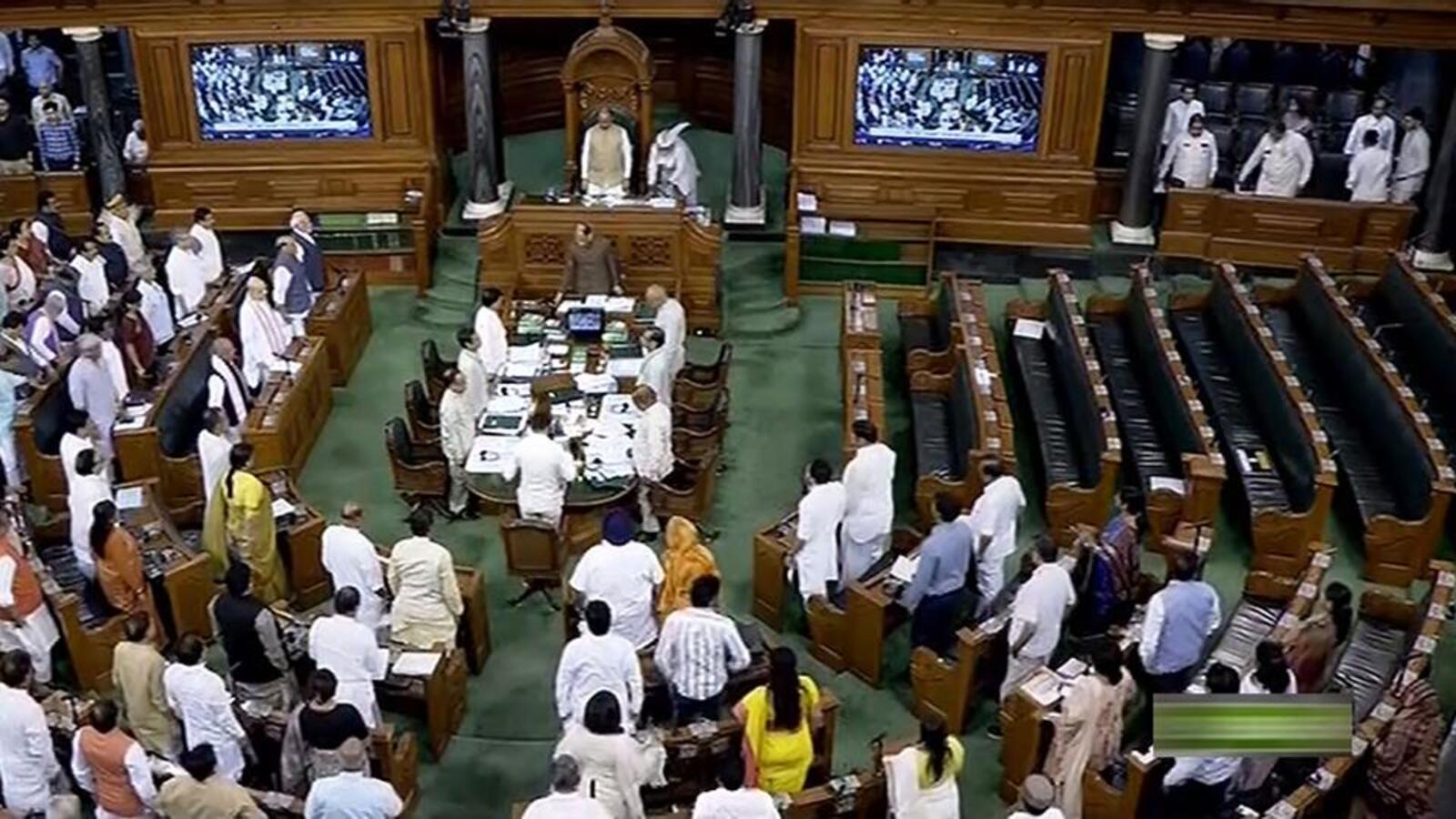
The Union Cabinet is likely to meet on Friday to approve changes to the Constitution (131st Amendment) Bill and the Delimitation Bill, with Parliament set to reconvene on Monday (Lok Sabha) and Wednesday (Rajya Sabha). The bills seek 33% reservation for women in the Lok Sabha and state assemblies before the 2029 general election, requiring a fresh delimitation that would raise the Lok Sabha's strength from 550 to 850, with up to 815 seats for states and 35 for Union Territories; the Rajya Sabha ceiling of 250 stays. The Delimitation Bill would base the exercise on the latest census, in practice the 2011 census, and the Delimitation Commission would be headed by a serving or retired Supreme Court judge, with the Chief Election Commissioner or their nominee and the state election commissioner concerned as members.
Southern states have objected that slower population growth would shrink their parliamentary weight. Under discussion is a "flat 50%" formula raising every state's seats by half while keeping present proportions, which in April was only a spoken promise from Union home minister Amit Shah backed by a "guarantee" from Prime Minister Narendra Modi and was not part of the bill. The government is now considering raising seats by up to 50% in every state while keeping inter-state proportions based on the 1971 Census, though no final decision has been taken. Law and Justice Ministry (Legislative Department) officials said the revised draft may also restore the 1971 Census as the basis for dividing seats among states, a reference the April bill removed; without it, a uniform 50% rise would not be possible since the bill otherwise ties seats to population. The April version carried no state-wise seat numbers or formula, a gap the Opposition repeatedly flagged.
On April 17, the amendment bill got 298 votes in favour and 230 against, falling 54 short of the 352 needed, two-thirds of the 528 members present and voting. It was the first Modi government bill to be defeated, and the government withdrew the two bills. Since then, 20 of Trinamool Congress's 28 Lok Sabha members broke away in June and merged with the Nationalist Citizens Party of India, which supports the NDA, and in July Speaker Om Birla approved the merger of six Shiv Sena (UBT) MPs with the Eknath Shinde-led Shiv Sena. The Shiromani Akali Dal, which left the NDA in 2020 over the farm laws, has announced support for the Delimitation Bill and the women's reservation law. The NDA now has about 320 members in a House of 540 with three vacancies; if every member votes, the bill needs 360.
On its own the NDA is about 40 votes short. The Sharad Pawar-led NCP (SP), with eight members, could take it to about 328; leader Supriya Sule has said her party is open to backing the bill if every state gets a flat 50% increase with no state-wise tweaks, but wants to see the full bill first. The DMK, with 22 members, left the Opposition bloc in May after the Congress tied up with Tamilaga Vettri Kazhagam in Tamil Nadu, and is expected to decide only after seeing the draft and receiving written assurances on its demands. Even with the DMK, the NDA would reach only about 350, still about 10 short. The remaining votes would have to come from 15 other members outside both alliances, including the YSRCP (four), AAP (three), Amritpal Singh's Akali Dal (Waris Punjab De) with two, and one each from the AIMIM, Chandrashekhar Azad's party, the United People's Party Liberal, the Zoram People's Movement, Engineer Rashid's party and an independent. The YSRCP has often sided with the government on key bills, while AAP and the AIMIM are unlikely to support; even with the YSRCP and a few smaller members, the NDA would reach only about 355-357. Attendance then becomes crucial: the two-thirds rule counts only those present, so if five or six opposition members are absent, a tally of about 357 would be enough.