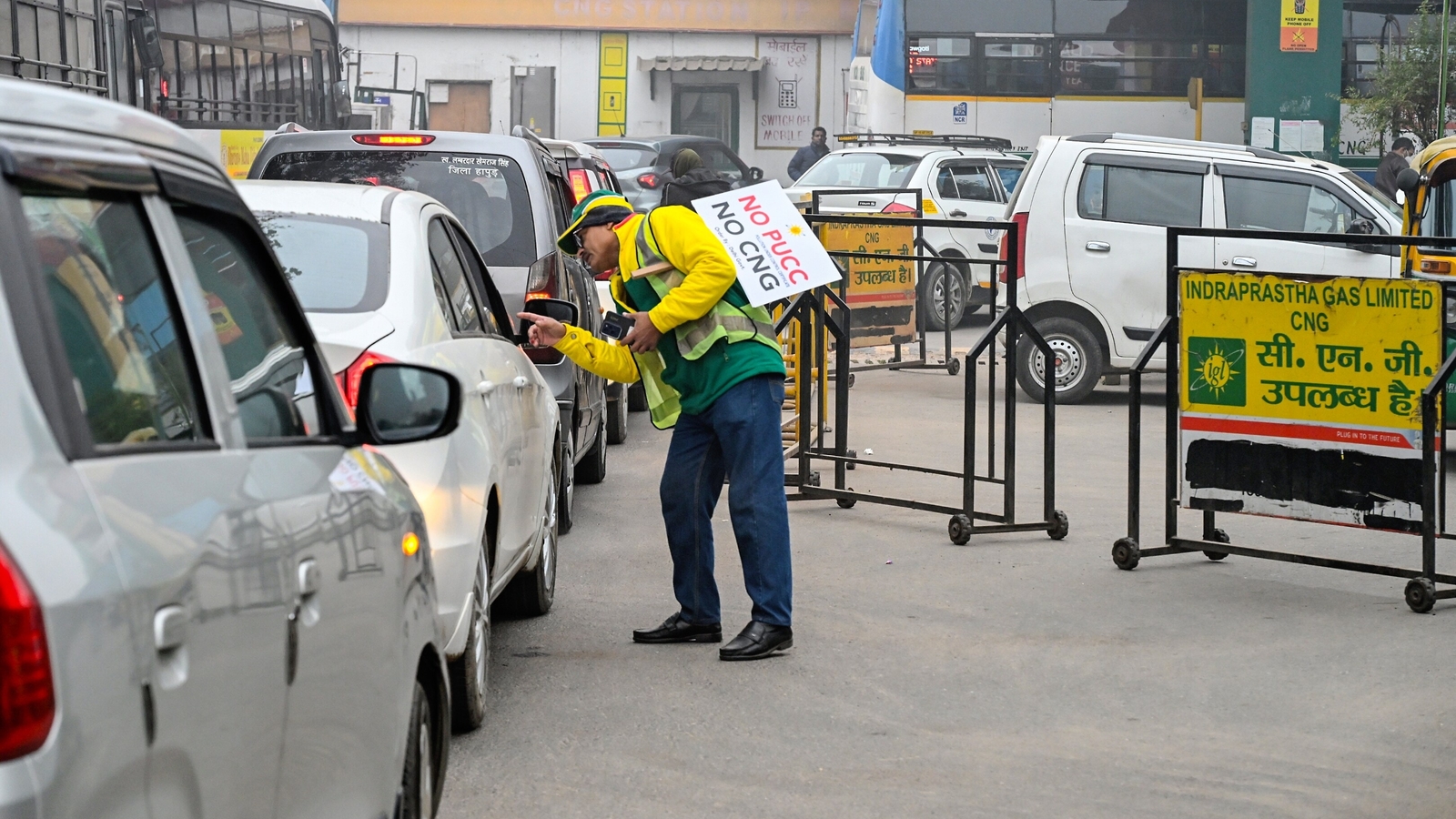
The Centre on Thursday revised the validity period of Pollution Under Control (PUC) certificates, with the new schedule depending on a vehicle's emission standard, its age, and whether it is a non-transport or transport vehicle. Under the change, BS-VI cars, motorcycles and scooters up to six years old will need a certificate once every three years instead of annually, while BS-VI transport vehicles of the same age will get two years, up from one. BS-VI vehicles aged six to 10 years, of either kind, will continue with a yearly certificate.
Older vehicles will face more frequent checks. BS-IV vehicles will require a new certificate every six months instead of every year, and BS-I, BS-II and BS-III vehicles every three months instead of every six. BS-VI vehicles more than 10 years old will also move to a six-month certificate. Existing certificates remain unaffected, and the new schedule applies from the first renewal after the rules take effect from Thursday. A certificate renewed within 10 days before expiry will start from the old one's expiry date, while one renewed after lapsing will start from the day of renewal.
Experts said the revised intervals alone would not be enough. Anil Chhikara, a former deputy commissioner in the Delhi government's transport department and an automotive and mobility specialist, said poorly maintained vehicles could limit the emission benefits, noting that an unmaintained BS-VI vehicle can cause even more emissions than a BS-IV one. He said the government should encourage good maintenance, reward low emissions, and hold private vehicles to the same fitness rules as commercial ones, adding that such mandates already exist across the world.
Amit Bhatt, India managing director of the International Council on Clean Transportation, welcomed the move and said BS-I to BS-IV vehicles need close monitoring. He added that current PUC certification does not show particulate matter (PM) or nitrogen oxides (NOx) emissions, which are important criteria pollutants from a public health perspective, and that additional testing will be important going forward to complement the PUC. Separately, a Gazette notification on Thursday showed the road transport ministry proposed exempting construction equipment vehicles used by the Border Roads Organisation (BRO) in operational areas above 1,700 metres from applicable CEV Stage V emission limits.