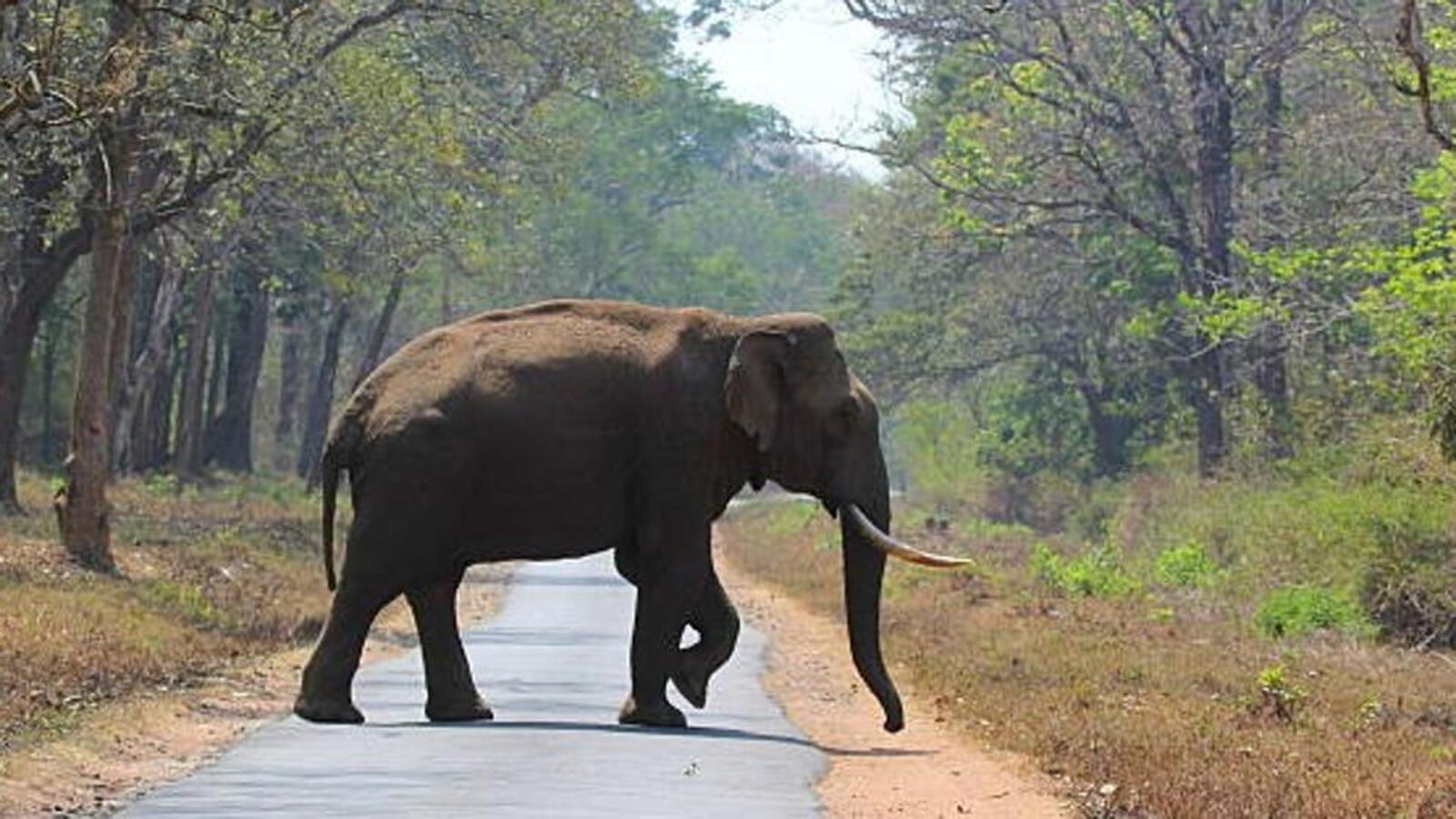
Over 200 forest personnel have stepped up efforts to track a rogue elephant, locally called "Kabra Kaan" for its patchy ears, which is held responsible for 16 deaths in Surajpur and adjoining Balrampur districts over the past six to seven months, principal chief conservator of forests (PCCF) Arun Pandey said.
Pandey said tranquilising an elephant is a difficult task, especially when the animal is in a herd and inside a dense forest. The team is continuously tracking the tusker and will tranquilise it as soon as a suitable opportunity arises, he added. The forest department has received approval to tranquilise the elephant and fit it with a satellite radio collar to monitor its movements.
The latest death occurred in Umeshwarpur village of Surajpur district on November 12, when the elephant trampled a 45-year-old woman, identified as Dilaso, to death. According to forest officials, the elephant was spotted in the area around 11pm. Dilaso stepped out of her house with her husband and son to alert neighbours, and came face to face with the elephant. A forest department team reached the spot and sent the body for post-mortem examination. The elephant later moved into the Udaipur forest area of Surguja district, where personnel are monitoring it. Officials said the same tusker killed two men in separate incidents on the night of November 8 and another man the next day in Surajpur district.
The state's additional PCCF (Wildlife) has approved the proposal to tranquilise the elephant and fit it with a satellite radio collar. According to the department's order, the tusker has been moving across forest areas under Pratappur, Ghui, Surajpur, Rajpur, Ambikapur and Tamor Pingla ranges, posing a threat to human life and property. The Divisional Forest Officers of Surajpur and Balrampur have been appointed joint nodal officers to oversee the operation, with veterinary doctors and senior forest officials assisting the team. Trained captive elephants, known as kumkis, may also be deployed if required. After the operation, the elephant will undergo a health examination and, if found healthy, will be released into its natural habitat, with its movements monitored and reports submitted to authorities every 15 days.