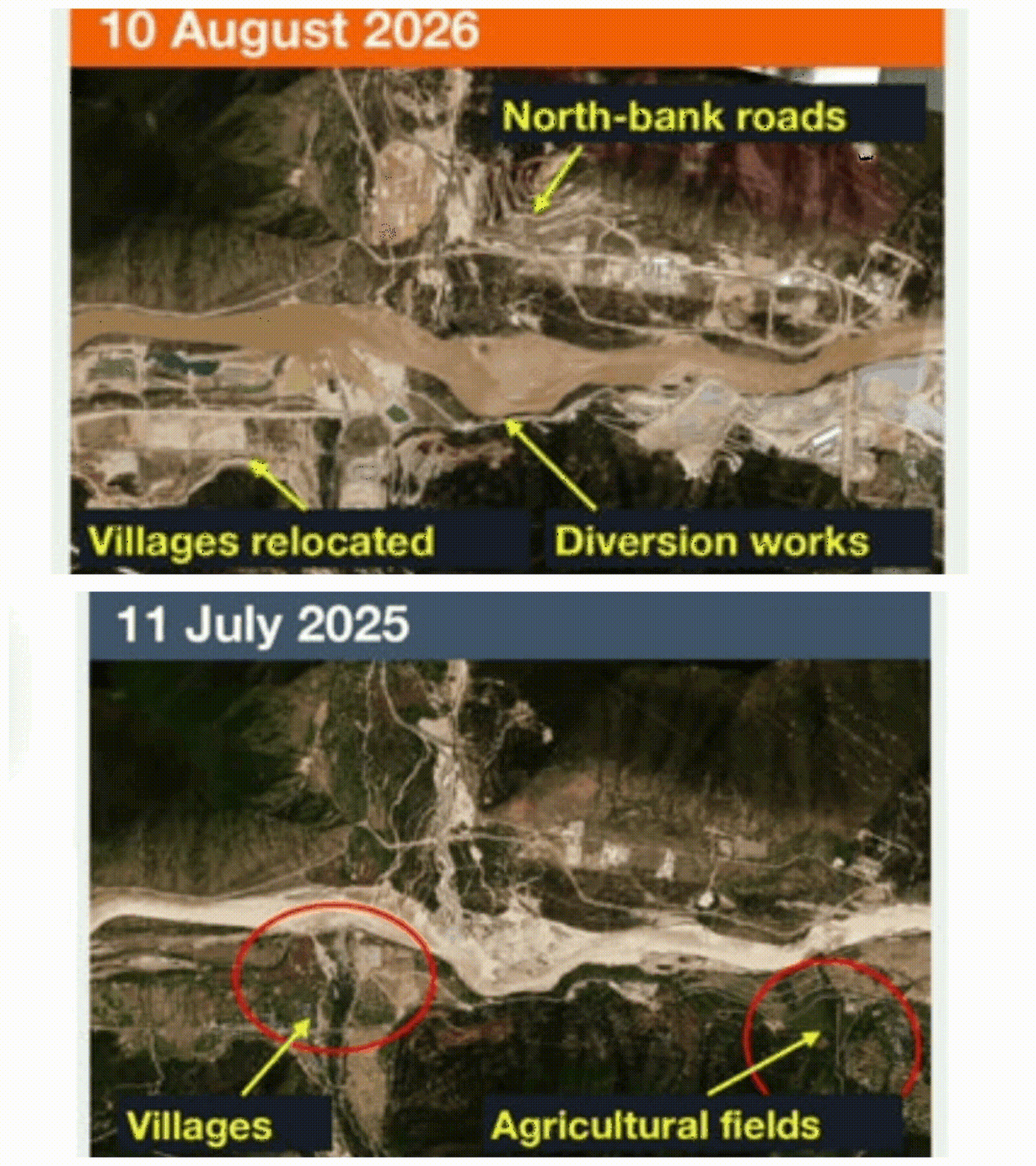
Satellite imagery indicates that villages and farmland have been cleared and major construction is underway in southeastern Tibet, more than a year after China began building what is projected to be the world's largest hydropower project on the lower Yarlung Tsangpo River near the border with Arunachal Pradesh. The project, expected to cost $168 billion, involves a multi-structure dam system and a tunnel across the Great U-Bend, where the river loops around Namcha Barwa mountain and enters India through Arunachal Pradesh. With an installed capacity of 60 GW, it would be three times that of China's Three Gorges Dam.
Nirdesh Sharma, CEO of geospatial AI startup Earthsense Labs, said the firm has been tracking construction activity from space for nearly two years. "The satellite imagery shows villages and farmland on the south bank of the river, upstream of the dam, being cleared," he said, as the company released its first report on the Medog Hydropower Project on Monday. Construction began in July last year.
According to the report, imagery of the Mainling high dam site taken last July, before the groundbreaking ceremony on July 25, showed villages and agricultural fields on the south bank; by December, the villages had been cleared, fields removed and earthwork started. Imagery from the north bank in August this year showed road construction, river diversion works, and offices and other buildings. The report also highlights a lower dam near Pai town, a tunnel through Namcha Barwa mountain, and a water outlet near the India-China border downstream of Medog county. It notes that imagery of the lower dam site did not show conclusive structural work between October last year and October this year, suggesting work may begin from the lower tunnel end.
India is planning the 11,200 MW Siang Upper Multipurpose Project in Arunachal Pradesh to offset the impact of China's dam and changes in the river's discharge, with a section of residents opposing it over threats to lives and livelihoods. Union home minister Amit Shah said last week during a visit to the state that all concerns would be addressed before the project proceeds. Efforts to contact the Arunachal Pradesh government and representatives of organisations opposed to the SUMP were unsuccessful, and the copy will be updated once they comment.