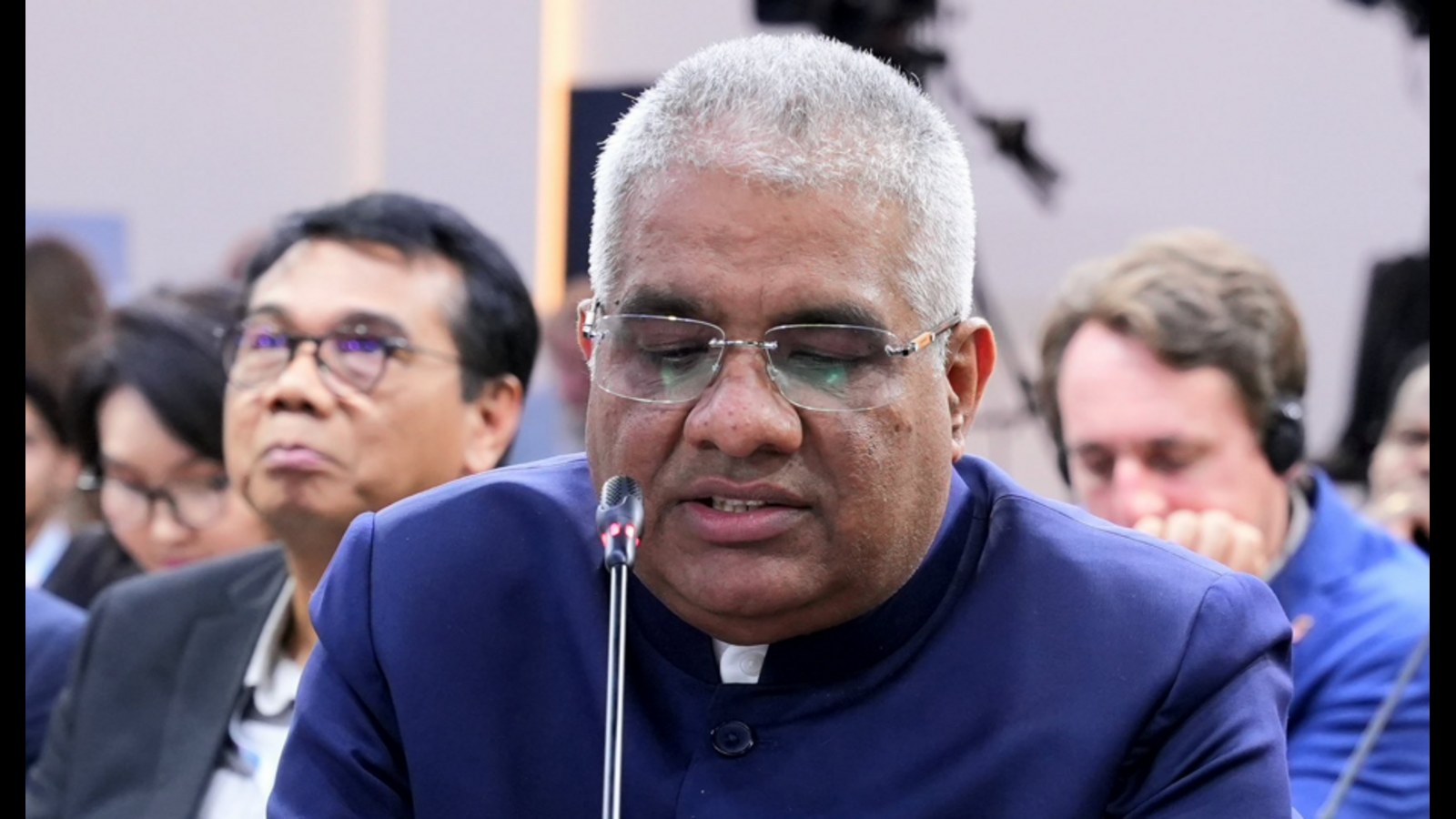
Countries failed to adopt an overarching cover decision at COP31 in Antalya on Sunday, the longest COP ever held, leaving India's key demands on climate finance, equity and nationally determined energy transitions without a new negotiated political agreement. Union environment minister Bhupender Yadav said India engaged constructively until the final stages, working with BASIC and Like-Minded Developing Countries partners for an outcome rooted in equity, the principle of common but differentiated responsibilities and respective capabilities, climate finance and adaptation. He said climate ambition must go hand in hand with means of implementation, and that energy transitions must be nationally determined, just and equitable, backed by finance, technology and capacity-building for developing countries.
India's core demands ahead of Antalya remain unresolved, including predictable and concessional climate finance from developed countries, protection against uniform global mitigation targets, technology transfer and recognition of historical responsibility for emissions. At the Pre-COP31 meeting in Fiji in October, Yadav called for equal attention to adaptation, mitigation and means of implementation, stressing there could not be a one-size-fits-all approach. India has called for climate finance to be largely public and concessional without adding to developing countries' debt burden, and for mitigation and the Global Stocktake to remain facilitative, non-punitive and party-driven.
In its national statement on November 18, Yadav said developing countries could not be expected to bear the burden of historical emissions, arguing that two centuries of industrialisation in some countries contributed disproportionately to global warming. He said equitable access to the remaining global carbon budget was non-negotiable. Additional secretary Amandeep Garg said the LMDC group was uncomfortable with parts of the proposed cover decision, particularly inadequate reflection of equity and CBDR-RC in paragraphs introducing new global targets, and flagged what India described as dilution of developed countries' historical responsibility.
The absence of an overarching decision means there is no new consensus text resolving these differences. India said its interventions shaped the draft, including recognition of food security, livelihoods and cultural practices in methane-related action, a reference to developed countries' obligations under Article 9.1 of the Paris Agreement, and inclusion of equity and CBDR-RC in implementation. The draft did not attach new quantified commitments to that obligation, and the proposed $120 billion annual adaptation-finance figure was dropped, while the call to triple adaptation finance by 2035 remained without an agreed baseline or delivery pathway.