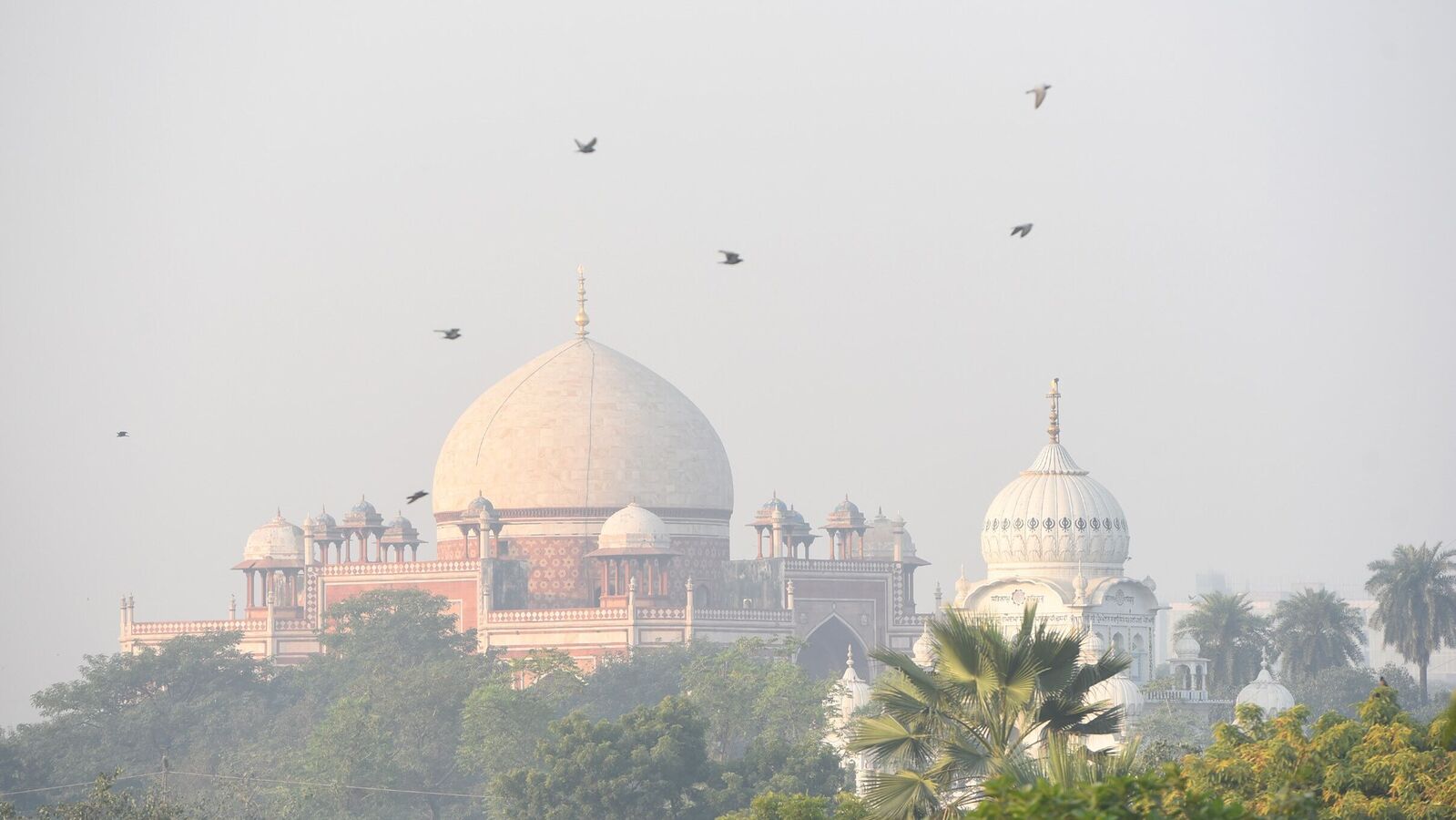
Delhi's air quality index deteriorated to 454 at 6:51 AM on Saturday, 28 November, placing it in the 'hazardous' category, according to AQI.in. The reading was close to the seven-day peak of 449 recorded at 6 AM on 21 November. The capital's AQI had fallen to 144 at 3:01 PM on Friday before worsening again in the evening, crossing 300 around 7:30 PM and staying above 400 after midnight. At 6:11 AM on Saturday, Delhi's PM10 level was 428 micrograms per cubic metre, well above the WHO's 24-hour guideline of 45 micrograms per cubic metre. Carbon monoxide stood at 3,395 ppb, nitrogen dioxide at 25 ppb, sulphur dioxide at nine ppb and ozone at two ppb, with the temperature at 25°C, humidity at 30% and wind speed at 3.6 km/h.
Vehicular emissions were the largest contributor to PM2.5 pollution in real-time source apportionment estimates for Delhi between 1 AM and 9 AM on Friday, accounting for 32% of the estimated load. Biomass burning followed at 22.8%, secondary organic aerosols at 14% and secondary inorganic pollutants at 12.3%. Waste burning accounted for 10.7%, industrial emissions 4.2%, mineral dust and ash 1.8%, coal combustion 1.5% and mixed combustion 0.8%. Of the 57 monitoring stations that recorded data on Friday, 36 were in the 'poor' category, 17 in the 'moderate' category and four in the 'very poor' category, with the Terminal 3 station at Indira Gandhi International Airport reporting the worst reading at 346.
According to AQI.in, Bettiah in Bihar recorded the country's worst air quality on Saturday at 682, followed by Ghazipur at 558 and Saharsa in Bihar at 488. Srinagar's AQI also remained in the hazardous category at 480. AQI.in follows the US AQI scale, where readings of 301 and above are classified as hazardous, while the Central Pollution Control Board classifies 301-400 as 'very poor' and 401-500 as 'severe'.