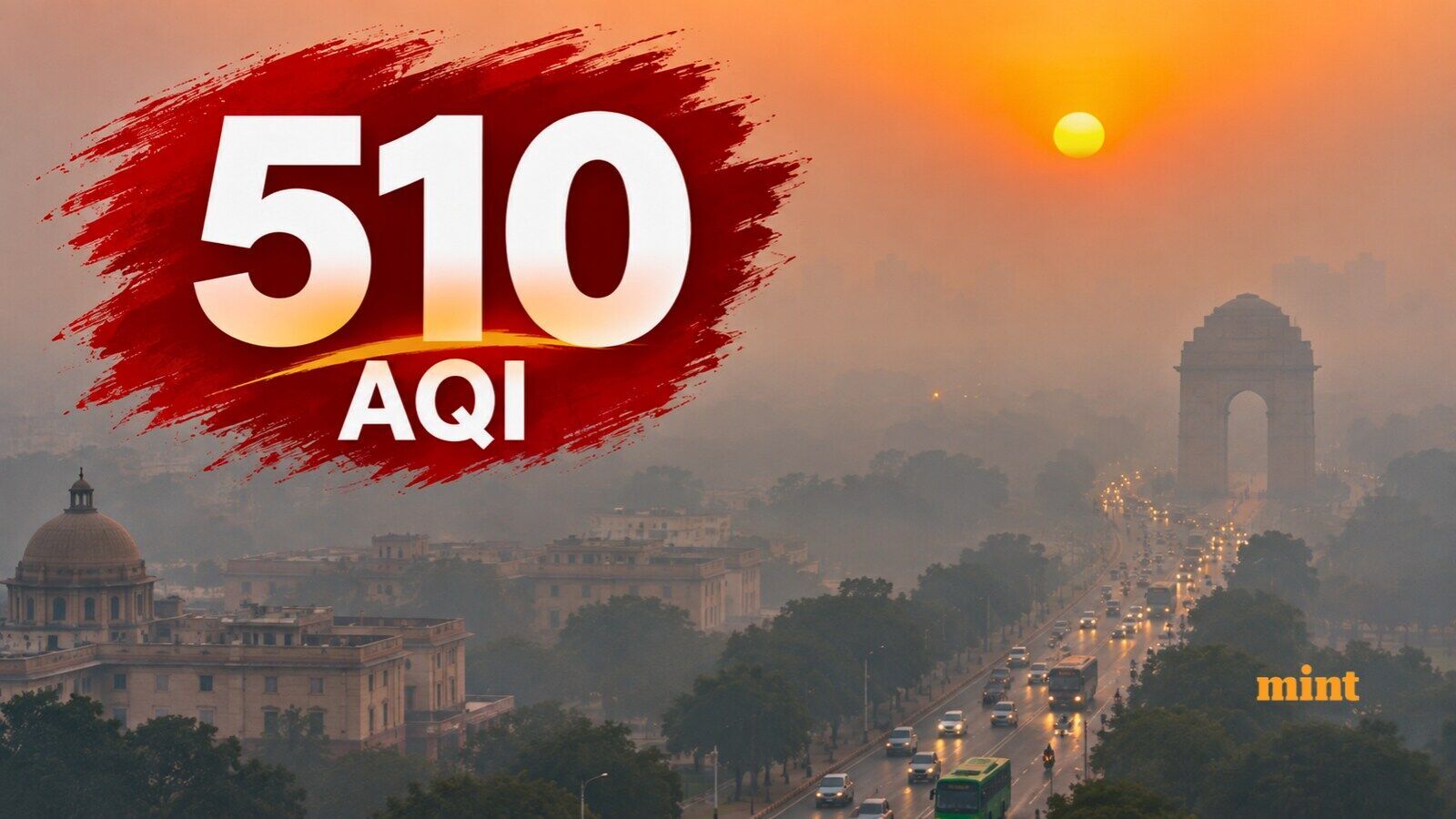
Delhi recorded an Air Quality Index of 510 at 7:11 AM on Friday, November 20, placing the national capital firmly in the hazardous category, according to monitoring data on AQI.in. Pollution levels rose sharply overnight, reversing the improvement seen on Thursday afternoon. PM2.5 concentrations reached 330 micrograms per cubic metre, while PM10 stood at 462 micrograms per cubic metre. The city experienced a smoky haze, with temperatures around 16 degrees Celsius, humidity at 62% and wind speeds of 3.6 kilometres per hour.
Over the previous 24 hours, the highest AQI was 563 on November 19 at 8:01 AM, after which pollution declined to 178 by 4:31 PM before deteriorating again in the evening. By early Friday, levels had climbed above 500. The reading placed Delhi 8th among the world's most polluted cities. November's figures show the capital's continuing struggle: AQI was 666 on November 9, dropped to 224 on November 17, then rose to 273 on November 18 and 353 on November 19.
Carbon monoxide concentrations stood at 2,066 parts per billion, nitrogen dioxide at 22, sulphur dioxide at six and ozone at two parts per billion. According to AQI.in, breathing Delhi's air was estimated to be equivalent to smoking 10.2 cigarettes daily, rising to 71.4 per week and 306 per month. The platform said staying indoors is a "must", along with wearing N95 masks, and advised residents to use air purifiers and car filters.
Delhi's AQI of 510 exceeded other Indian metro cities. Chennai recorded 254, Hyderabad 184, Pune 177, Bengaluru 176, Ahmedabad 166 and Mumbai 157, while Kolkata registered the lowest at 49.