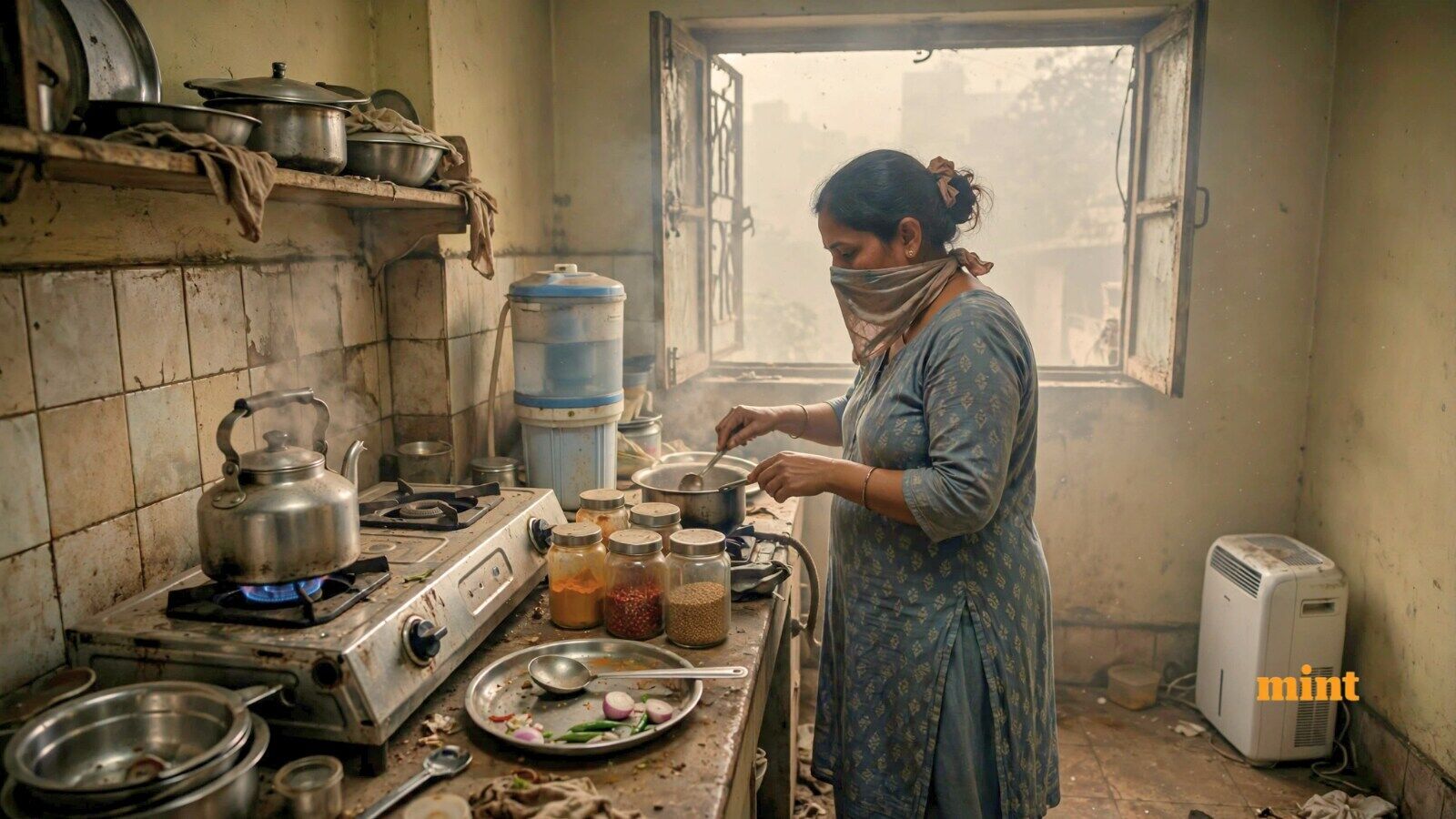
A study has found that fine particle pollution inside poorly-ventilated homes in south Delhi was roughly 50% higher than outdoors, according to reports. Researchers monitored 24 homes across Shaheen Bagh, Jasola Vihar, Batla House and Okhla Vihar, collecting readings between February and April 2023. Indoor measurements were taken in kitchens and outdoor readings on balconies, with each home monitored for eight hours a day over three consecutive days. Night-time monitoring was skipped due to privacy concerns.
In poorly-ventilated homes, indoor PM2.5 averaged 119.17 micrograms per cubic metre against an outdoor average of 79.34. In well-ventilated homes, indoor PM2.5 averaged 77.34 against 56.14 outdoors, putting indoor levels about 38% above outdoor readings. PM10 followed a similar pattern: poorly-ventilated homes averaged 138.63 indoors against 91.19 outdoors, while well-ventilated homes averaged 89.51 indoors against 64.81 outdoors. Across all 24 homes, indoor PM2.5 averaged 98.25 and PM10 114.07 micrograms per cubic metre, about 45% and 46% higher than outdoor levels respectively.
Even homes with working kitchen exhaust systems recorded higher pollution indoors than outside, though their readings were lower than those in poorly-ventilated homes. Indoor PM2.5 was about 54% higher in poorly-ventilated homes than in well-ventilated ones, and the gap for PM10 was about 55%.
The researchers linked higher indoor readings to household activities such as cooking, cleaning, smoking and burning incense, poor ventilation, and outdoor pollution entering homes. They did not measure how much each source contributed. The team included researchers from Jamia Millia Islamia, Jazan University in Saudi Arabia and Baba Ghulam Shah Badshah University in Rajouri. The study was published in the journal Discover Environment in 2025, and the researchers said improving ventilation, maintaining exhaust systems and reducing indoor pollution sources could help.