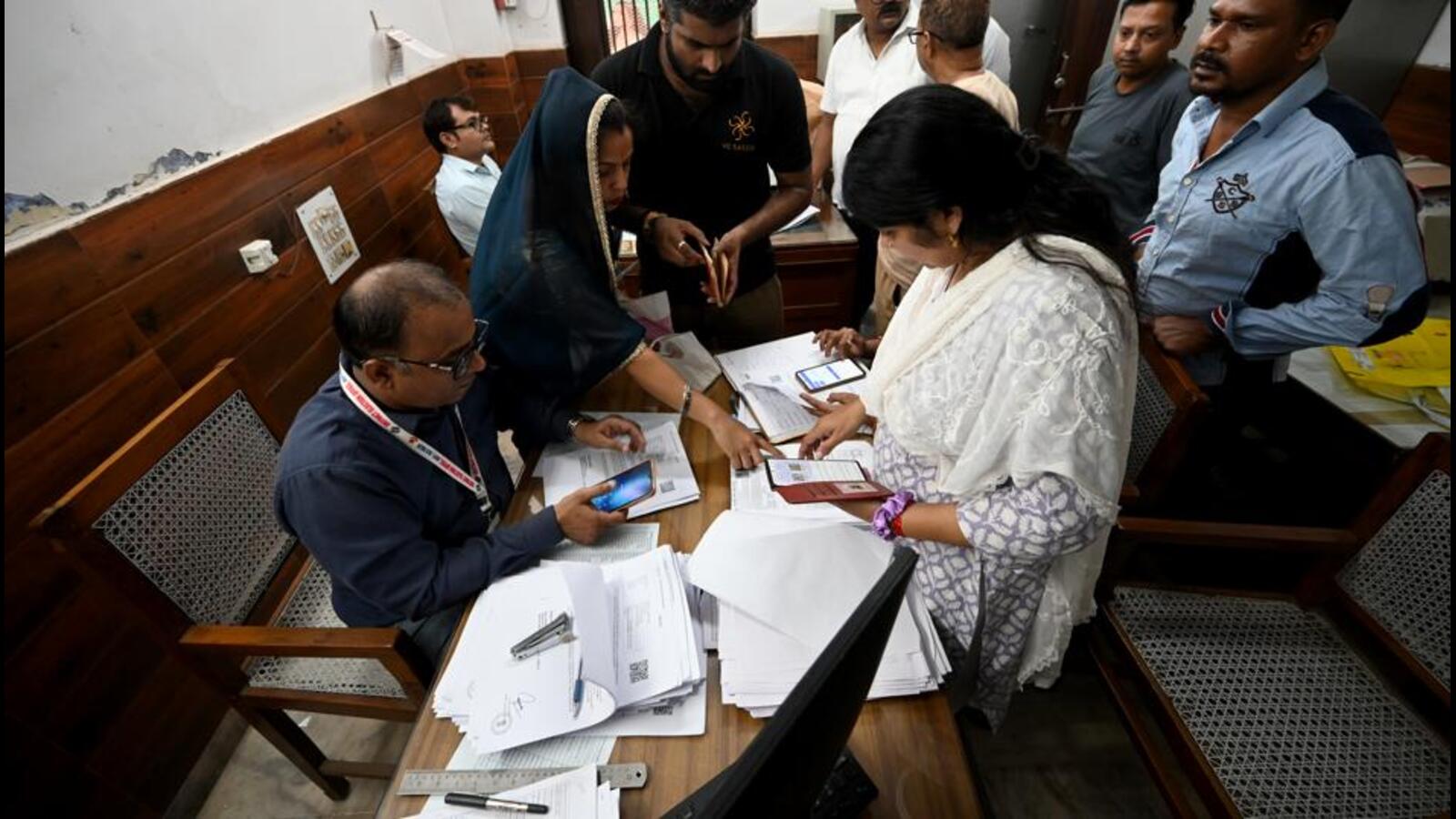
The Election Commission of India has directed a Special Summary Revision (SSR) of Karnataka's electoral rolls to enrol eligible citizens who are missing from the roll and to prevent wrongful exclusions. The order, issued in a November 16 notification, comes weeks after more than 9.9 million voters were removed in the state under the Special Intensive Revision (SIR). The Commission said officials must make maximum efforts to enrol all un-enrolled eligible citizens and prospective electors, while ensuring that no eligible citizen is left out and no ineligible person is included or remains on the roll.
The SSR, conducted under Section 21 of the Representation of the People Act, 1950, will use the qualifying date of January 1, 2027, and will also accept advance applications for the subsequent qualifying dates of April 1, July 1 and October 1, 2027. Unlike the SIR, which requires electors to prove their eligibility to stay on the roll, SSR applicants do not have to submit documents proving citizenship or be mapped to earlier rolls. The draft roll will be published on December 1, claims and objections will be accepted until December 31, and their disposal must be completed by January 14, ahead of the final roll's publication on January 20.
The Commission has laid down safeguards for deletions. Electoral Registration Officers must personally verify cases where proposed deletions exceed 2% of total electors at a polling station or where an individual has filed objections in more than five cases. Field verification is mandatory when duplicate or multiple entries are reported by people, political parties' Booth Level Agents or residents' welfare associations. Confirmed cases of Demographic Similar Entries, Photo Similar Entries, permanently shifted electors and deceased persons may be removed only after Form 7 is received from the elector or a near relative. Where no such application is available for a deceased person, the ERO can act on a written field report from the Booth Level Officer.
Every deletion must carry a recorded reason, with the affected person given an opportunity to contest it. The ERO must pass a speaking order after a hearing and upload it on ECINET. The Commission reiterated its October 9 limits on the number of Form 7 applications an individual can file, and said Booth Level Agents may collect applications for submission to BLOs subject to a daily ceiling of 10 forms; if an agent submits more than 30 applications during the claims and objections period, the ERO or Assistant Electoral Registration Officer must personally cross-verify them. Aadhaar cannot be made compulsory for registration or corrections, and no application may be denied or entry deleted for inability to furnish the number.