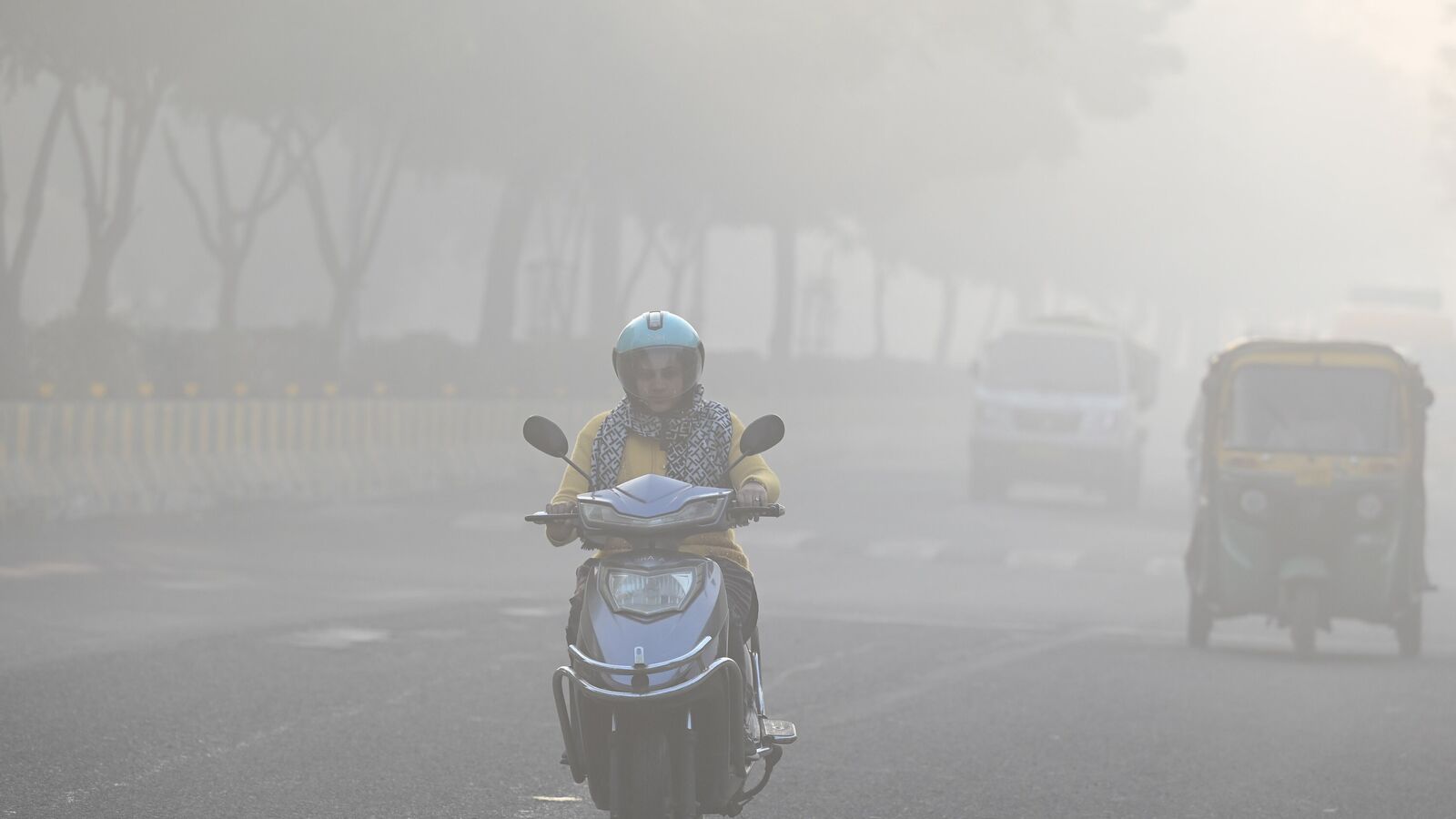
The Commission for Air Quality Management on Tuesday withdrew Stage-III restrictions under the Graded Response Action Plan across Delhi and the National Capital Region, citing a sustained improvement in air quality over the past three days. The decision was taken by the CAQM's GRAP Sub-Committee after it reviewed the downward trend in pollution levels.
Measures under GRAP Stages I and II will remain in force across the NCR, along with the directions issued by the Commission in its October 30 order. With the withdrawal of Stage-III curbs, restrictions on certain construction and demolition activities and specified categories of vehicles will be eased.
Delhi's air quality remained in the 'poor' category on Tuesday morning, with the overall Air Quality Index recorded at 238 at 8 AM, according to the Central Pollution Control Board. Of the capital's 58 monitoring stations, 31 reported 'poor' air quality and 24 recorded 'moderate' levels. Siri Fort was the only station to report 'very poor' air quality, with an AQI of 303, according to the monitoring data.
Stage-III measures had been enforced on November 6, when the city's average AQI touched 382, falling in the 'very poor' category, after pollution levels worsened ahead of Diwali. According to Dr Manoj Kumar, an air quality and energy analyst at the Centre for Research on Energy and Clean Air, favourable weather conditions and changes in the movement of pollution from neighbouring regions contributed to the recent improvement. He identified northwesterly winds reaching speeds of up to 15 kmph and a mixing depth of approximately 1,500 metres as key factors that helped disperse pollutants. Delhi also recorded its coldest morning of the season on Tuesday, with the minimum temperature at Safdarjung falling to 11.6 degrees Celsius, 0.7 degrees below normal.