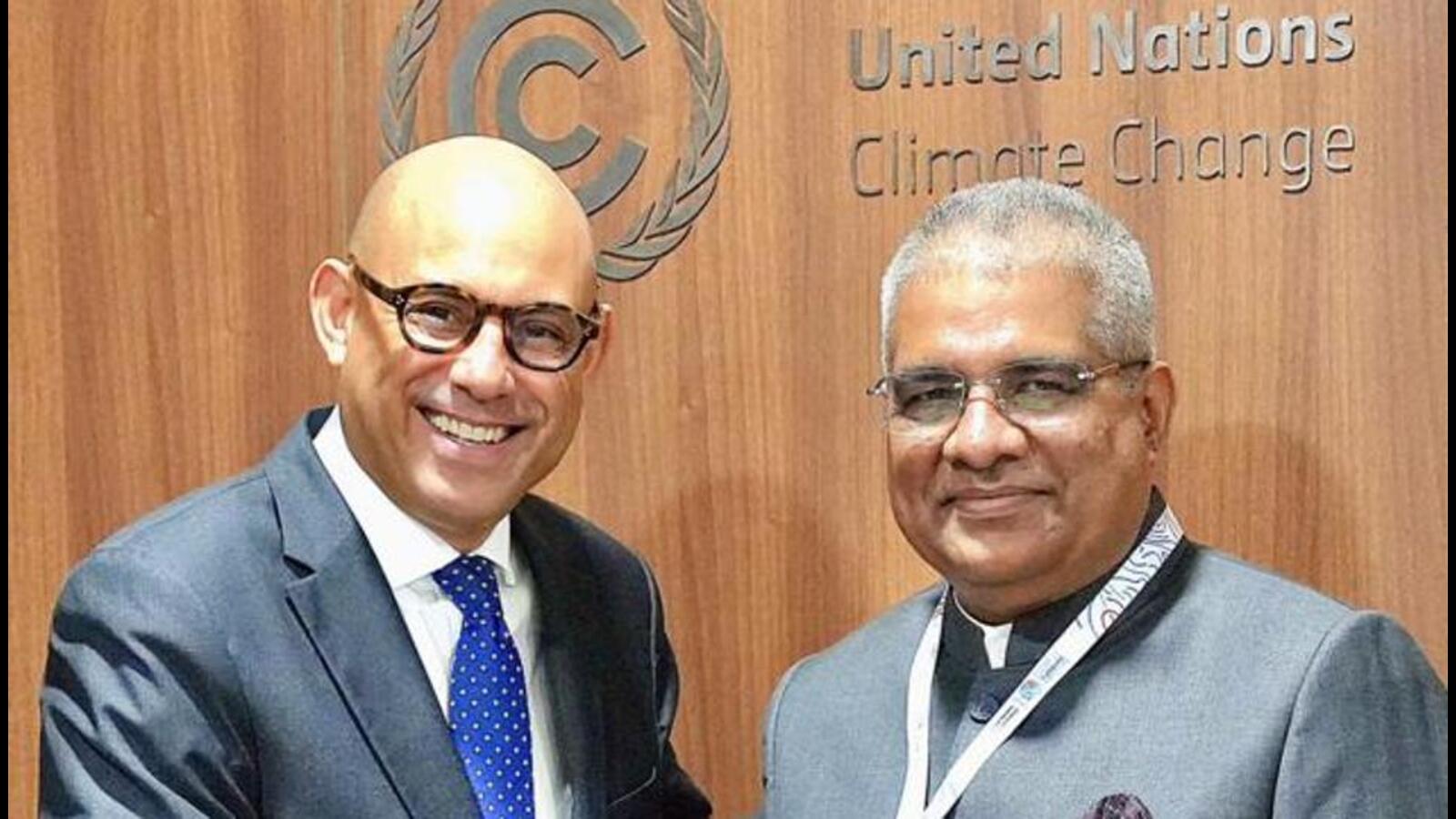
India on Monday called for a country-driven approach to Just Transition at the COP31 climate conference in Antalya, stating that developing countries must be allowed to determine their own pathways based on national priorities and circumstances. Speaking during discussions on the Just Transition Work Programme (JTWP), Union environment minister Bhupender Yadav, who landed in Antalya in the early hours of Monday, said the mechanism must not prescribe uniform sectoral pathways or create new obligations, but should enable countries to pursue their own transition plans while ensuring workers, communities and vulnerable groups are not left behind.
Yadav said the transition must address not just the shift to low-carbon energy but also cover employment, social protection, adaptation, poverty eradication, energy access and sustainable development. The JTWP is a UN initiative established under the United Nations Framework Convention on Climate Change (UNFCCC) to help countries achieve the goals of the Paris Agreement in a fair, inclusive and equitable manner.
“India has consistently emphasized that just transition must have a whole of economy and whole of society approach,” Yadav said, calling once again for adequate finance, technology transfer and capacity building to help developing countries implement their priorities. He said India’s experience demonstrated that there could be no “one-size-fits-all approach,” pointing to the country’s sub-national heat action and disaster management plans, which address vulnerabilities among workers and communities, as well as its renewable energy expansion aimed at combining low-carbon development with affordable energy access.
Yadav said COP31 offered an excellent opportunity to begin moving from exchange of experiences toward practical country-driven implementation. He also called for a clear distinction between the roles of the JTWP and the proposed Just Transition Mechanism (JTM) at COP30, saying the work programme should remain a platform for dialogue and exchange of experiences while the mechanism should facilitate practical support through technical assistance, capacity building and international cooperation. India supports the operationalisation of a two-tier, party-guided mechanism responding to developing countries’ needs and respectful of national sovereignty and diverse national circumstances, he added.