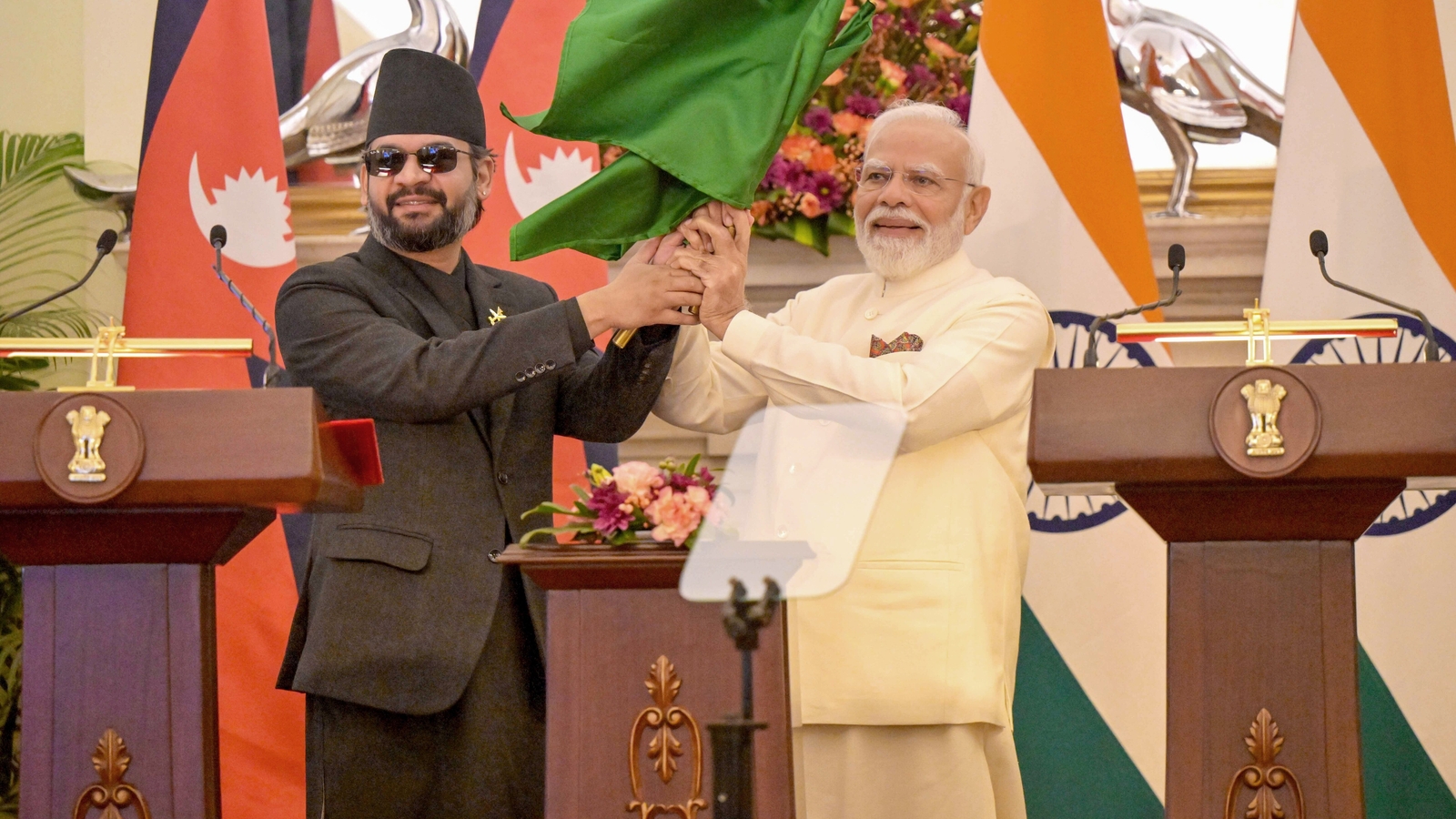
India and Nepal on Monday unveiled a joint vision document titled "Viksit Bharat and Samunnat Nepal", setting out an updated framework for bilateral ties that provides for a review of the Treaty of Peace and Friendship of 1950. According to the document, Prime Minister Narendra Modi and his Nepalese counterpart Balendra Shah agreed that the partnership should reflect contemporary political, economic and technological realities and rest on an "updated and forward-looking legal framework", under which existing agreements, including the 1950 treaty, "could be reviewed on the basis of mutual consent". All outstanding matters, including those related to water resources, energy, trade and the boundary, are to be resolved through mutual discussion and dialogue, according to the joint vision, one of the main outcomes of Shah's visit.
Foreign secretary Vikram Misri told a media briefing that the work of the Eminent Persons Group (EPG) is "in the past" and no longer relevant to the process of updating ties. "We are looking at a forward-looking approach to this particular issue. We are not looking backward and to me, therefore, the [EPG] report…is not relevant," he said. The EPG was formed in 2016 with four members each from India and Nepal and held nine meetings during 2016-2018 before reportedly finalising its report, which has never been made public.
Misri said the two sides had not yet decided on the mechanics for reviewing agreements, though existing mechanisms such as foreign office consultations led by the two foreign secretaries and the joint ministerial commission headed by the foreign ministers could be used. He noted that references to re-looking at the 1950 treaty have figured in bilateral documents earlier, though discussions had not moved forward for various reasons. He said both countries have their own priorities and some homework will be needed before they "mutually agree on which is the best mechanism".
On the boundary, Misri said Nepal's claims to areas such as Lipulekh had not figured in Monday's discussions. He said a multi-layered architecture, ranging from field survey teams to the boundary working group, handles border management, and that considerable technical work has been done along the vast majority of the settled boundary, with "very good and smooth progress". Modi and Shah have directed the two foreign secretaries to take border management forward in line with the joint vision, he said.