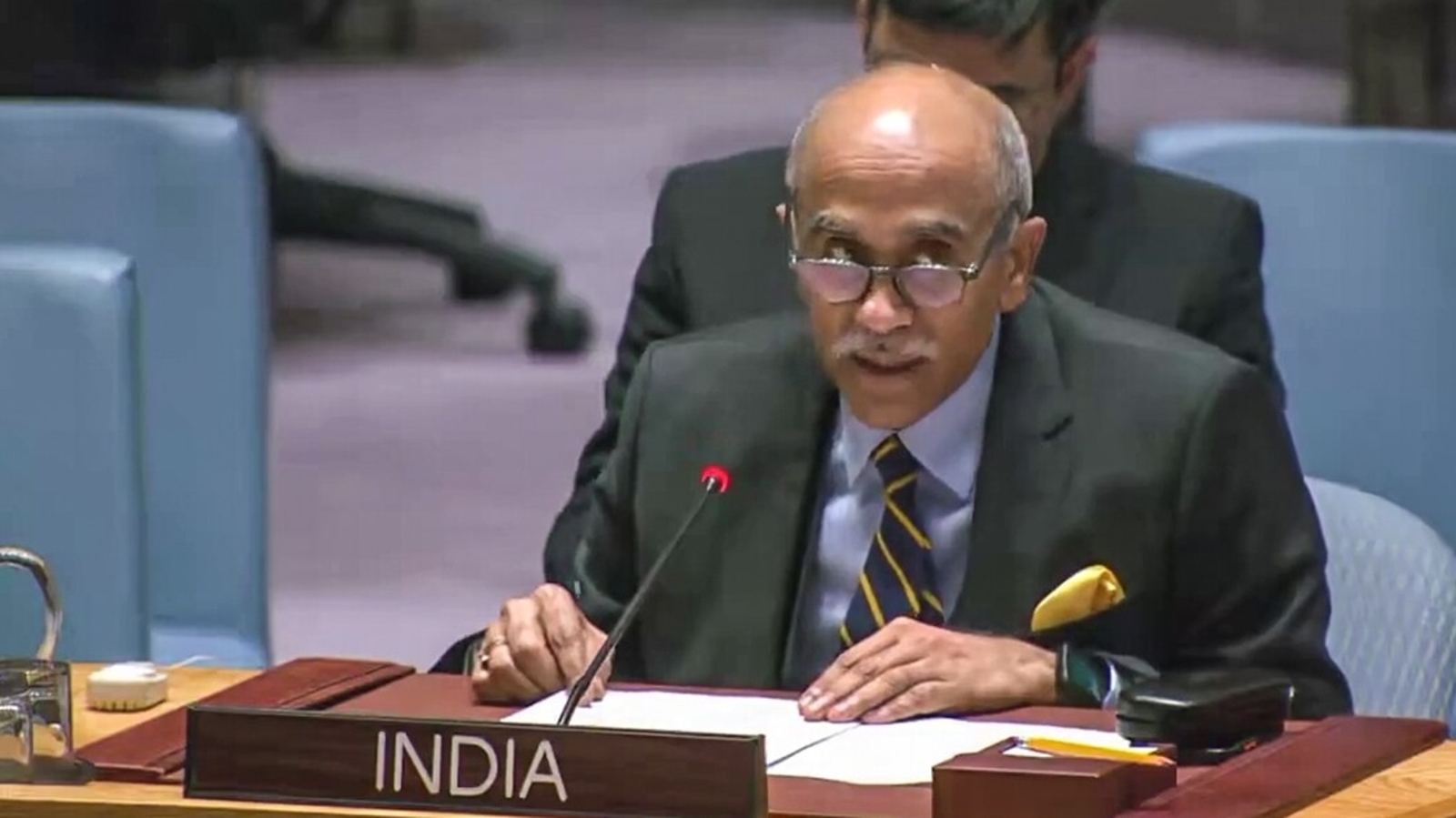
India has pushed back against Pakistan at a United Nations Security Council Arria-formula meeting, accusing its neighbour of using the discussion to spread propaganda after the Pakistani delegation raised the Indus Waters Treaty. New Delhi said it had not intended to discuss bilateral disputes at the session, convened by Liberia on natural resources and conflict, but was compelled to respond.
India's Permanent Representative to the UN, Ambassador Parvathaneni Harish, said India's position on the Indus Waters Treaty remains clear and consistent and has been stated at multiple fora. He also linked Pakistan's military to the exploitation of the country's natural resources, referring to its army chief reportedly displaying a wooden box of mineral stones to foreign leaders last September, which he said indicated the army's role in such extraction. He claimed this was also believed to be behind the recent dismissal of a provincial government in Pakistan and the imposition of a state of emergency there.
Calling the military Pakistan's actual decision-makers, the Indian envoy said the country's top brass prioritises its own enrichment and cross-border hostility over the welfare of ordinary Pakistanis. He said Pakistanis would be better served if its military used national resources for the population rather than self-aggrandisement, and if the army stopped fomenting conflict with its neighbours, which he said was boomeranging back on the country.
Ambassador Harish set out India's position on global resource governance, arguing that voluntary, consensus-based and nationally led cooperation works best, citing the Kimberley Process as an example. He noted India's chairmanship of the Kimberley Process in 2026 and said existing mechanisms should be fully used before new frameworks are considered. He added that lasting peace comes only when local citizens directly benefit from the wealth extracted from their land, citing India's mining laws, which require companies to fund local community development.