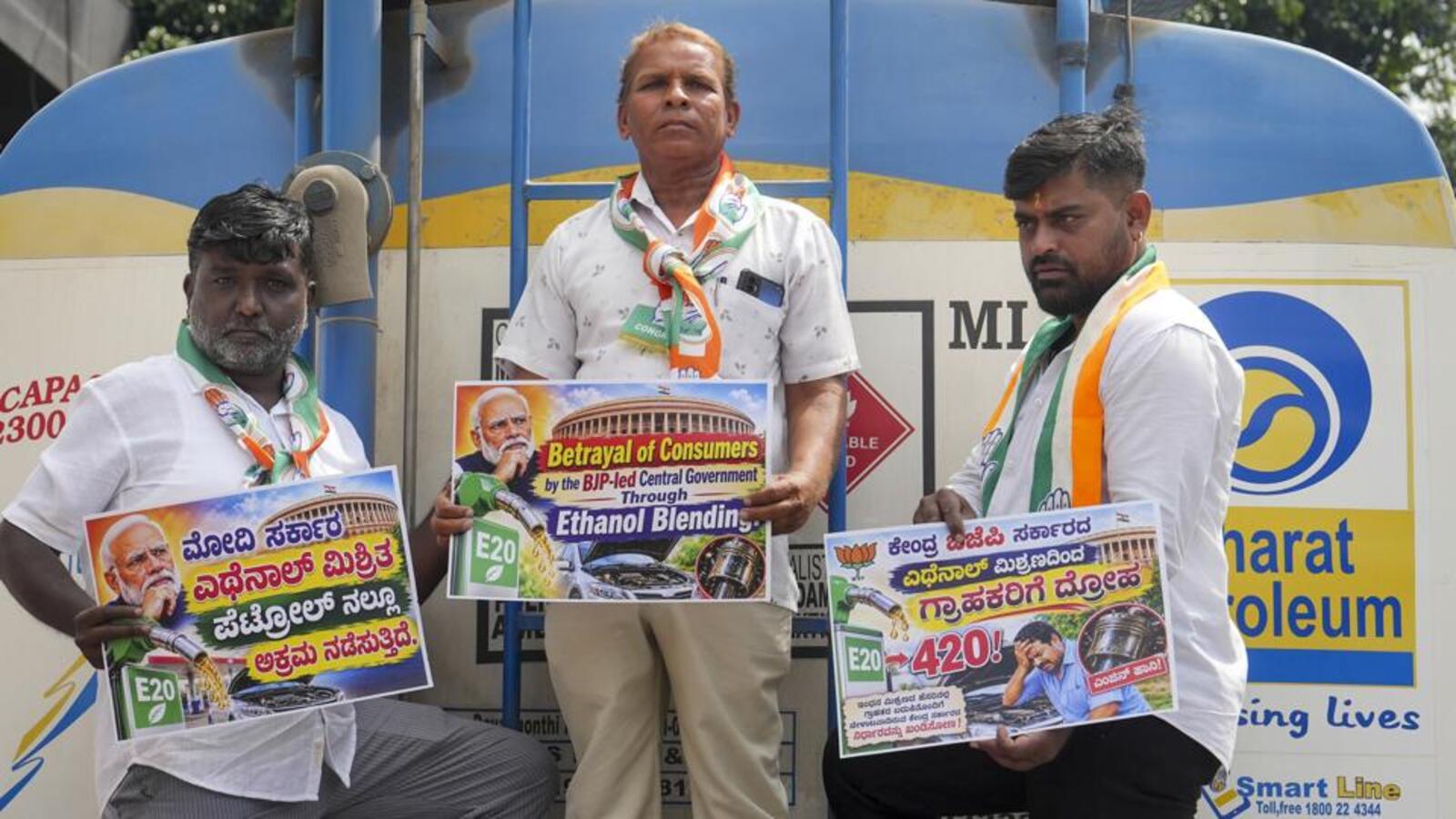
The Karnataka government is examining legal options in case the Centre does not act on the state's report on alleged excess ethanol blending in petrol, state food and civil supplies minister Rizwan Arshad said on Tuesday. The report, which includes technical details and laboratory test results from samples lifted at six petroleum terminals in Karnataka, will soon be sent to the Union government and made public thereafter, he told reporters in Mysuru.
"We will wait for some time. If they say they will take action, it is fine. Otherwise, we have also sought legal opinion on initiating legal action. We have obtained the opinions of experts and officials and will proceed accordingly," Arshad said. There was no immediate reaction from the central government on the statement.
The controversy began after the state government declared on November 6 that petrol sold in seven Karnataka districts contained ethanol concentrations as high as 31.2%, with eleven of 14 samples exceeding the 20% blend specified under the Union government's E20 standard. According to the findings, an Indian Oil Corporation Limited sample recorded 31.2% ethanol, while samples from Hindustan Petroleum Corporation Limited and Bharat Petroleum Corporation Limited recorded 30.5% and 26.5% respectively.
The three oil marketing companies disputed the findings the same day, questioning the sampling procedure, testing methodology and choice of laboratories. They cited a separate exercise in which 893 samples from 27 states and Union territories, including 56 from Karnataka, were found to contain between 19% and 21% ethanol. Karnataka stood by its report, saying samples initially sent to the OMCs did not yield specific blending percentages, after which they were sent to NABL-accredited and ISO-certified laboratories. On November 9, Arshad said the collection process was documented in the presence of representatives concerned as per the prescribed procedure under the Motor Spirit and High Speed Diesel Order, 2005, and rejected the OMCs' contention that irregularities could have occurred at individual petrol outlets.