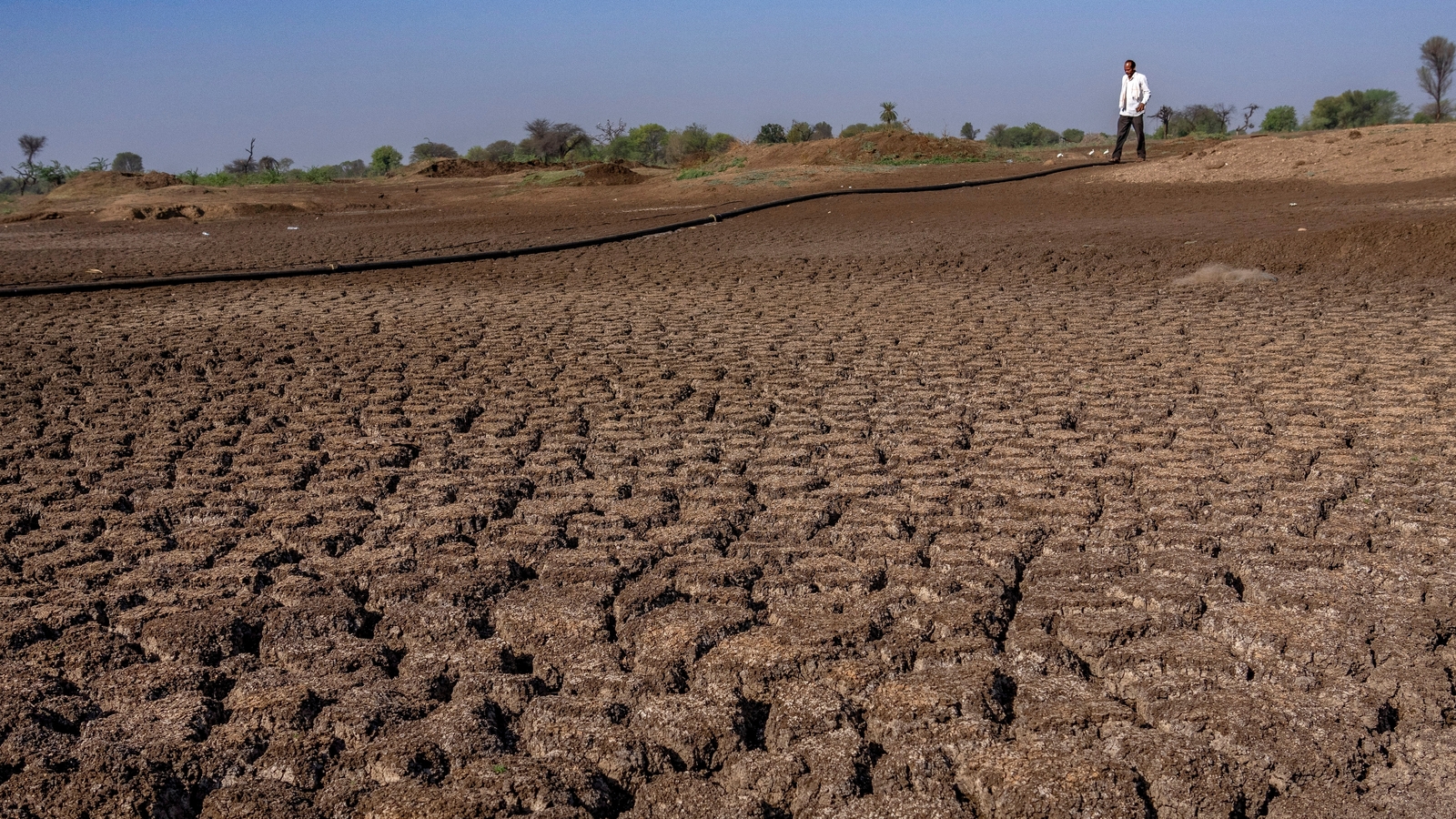
The Maharashtra government has directed district authorities to temporarily suspend non-essential new construction works in 304 drought-hit talukas and redirect available funds towards drinking water supply and other drought-mitigation measures. A Government Resolution issued by the Planning Department on Wednesday said funds under the District Annual Plan (General) must be prioritised to complete incomplete water supply projects, strengthen existing water sources and ensure water and fodder availability for livestock.
District collectors have been asked to review non-essential new projects, including parks, beautification works, new office and administrative buildings, cement roads and drains, and defer them as per prescribed procedures. Funds from such deferred projects are to be reviewed and reallocated to priority drought-relief works, with the exercise to be completed by December 31. The government clarified that ongoing projects should not be stopped indiscriminately, and decisions must be taken case by case after considering contractual obligations, public safety, the stage of work, expenditure already incurred and possible compensation or financial liabilities.
Essential works related to drinking water availability, strengthening of existing water sources, creation of necessary new sources, water and fodder for livestock, water conservation, irrigation, public health and emergency requirements have been exempted from the suspension, subject to applicable rules and approvals. Priority is to be given to completing incomplete pipelines, pumps, electricity connections, storage tanks and distribution systems needed to transport water from existing sources to scarcity-hit villages. Projects that can be completed during the current scarcity period and provide immediate water access must receive priority, while new projects that cannot normally be completed within the current financial year should not be sanctioned under the special priority framework.
In exceptional cases, essential drinking water, livestock water or water-source creation projects may be considered even if they extend beyond the current financial year, though the additional financial liability for 2027-28 must not exceed 10 per cent of the approved District Annual Plan outlay for 2026-27. Collectors have been asked to convene district-level officials' meetings within seven days of the GR and prepare an integrated taluka-wise and project-wise action plan within 15 days. Urgent relief measures may be approved through the guardian minister if a District Planning Committee meeting would cause delay, subject to ratification later. Collectors must submit monthly reports on fund allocation, expenditure and physical progress by the 10th of every month, and details of sanctioned works are to be published on district collectorate websites or government portals. The provisions apply to the 304 drought-hit talukas and any additional talukas declared drought-affected later, and will remain applicable for the 2026-27 financial year.