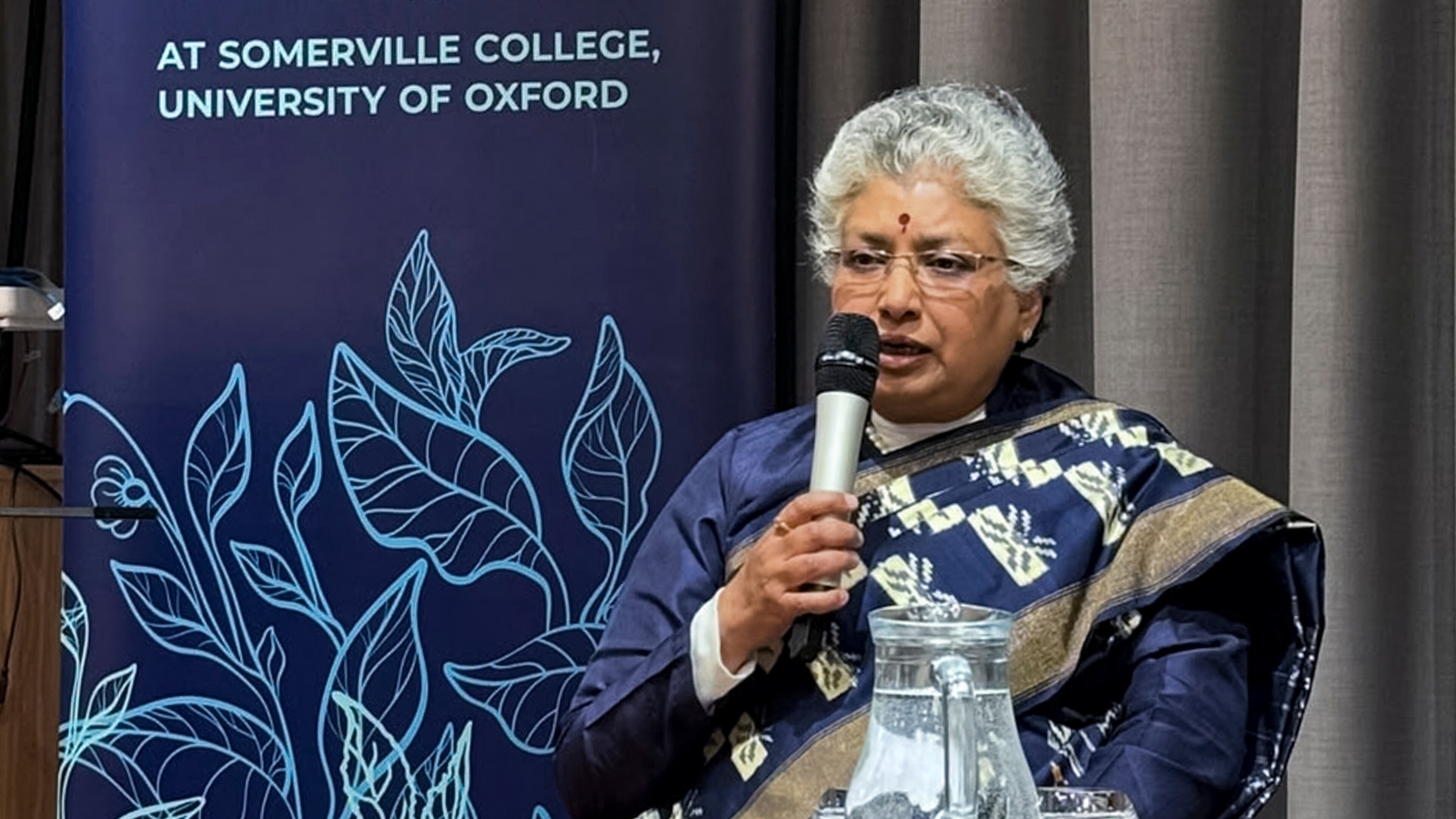
Supreme Court judge BV Nagarathna, who is in line to become India's first woman Chief Justice, has said the presence of women in high public offices does not mean gender equality has been achieved across society. She called for a deeper examination of the structural barriers that continue to prevent women from accessing education, employment and professional opportunities.
Speaking at the inaugural Cornelia Sorabji Memorial Lecture at Somerville College, University of Oxford, earlier this week, Justice Nagarathna said a few distinguished women in public life cannot be taken as a reflection of the actual position of women across the country, and that substantive equality must account for the diversity of women's experiences. She said many women in India find it difficult to pursue education or a career despite being well qualified, and that Indian society, particularly men, needs to introspect on this if the Constitution's goals are to be achieved by the women of India.
Justice Nagarathna called for one-third representation for women lawyers on government panels, including those representing public sector undertakings and providing legal aid, and said women's participation in the legal profession must extend beyond entry to professional advancement and institutional leadership. Her remarks come amid a persistent gender imbalance in the higher judiciary: the Supreme Court currently has three women judges among 37 sitting judges, while women account for 111 of the 781 sitting judges in the country's 25 high courts, or around 14%, according to the latest available figures. Justice Nagarathna is expected to become India's first woman Chief Justice in September 2027, with a brief tenure at the helm.
In her lecture, she traced the evolution of women's rights from the colonial legal order to the constitutional promise of equality, arguing the journey remained unfinished despite legislative and judicial advances. She discussed judgments including the 2005 recognition of daughters as equal coparceners in ancestral property, the Vishaka guidelines against workplace sexual harassment, and rulings challenging gender-based restrictions in employment and the armed forces. She also referred to Anuj Garg, which rejected protective paternalism, and the Sikkimese women exemption case, which she authored and which struck down a discriminatory tax provision, saying marriage cannot extinguish a woman's independent identity. She cautioned against measuring progress merely through laws struck down or enacted, pointing to persistent barriers in women's safety, economic independence and access to justice, and said the disproportionate burden of unpaid domestic and care work shapes women's choices. Equality must recognise how caste, class, disability, religion, region and economic circumstances create different experiences of disadvantage, she said, adding that there is no single experience of being a woman.