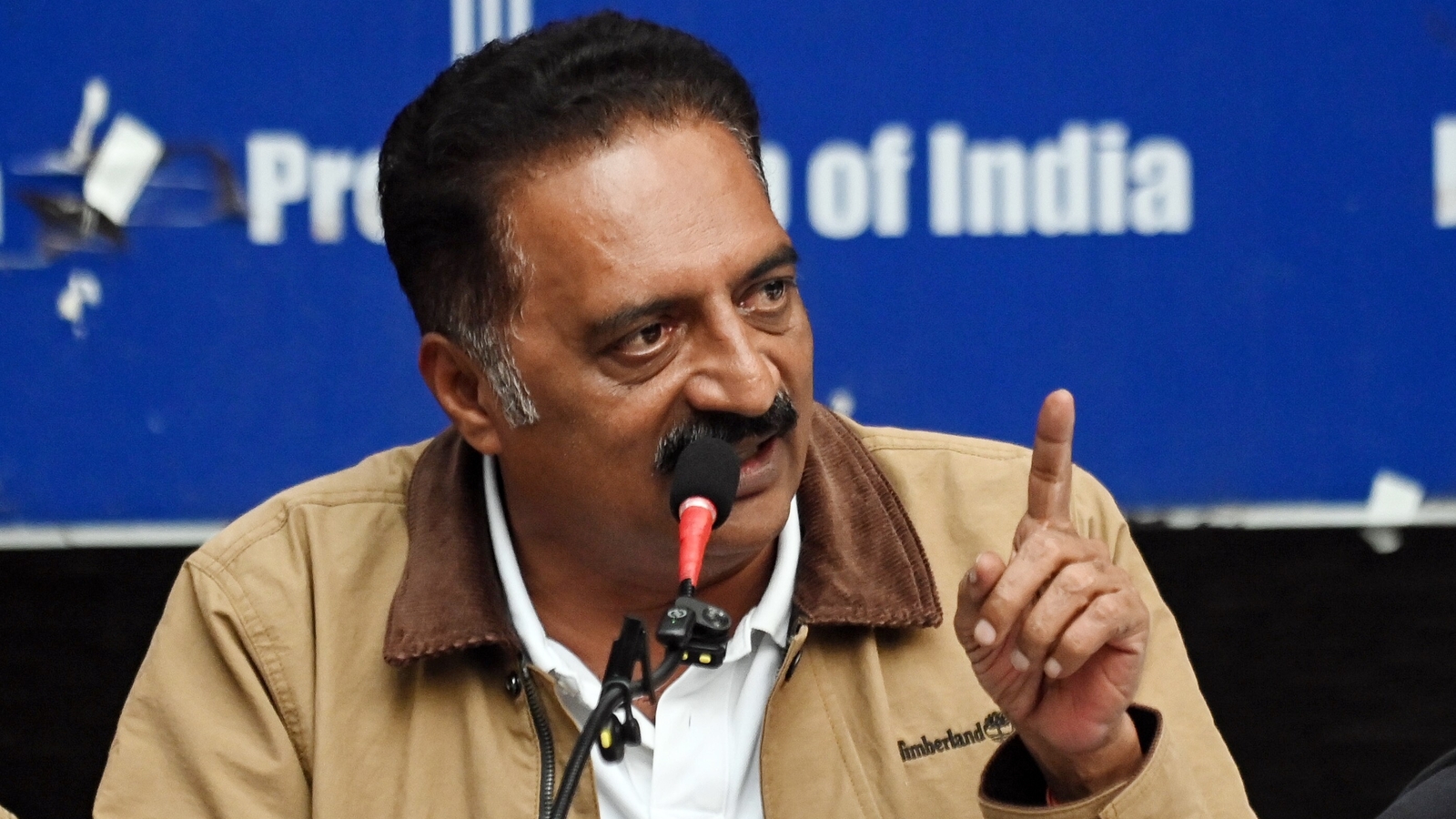
Actor Prakash Raj on Saturday described the Dravida Munnetra Kazhagam's position on delimitation as an "act of betrayal" and asked party chief MK Stalin to reconsider the decision to back the Centre's proposed bill on the exercise. Raj said the stand conflicted with the principles the DMK had long championed and accused the party of "aiding communalism." His remarks came hours after the DMK said it would support the delimitation bill proposed by the Centre, stating that its core demands had been included in the proposed legislation. Raj called the party's stance a "selfish decision."
In a video posted to his official X handle, Raj addressed Stalin directly and alleged that the proposed bill was "extremely dangerous." He said the legislation "goes against the principles of religion, language, and ethnicity, and threatens the sovereignty of this nation." Raj said the DMK would be making a "historic blunder" if it supported the bill and claimed the decision "betrays the people at large." In the caption of his post, he requested Stalin to reconsider the party's support to the bill in the interest of the nation.
The government has called a special Parliament session from November 30 to December 3, during which it will table the Delimitation (Second) Bill, 2026 and the Constitution (132nd Amendment) Bill. The latter seeks to amend constitutional provisions to enable implementation of the one-third quota for women after the first delimitation exercise following its commencement.
Stalin said the proposed bill has accepted the "fair delimitation" demands put forth by his party. He said one must pause and think about what would happen if the bill, which provides a 50 per cent increase in constituencies for all states based strictly on the 1971 population, were missed. The DMK chief had earlier reiterated two demands: that Tamil Nadu's share of Lok Sabha seats remain at 7.18 per cent even if the total number of constituencies is increased, and that the existing proportion of parliamentary representation among states, based on the 1971 Census, be frozen for another 25 years.