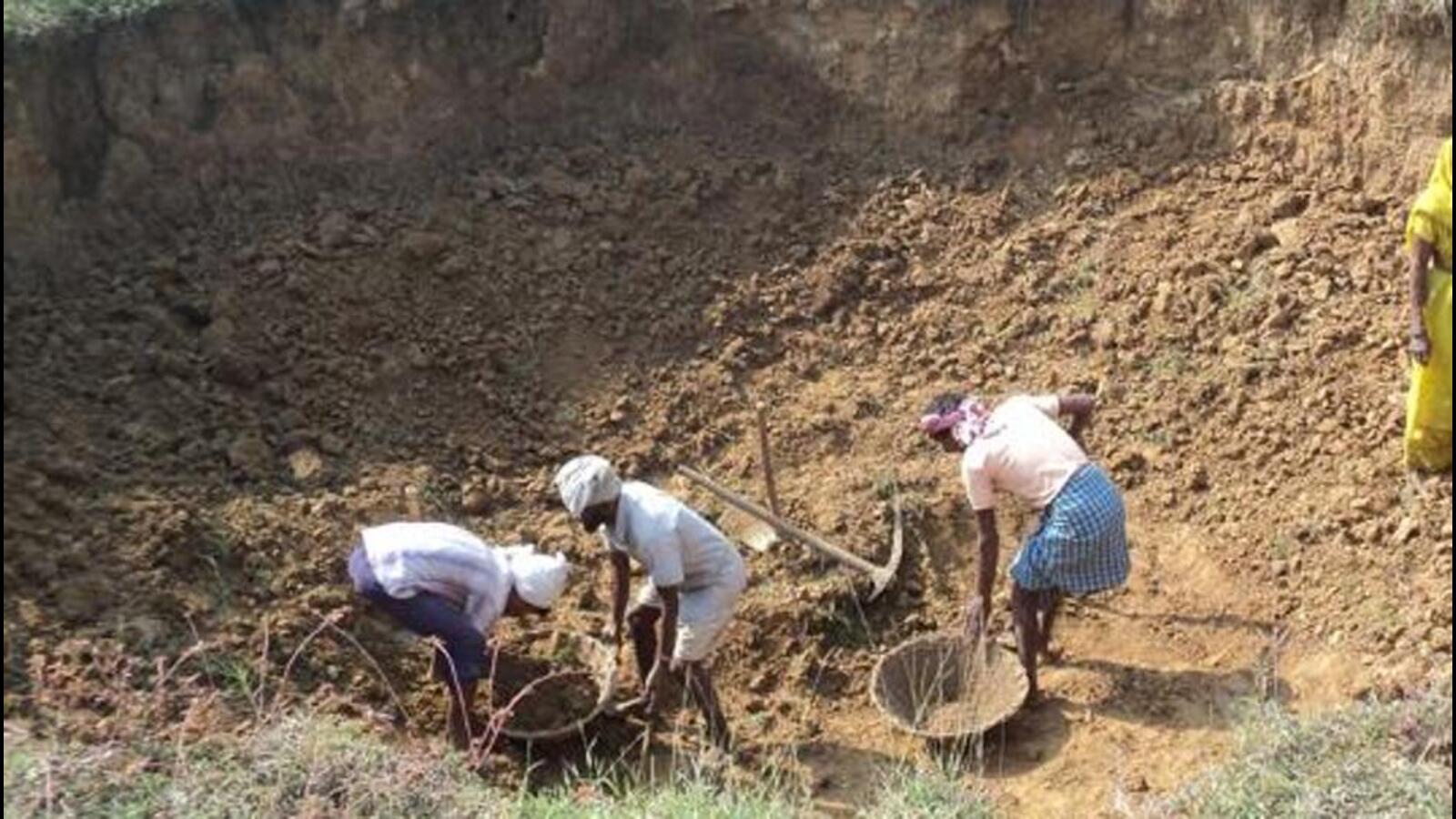
A PRS Legislative Research report has estimated that states would have spent about ₹33,000 crore under the new VB-G RAM G rural employment scheme in 2025-26, compared with the ₹5,261 crore they actually spent under MGNREGA, according to the report. The increase stems from a change in cost-sharing: under MGNREGA, the Centre paid the entire wage cost and 75% of material costs, while under VB-G RAM G, which replaced MGNREGA from July 1, 2026, states bear 40% of wage, material and administrative expenditure. The ratio is 90:10 in favour of the Centre for Himalayan and northeastern states.
PRS estimated the higher burden assuming the same number of person-days, wage rates and material and administrative expenditure as in 2025-26. Large states such as Bihar, Madhya Pradesh, Maharashtra and Uttar Pradesh would each have faced an increase of around ₹2,000–3,000 crore, the report said.
The Centre said on October 23 that nearly 460 million person-days of employment had been generated under VB-G RAM G since its rollout, with more than 36.5 million workers from 28.9 million rural households receiving work. The Centre has allocated ₹95,692 crore for the scheme in 2026-27; including states' contribution, the total provision exceeds ₹1.51 lakh crore, according to the rural development ministry.
MGNREGA, introduced in 2005, guaranteed 100 days of wage employment per rural household and was demand-driven, with no fixed state-wise central allocation. It generated 2.91 billion person-days in 2024-25, though average workdays per household fell to 43 in 2025-26 and only 4% of households received the full 100 days, PRS noted. Under VB-G RAM G, which raises guaranteed employment to 125 days, central contributions are subject to state-wise allocations proposed to be determined using the 16th Finance Commission's devolution formula, leaving states to bear expenditure beyond their allocated central funding. PRS estimated that six states would have faced a central funding shortfall of ₹80 crore to ₹650 crore in 2025-26. The 2025 law also allows states to notify a pause on work for up to 60 days a year during peak agricultural seasons, and from the second year, central allocations will be linked to performance criteria including timely wage payments.