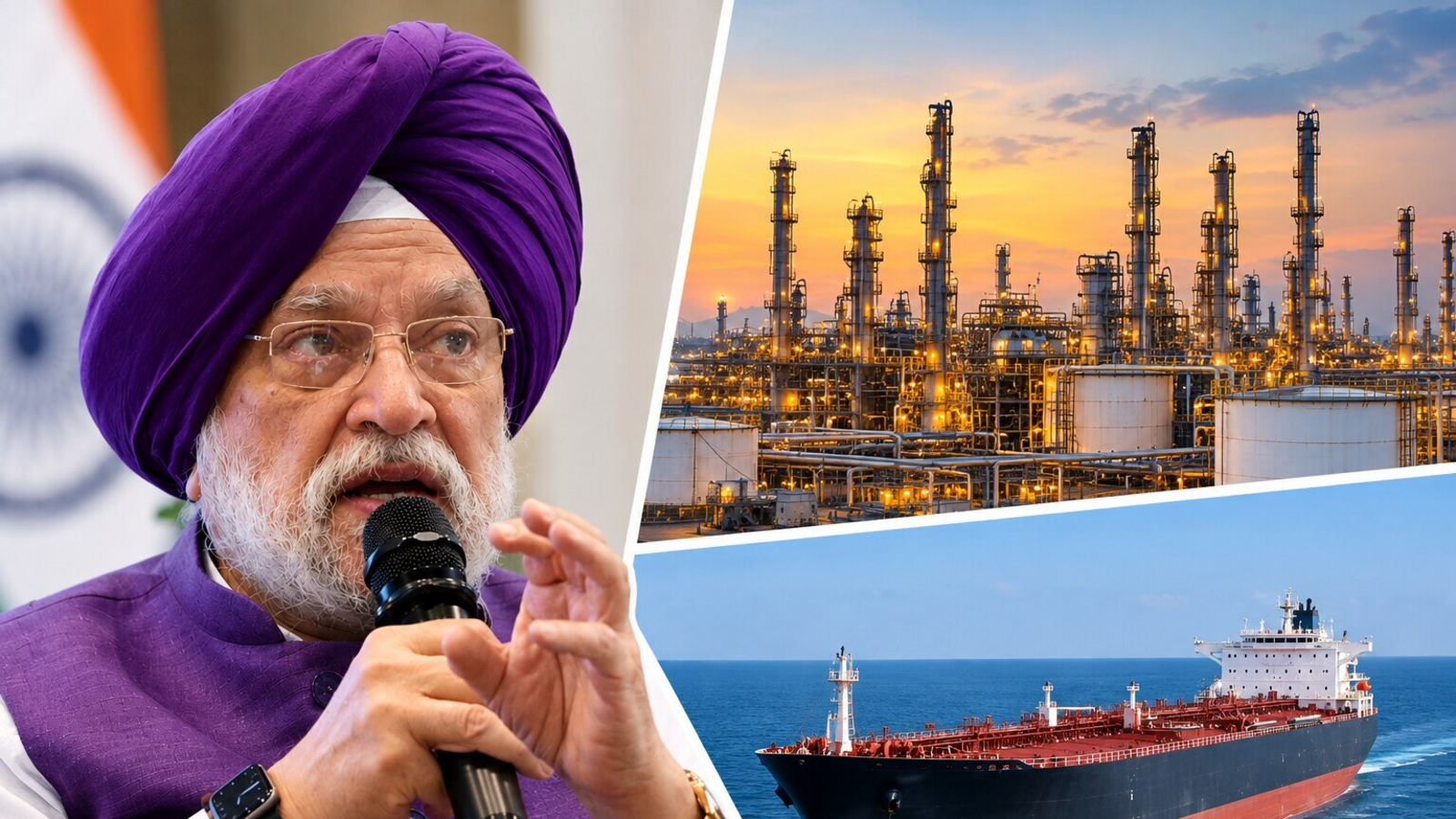
Union Petroleum and Natural Gas Minister Hardeep Singh Puri has said India managed to prevent a sharp rise in petrol and diesel prices despite surging global crude rates and disruptions to key energy supply routes. He attributed this to the Centre's strategy of cutting excise duties and managing domestic fuel supplies.
Speaking at a meeting with petroleum dealers, Puri said petrol and diesel prices rose 50-60% in several countries amid geopolitical tensions, while domestic retail rates stayed relatively stable. He pointed to three rounds of central excise duty reductions in November 2021, May 2022 and March 10, 2026, with the latest cutting duty on both fuels by ₹10 per litre. He said domestic fuel prices had declined over the preceding four years despite repeated global supply disruptions.
Puri cited the Russia-Ukraine war, which began in February 2022, and the closure of the Strait of Hormuz on February 28, 2026, as factors behind the global energy crisis. Speaking after the FICCI Annual General Meeting in New Delhi, he said crude prices rose from around $67-68 per barrel to nearly $120 during the disruption and were hovering around $92 when he spoke. "We are not out of the woods yet," he said, adding that discussions involving the United States, Iran and Gulf countries were continuing.
Puri said none of India's approximately 1.07 lakh fuel retail outlets reportedly ran dry during the disruption. LPG faced greater pressure as India imports around 60% of its consumption, with about 90% of those imports passing through the Strait of Hormuz. He said daily LPG output rose from around 35,000 tonnes to 55,000 tonnes as cylinder bookings increased from 52 lakh to 92 lakh. He acknowledged that oil marketing companies continued to face financial shortfalls, with compensation remaining an ongoing process.