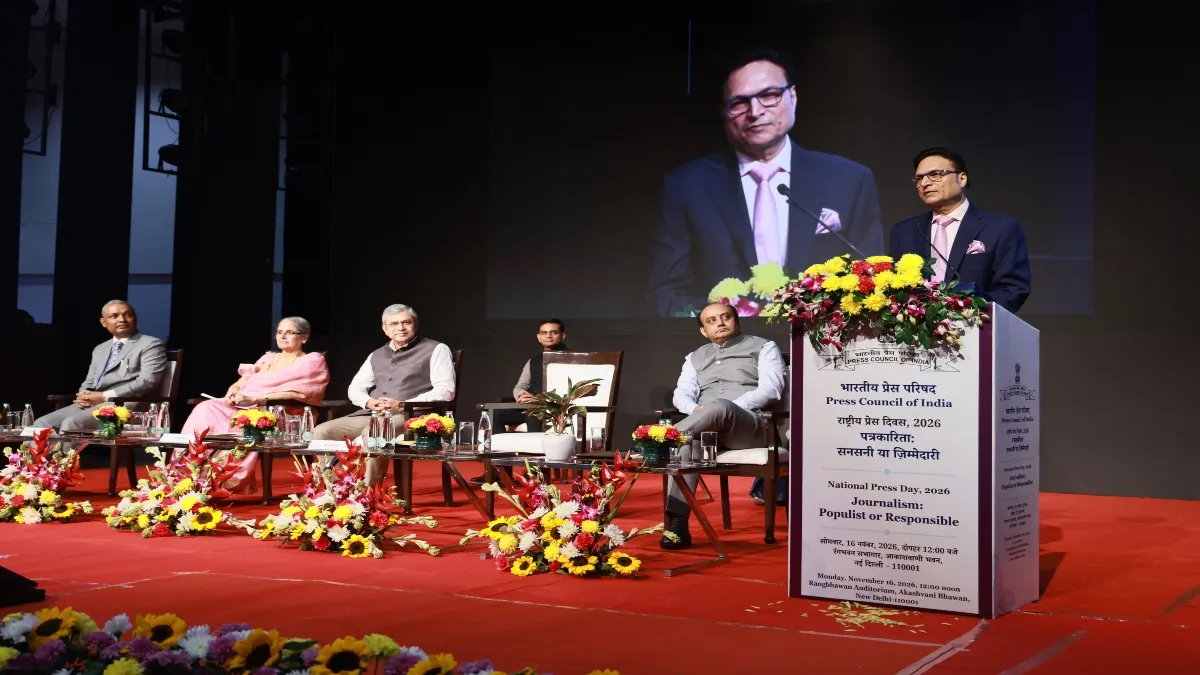
India TV Chairman and Editor-in-Chief Rajat Sharma on Monday called for greater accountability in journalism and urged society to distinguish between sensationalism and responsible reporting, while addressing the National Press Day celebrations in New Delhi. Speaking as the Guest of Honour at the event organised by the Press Council of India at Akashvani Bhawan's Rang Bhawan auditorium, he spoke about the media's evolving role and the need for a responsible information ecosystem. The event, themed "Journalism: Populist or Responsible", was attended by Union Minister Ashwini Vaishnaw as the Chief Guest, while Justice Ranjana Prakash Desai presided over it.
Emphasising collective responsibility, Rajat Sharma said that while every citizen has the right to criticise, the changing nature of politics and governance also requires the media to adapt its working methods. He said there was a fine distinction between sensationalism and responsibility, adding that the media must not forget its accountability towards the country. He highlighted the self-regulatory mechanism in television and broadcast media, under which viewers can file complaints against channels for irresponsible reporting or sensationalism, and said the mechanism had taken several strict decisions over the past 20-21 years.
Recounting his experience during the 26/11 Mumbai terror attacks, he cited India TV's coverage as an example of how journalism could serve national interests during a crisis. He recalled receiving a phone call from a person claiming to be inside Mumbai's Oberoi Hotel and threatening to kill hostages, and said the channel's anchor continued engaging the caller on air while he simultaneously contacted people in Military Intelligence and the Research and Analysis Wing, sharing details of the conversation. He said the caller's accent raised suspicions that the terrorists were from Pakistan rather than the Deccan region, and that security agencies later established the call was being made using a Swedish woman's phone after she had been taken hostage. He also recalled that the channel began delaying its live telecast of the Nariman House operation by 10-12 minutes, and claimed that the Supreme Court, while examining the matter, acknowledged the channel's role in engaging the terrorists and helping establish their identity and location.
Rajat Sharma also highlighted the media's collective decision not to broadcast videos showing Wing Commander Abhinandan Varthaman being assaulted after he was captured in Pakistan, saying broadcasters had agreed that showing the Indian Air Force officer being beaten would not be appropriate for the country or the morale of the armed forces. He criticised instances of unverified reporting during military operations, recalling how some channels had claimed that Indian forces had reached Lahore and Karachi during Operation Sindhu without confirmation, and said broadcasting unverified information during a military situation could pose serious risks. He further referred to the media coverage of actor Sushant Singh Rajput's death, saying some channels had sensationalised the case and repeatedly raised murder allegations, and that subsequent findings by the AIIMS and CBI had established that it was a suicide. Raising concerns over the growing influence of digital platforms, he said social media, YouTube and digital news platforms required greater regulation.