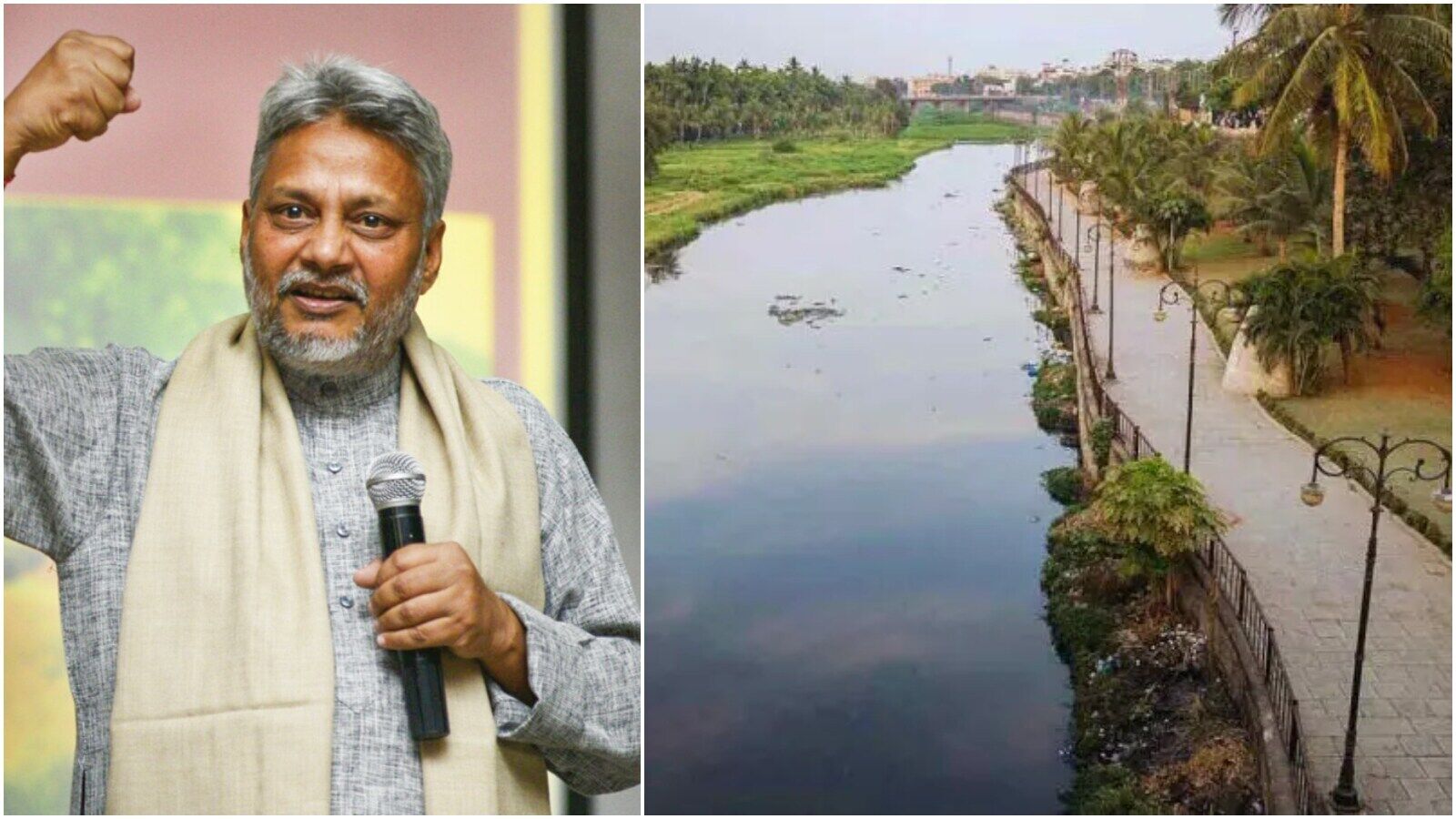
Water conservationist Rajendra Singh has advised the Telangana government against replicating the Sabarmati riverfront model for the Musi river in Hyderabad and urged the state to prepare its own plan centred on protecting nature and involving local people. He shared his views on 27 November at the curtain-raiser event for the Telangana Climate Conclave, scheduled from 7 to 9 December.
Singh, known as the 'Waterman of India', warned that large construction projects along the river could harm the environment and local culture, and asked the government not to turn the Musi into a concrete-lined canal. He suggested developing three layers of vegetation along the banks — smaller bushes close to the water, medium-sized trees in the middle and taller trees further away — so that the riverbanks are protected by natural vegetation rather than concrete, while keeping the river in its natural form.
He also called for a people-centric project, saying development should not be driven only by contractors and companies at the cost of nature and local culture, and suggested 'geo-cultural mapping' that studies an area's natural features along with its history, culture and the way local people use land and water. Singh said he had helped revive 33 small rivers without taking money from governments, with 15,800 small dams built across them using local knowledge and methods.
On water and land use, he urged the government to prevent the cultivation of commercial crops and to restrict industrial water supply during El Niño phases, and warned against removing forest areas from protected status and flattening hills for development projects. He praised the Hyderabad Disaster Response and Asset Protection Agency (HYDRAA) for its work on restoring the city's lakes but said it was moving slowly and asked the government to speed it up. The conclave will bring together scientists, policymakers, farmers, environmental experts and community representatives to discuss issues including drinking water security, drought-proofing, heat protection, forests, biodiversity and clean energy, and the state plans to use the discussions to prepare a long-term climate resilience agenda.