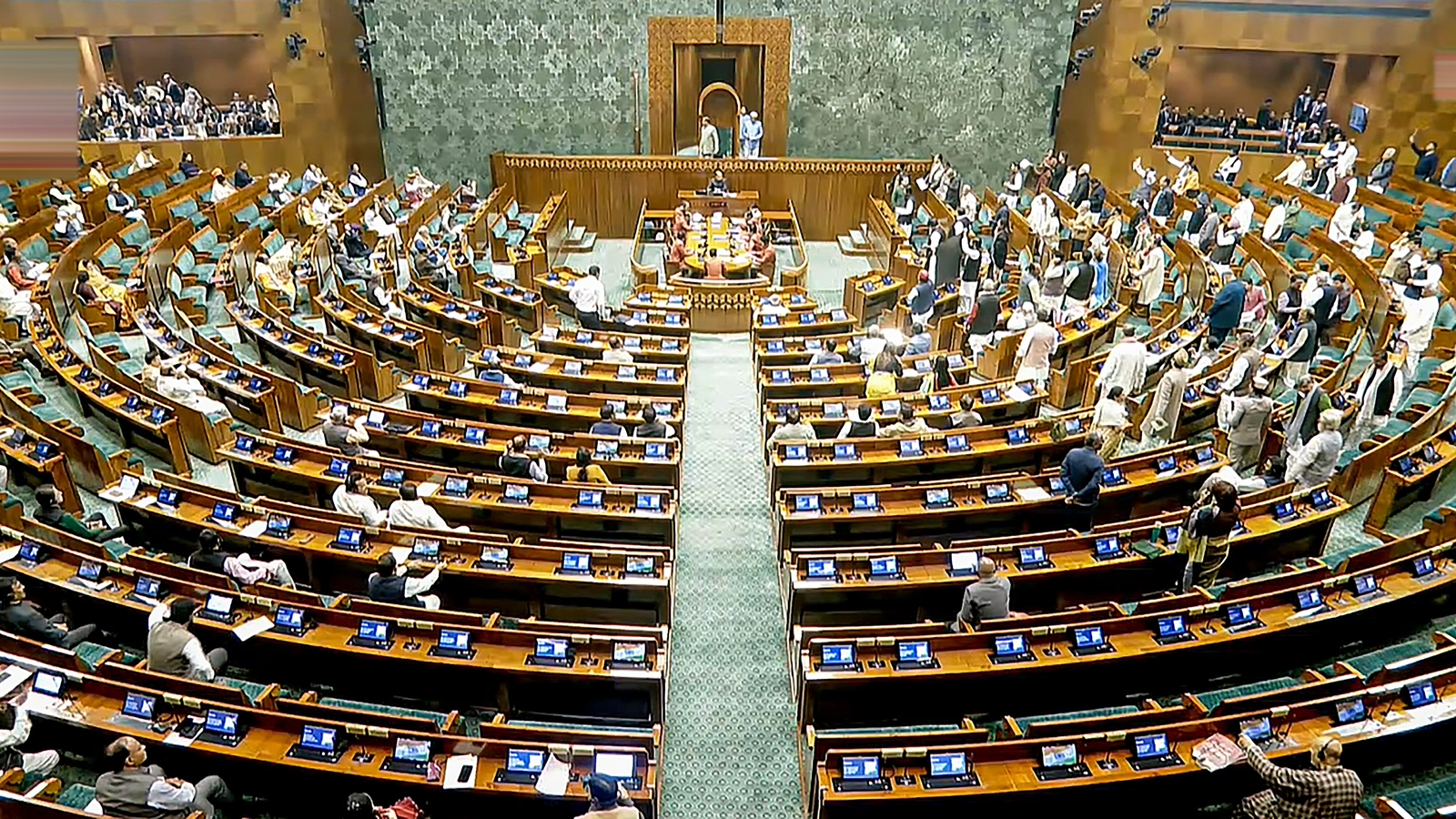
The government's proposal for a special sitting of Parliament has renewed attention on a Constitution Amendment Bill that seeks to expand the size of the Lok Sabha and fast-track 33% reservation for women. The bill failed to secure the required two-thirds majority in the Lok Sabha in April, the first time a constitutional amendment brought by the government was defeated since the National Democratic Alliance came to power in 2014. The government subsequently withdrew two linked bills, one mandating delimitation on the basis of the latest available census, effectively the 2011 one, and another implementing changes in union territories.
While proposing the special sitting on Thursday, the government did not mention the agenda, but speculation has been rife that it could be arranged to push through the 131st Constitution Amendment Bill and the delimitation bill. The buzz was fuelled by the fact that the government did not prorogue the Monsoon Session, which was adjourned sine die on August 13. The 131st Constitution Amendment Bill sought to raise the Lok Sabha ceiling to 850 and implement 33% reservation for women in time for the 2029 polls. It lost the Parliament test in the face of a united Opposition, which did not waver despite a last-minute offer by Union Home Minister Amit Shah to incorporate a 50% proportional rise for all states into the bill.
The Opposition said it favoured women's reservation but opposed delimitation, and questioned the government's timing and intent. The 2023 women's reservation act, the Nari Shakti Vandan Adhiniyam, still stands and came into force in April this year; it mandates that 33% reservation for women will be rolled out based on a fresh census and delimitation. In the budget session, the government introduced three bills aimed at delinking the women's quota from the next census and tying it instead to a delimitation based on the 2011 census.
The Opposition and leaders of southern states flagged concerns over the exercise, with critics calling it flawed, unconstitutional and anti-federal. A section of critics argue that North India could gain more seats in proportion to its population, while South India, which contributes around 30–31% of the GDP, could lose out because of the population factor. Southern states have repeatedly flagged that population alone should not be the criterion for such revisions or additions. The government countered that under a uniform 50% increase, the southern states' share of Lok Sabha seats would rise slightly, from 23.76% to 23.87%; critics pointed out that the bill itself did not guarantee that formula.