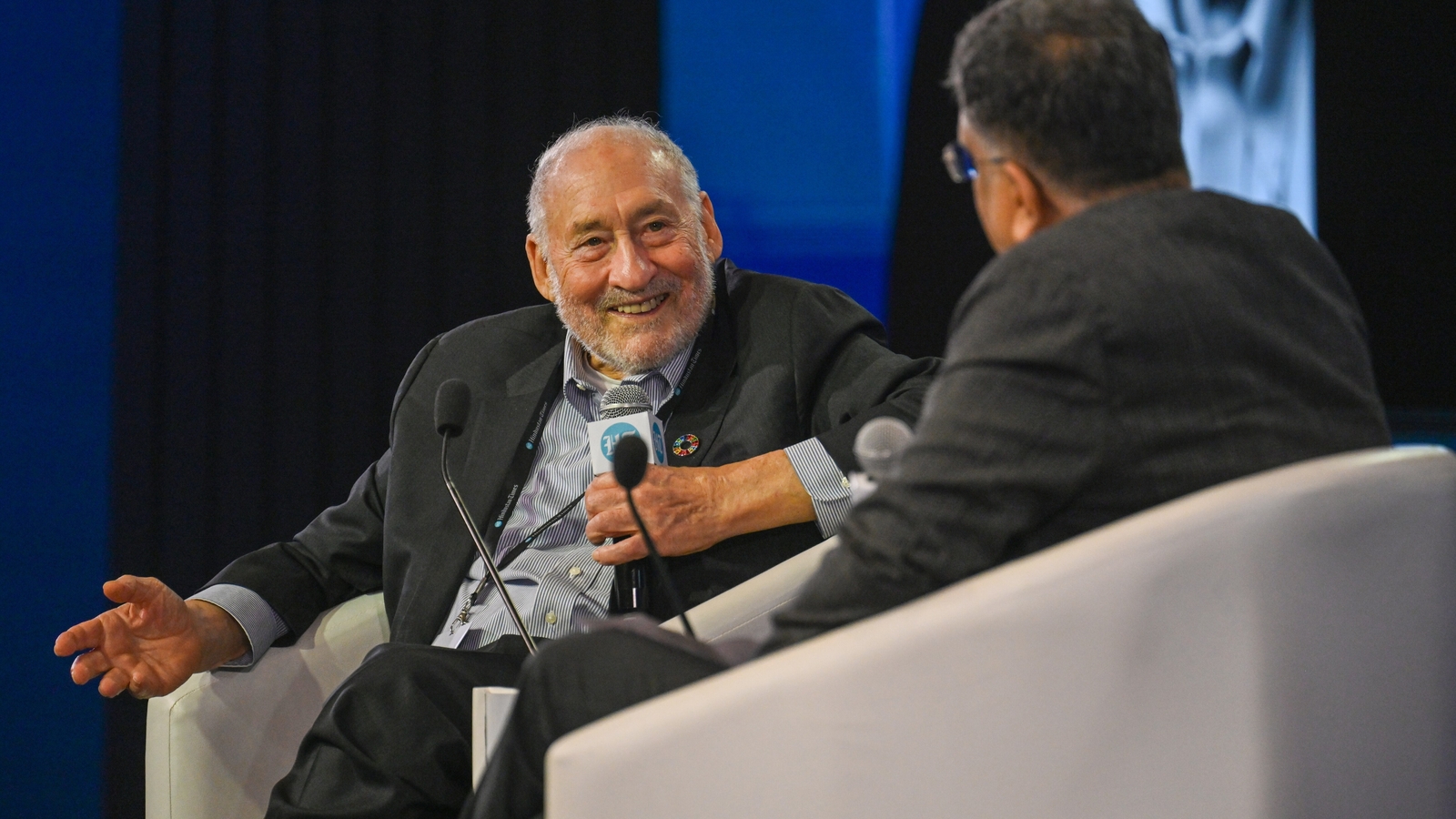
Nobel Prize-winning economist Dr Joseph E. Stiglitz has said the United States is finding it difficult to accept that it is no longer the world's largest economy in purchasing power parity (PPP) terms, with China having overtaken it in the last decade. He was speaking at the 24th Hindustan Times Leadership Summit on November 14 in the Capital, in conversation with Artha Global Executive Director Dr Niranjan Rajadhyaksha.
Stiglitz said the global economic order is moving toward multipolarity. He noted that neither the US nor China publicised the shift when China's GDP measured in PPP exceeded that of the US about a decade ago. China's growth has slowed since but, at 4.5-5%, remains roughly twice the US rate, he said, adding that the gap between the two economies has kept widening. According to the IMF's October 2026 World Economic Outlook, US nominal GDP is projected at $32.64 trillion in 2026 and China's at $21.55 trillion; adjusted for PPP, China stands at about $44.6 trillion against $32.6 trillion for the US.
Stiglitz warned that President Donald Trump's attacks on universities and research could create turmoil over the US's global position in the coming years. He said the US had benefited from attracting talent from around the world, half of them Indians, and that this strength was now under strain. He also referred to measures targeting international students, some of which he said US courts have blocked.
Stiglitz said the world needs the leadership of young, idealistic and pragmatic people, and called on middle powers to stand together against what he described as bully-like behaviour by the US under Trump. He expressed concern over the rise of right-wing politics among men under 35 in the US, even as women continue to support progressive politics.