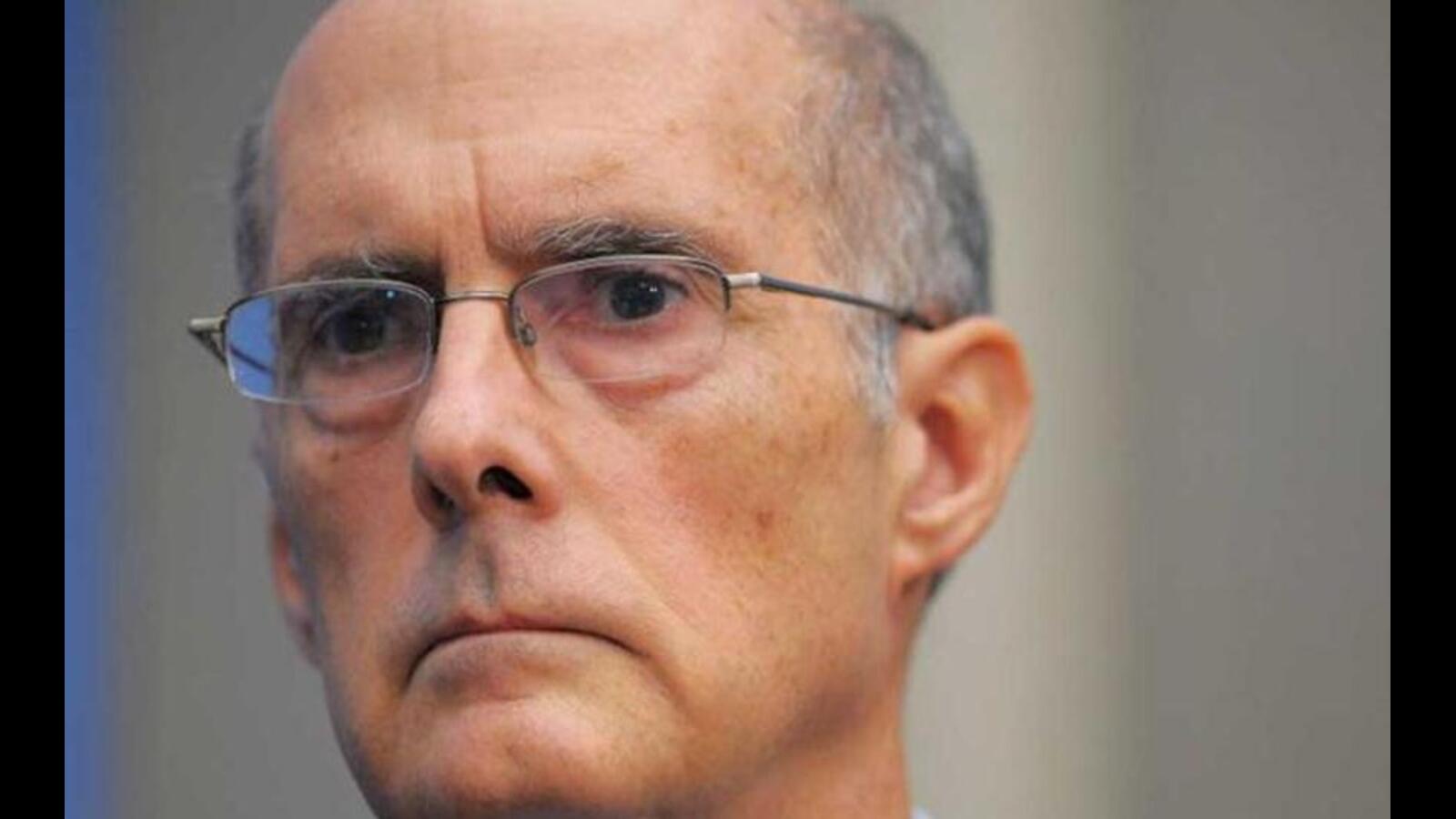
Strobe Talbott, the former US deputy secretary of state widely regarded as one of the principal architects of the turnaround in India-US relations, died in New York on Friday. He was 80.
Talbott launched a dialogue with external affairs minister Jaswant Singh after India conducted a series of nuclear tests at Pokhran in May 1998 and declared itself a nuclear weapons state, a move that infuriated US President Bill Clinton. The talks, which Talbott later recalled involved 14 meetings in 10 locations across seven countries on three continents, set the stage for a slow process of burying decades of distrust. Less than two years later, Clinton visited India and addressed Parliament, opening a new era in bilateral ties.
Born in 1946, Talbott studied at Yale and was a Rhodes Scholar at Oxford, where he befriended Clinton. He spent two decades as a foreign affairs correspondent for Time, much of it analysing the Soviet Union during the Cold War, before Clinton brought him into the State Department. As deputy secretary of state, Talbott handled the building of a new relationship with Russia, while Washington's attention to India had largely centred on its nuclear programme.
In the talks with Singh, Talbott pressed five American benchmarks: signing the Comprehensive Test Ban Treaty, halting production of fissile material, restraint in deploying missiles and warheads, tighter export controls and resuming dialogue with Pakistan. Compliance would have brought relief from sanctions imposed after the Pokhran tests. New Delhi resisted, and the exchanges were referred to as a "dialogue" rather than a "negotiation" amid concern over the perception of yielding to American pressure. The two struck up a warm friendship, though in a strict sense the talks failed amid fierce domestic opposition to any compromise with Washington.