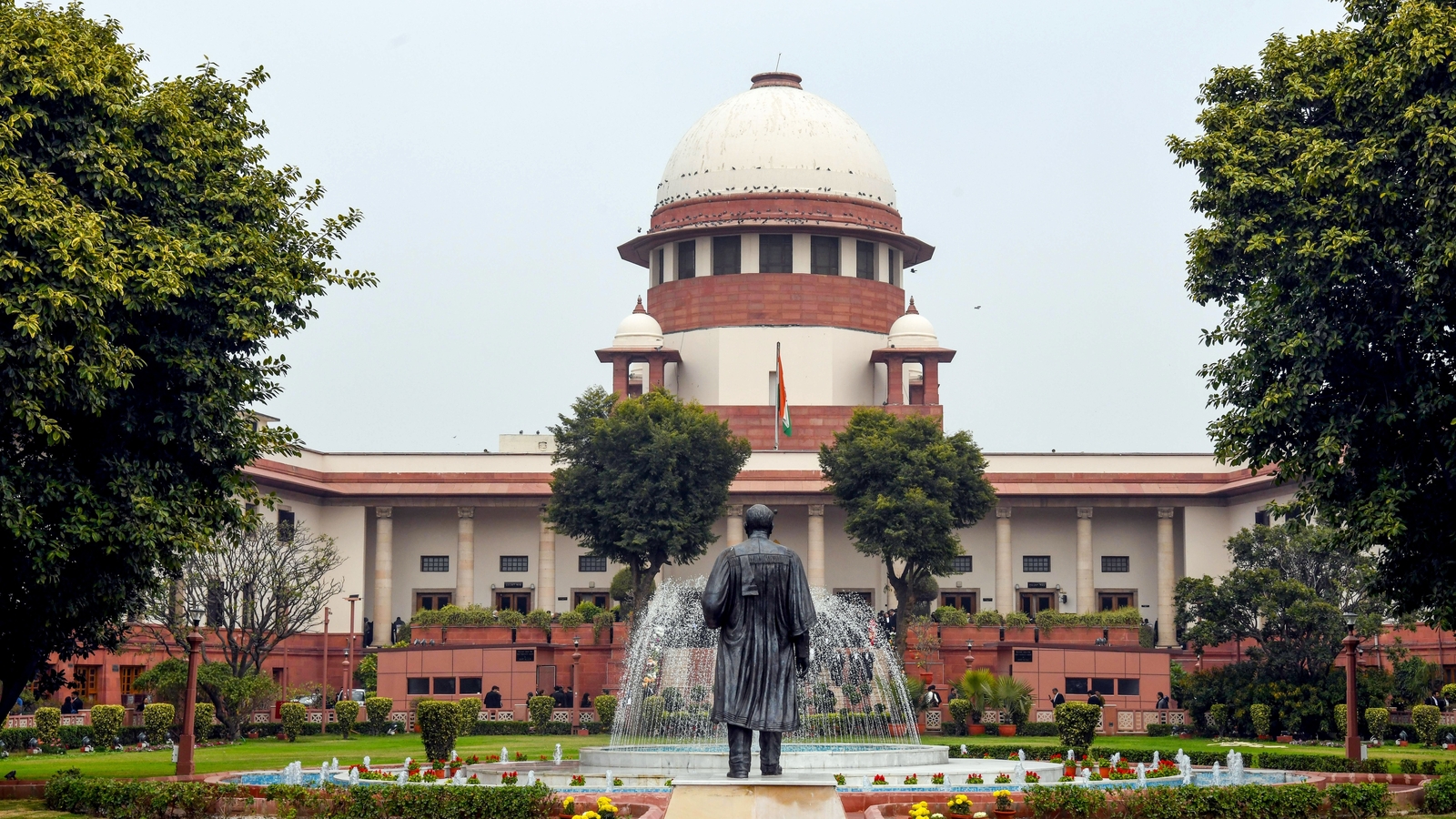
The Supreme Court on Wednesday made a light-hearted reference to Delhi's air pollution while hearing a child custody and visitation dispute, advising a father to wait for air quality to improve before asking his son to visit from Singapore. A Bench of Justices JB Pardiwala and KV Viswanathan was hearing a contempt petition arising from a long-running matrimonial and child custody dispute, according to Bar and Bench. The father had alleged that his estranged wife took their children to Singapore in violation of court-ordered visitation rights.
During the hearing, the Bench interacted with the estranged couple and their young son, who joined the proceedings virtually from Singapore. When the father said he would also like his son to visit him in Delhi during school vacations, Justice Pardiwala advised him to wait for pollution levels to improve. "Work something out. But let the AQI go down a little. Because Singapore is too clean," the judge remarked.
Senior Advocate Siddharth Luthra, appearing for one of the parties, joined in the exchange, suggesting that the judges should also visit Singapore to escape Delhi's air pollution. "Next birth. In our next birth," Justice Pardiwala replied, drawing smiles in the courtroom. Justice Pardiwala also asked the boy about his elder sister, who is currently in London, and playfully suggested that she should make time to speak to him, asking the boy to convey that "the judges were complaining". The Bench suggested that the father, who lives in Delhi, travel to Singapore occasionally to meet his son and invite his daughter to spend a week with him.
Delhi's air quality has remained a concern, with the AQI recorded at 214 in the 'poor' category at 7am on Wednesday, according to the Central Pollution Control Board (CPCB). The minimum temperature at Safdarjung also dropped to 11°C, the season's lowest so far, according to an earlier HT report. Earlier this month, the Supreme Court had stressed that tackling Delhi-NCR's air pollution required a people-driven approach, saying repeated judicial directions and restrictions alone would not resolve the problem. On November 7, a Bench headed by Chief Justice of India Surya Kant said the fight against pollution needed to become a "people's movement", driven by public awareness and changes in everyday behaviour.