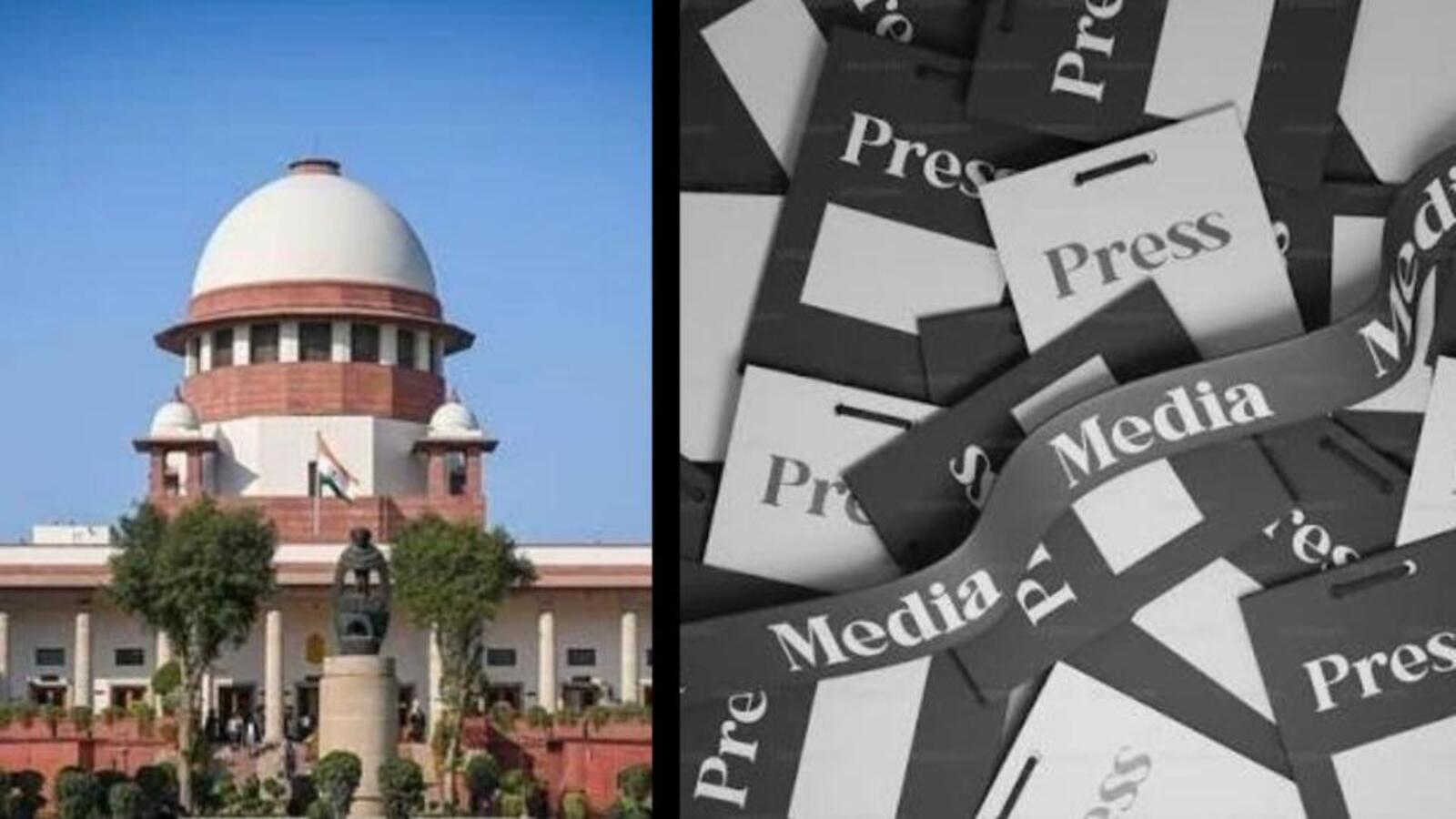
The Supreme Court on Thursday observed that the status of a journalist cannot be self-conferred, as it heard petitions alleging police excesses against media personnel during the October protests in Delhi. A bench led by Chief Justice of India Surya Kant, also comprising justices Joymalya Bagchi and V Mohana, said the protection available to journalists would depend on their professional credentials and the circumstances in which they sought it. The court noted that print and television journalists could be accredited through the Press Council of India and the relevant mechanism respectively, and that online journalists could also be registered, but said self-proclaimed journalists may not enjoy the same protection as accredited ones.
The remarks followed an affidavit by the Delhi Police, which said the evolving digital media landscape had raised questions over whether "reel makers" and "content creators" could be accorded journalist status. The police cited videos in which individuals identifying themselves as media personnel were allegedly seen participating in the protests and raising slogans, suggesting they were not journalists. The petitions were filed by the Free Speech Collective, the Delhi Union of Journalists and the Kerala Union of Working Journalists, citing separate instances in which media personnel with established news organisations were allegedly detained or prevented from performing their duties.
The bench said it would examine broader constitutional questions, including the balance between journalists' right to free movement and the police's duty to maintain law and order. Senior advocate PV Dinesh, appearing for KUWJ, submitted that the police response did not address alleged excesses against seven media personnel working with established organisations. The court directed the union to approach the high-powered enquiry committee headed by former Supreme Court judge justice (retd) R Subhash Reddy, which can examine whether the journalists were subjected to force and whether any such force was proportionate to what was necessary for maintaining public order. The court allowed KUWJ to approach the committee without expressing any opinion on the merits of its allegations.