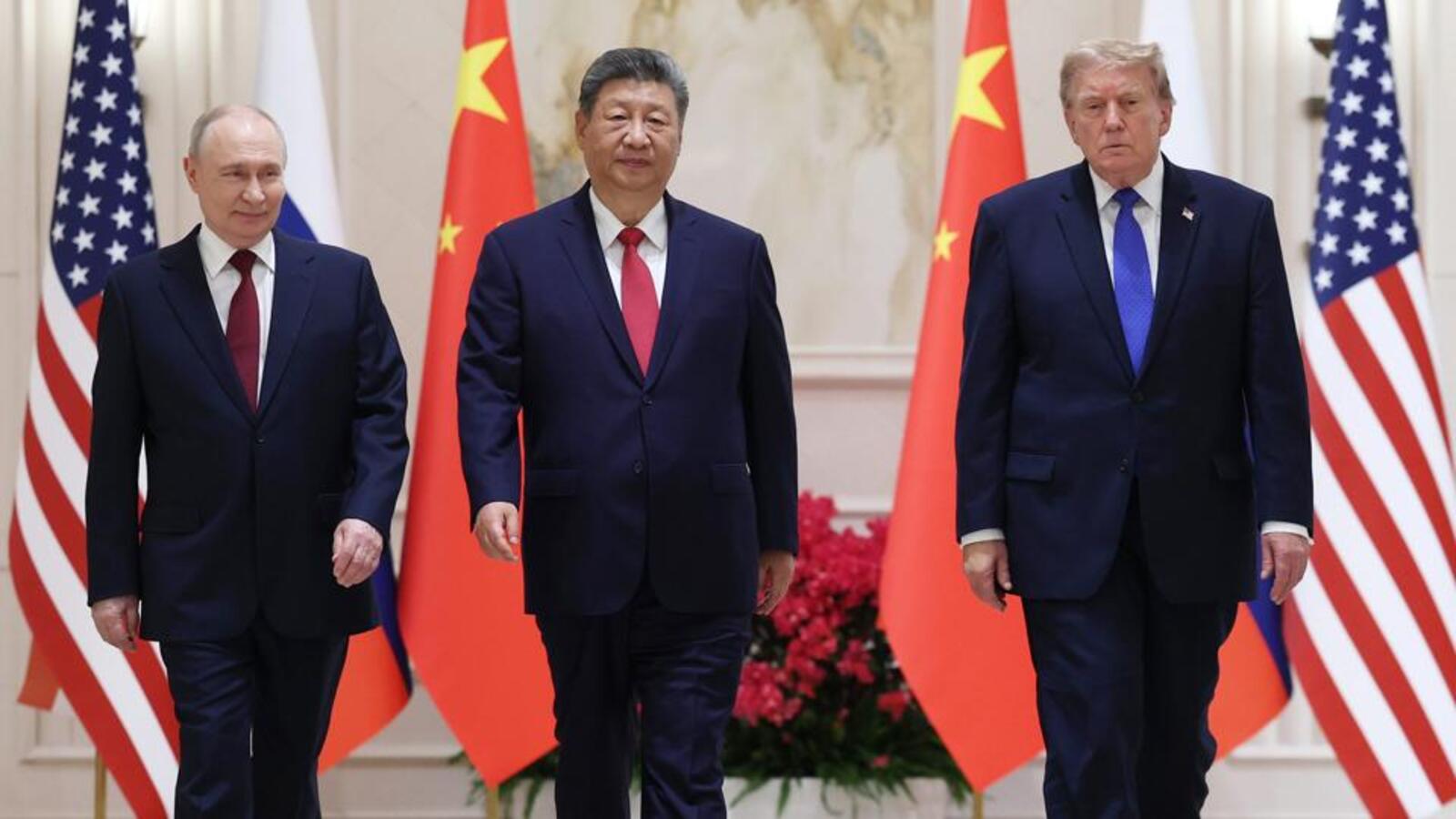
US President Donald Trump met his Russian and Chinese counterparts, Vladimir Putin and Xi Jinping, for a trilateral summit in Shenzhen, southeastern China, on Thursday. After about 90 minutes of talks, the three leaders adopted a short, four-point joint "declaration on peace". They called for reform of the United Nations, criticised what they described as abuses of jurisdiction by international courts such as the International Criminal Court, urged greater supply of oil and refined petroleum products to global markets, and agreed to hold talks on reducing nuclear risks and preventing the proliferation of nuclear weapons. The declaration made no mention of Ukraine.
The meeting produced few concrete deliverables, as summits are usually preceded by intense planning and backroom negotiations. However, observers noted that a US President joining the leaders of Russia and China to limit the reach of an international legal body would have been unthinkable under any other leader. The friendly meeting signalled that the three leaders remain committed to strategic stability and an open line of dialogue.
Much of the Western strategic commentariat was unimpressed. One major newspaper wrote that the one major thing the three leaders agreed on was loosening the post-World War II system of international cooperation that constrains them. Observers noted that the meeting handed Russia a substantial narrative win by allowing Putin to appear as a co-equal alongside Trump and Xi. China gained prestige by hosting the historic meeting. Both nations now have American support in their long-held ambition to ward off international legal institutions. Beijing and Moscow left without making any substantial commitments to help end the wars in Ukraine and Iran.
India will welcome the emphasis on boosting energy supplies, as markets have been roiled by uncertainty since the start of the US-Iran war. The summit also appeared to confirm Trump's reluctance to use economic pressure against Russia's energy sector, a relief for New Delhi, which is keen to avoid US tariffs for buying Russian oil under the Lindsey O Graham Sanctioning Russia and Iran Act. Although New Delhi expected little by way of major outcomes, some sign of a breakthrough on ending the Ukraine war would have been welcome.