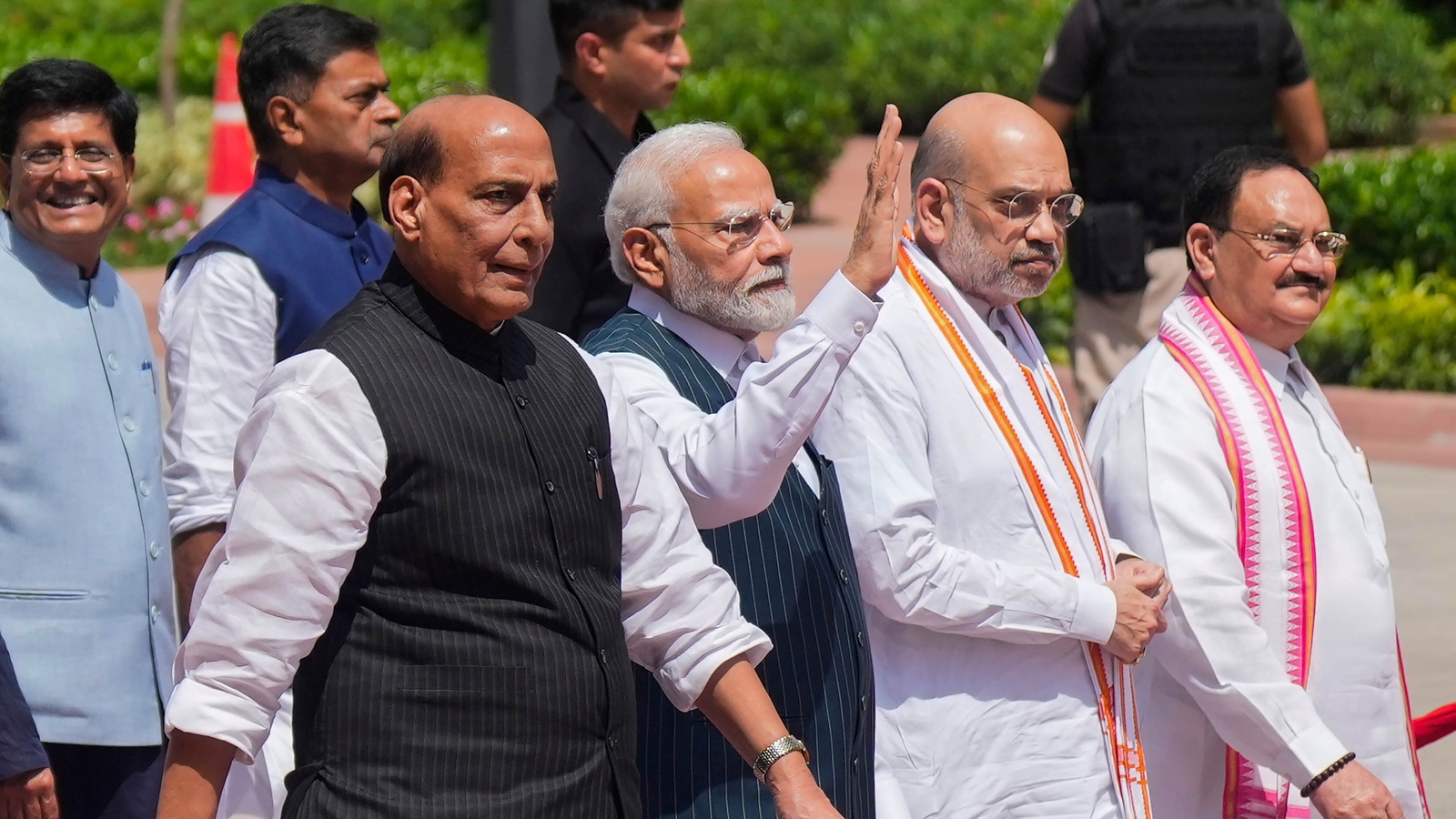
The BJP-led Union government has renewed its push for the passage of the Constitution amendment bill on women's reservation and the delimitation bill, with Prime Minister Narendra Modi frequently stressing the need to set aside political differences, according to people privy to details. Parliament meets on Monday for a four-day special sitting where the government is expected to make another attempt to pass the two bills, described as prerequisites for rolling out 33% women's reservation in legislatures in 2029. Government sources said they are confident of securing the required support, without disclosing which parties and MPs have assured backing.
Party leaders said the BJP high command did not want the bill to lapse, so channels of communication with all opposition parties were kept open, with negotiations gathering pace after the Trinamool Congress faced internal discord. In June, 20 of 28 TMC Lok Sabha MPs announced their exit from the party and joined the NCPI, a development a senior party functionary described as bringing "a certain energy and drive." In April, when the bills were introduced for passage, the government secured only 298 votes in favour against the 361 needed, with the opposition holding 230.
A second hurdle was crossed when six of nine Shiv Sena (UBT) MPs split and joined the Eknath Shinde-led faction. A party leader said the home minister had stated in Parliament that southern states would not see any reduction in proportional representation. The government's biggest concern is bringing on board regional parties including the DMK (22 MPs), the Samajwadi Party (37) and the NCP-Saratchandra Pawar (eight), and it has also approached unaligned parties such as the YSRCP and the BJD, according to leaders.
Leaders indicated the party also worked on the premise that MPs not wanting to vote in favour could abstain, which would lower the two-thirds threshold given the Lok Sabha's current strength of 540. A third party leader involved in the outreach described the bills as a "win-win" for all, saying the reservation bill poses no threat to the federal structure and that constituency boundaries drawn on the 2011 census would mean more representation for STs and SCs.