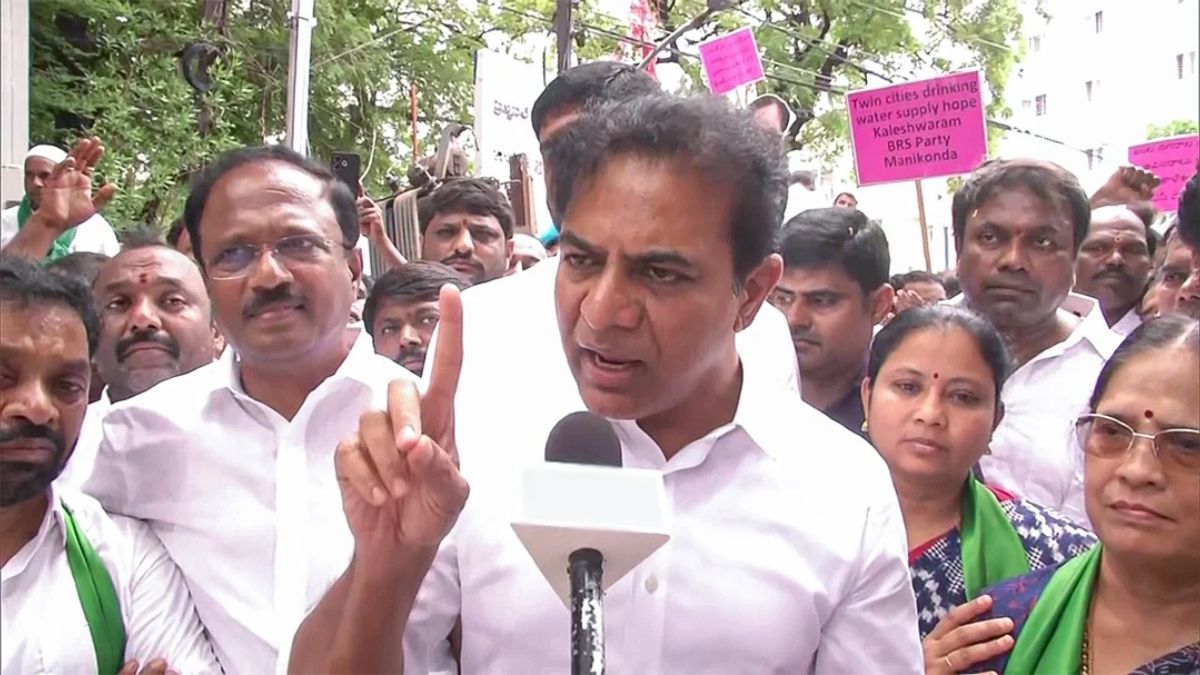
The Bharat Rashtra Samithi (BRS) will support the Centre's fresh delimitation push, working president KT Rama Rao announced on Saturday, saying the proposed 50 per cent increase in Lok Sabha seats addresses the party's key concern. In a post on X, Rao said the BRS remains committed to keeping Telangana's interests paramount and has always supported women's reservation.
"Our stand on Delimitation has always been clear: No reduction in South India's parliamentary representation. No injustice to Telangana will be tolerated. We have consistently demanded that the South's existing 24% share in parliament be protected," Rao said. He added that the proposed 50 per cent increase in seats, with a safeguard against altering the inter-state representation ratio until 2051, addresses this concern while increasing Telangana's Lok Sabha seats from 17 to 26, and that the party's three Rajya Sabha members will vote in its favour.
The BRS, founded by former Telangana Chief Minister K Chandrasekhar Rao, has no seats in the Lok Sabha but has three Rajya Sabha members: Vaddiraju Ravichandra, Divakonda Damodar Rao and Bandi Parthasaradhi Reddy. The party's decision to back the contentious bill is yet another setback for opposition parties seeking to stop its passage in Parliament.
Before the BRS, the Dravida Munnetra Kazhagam (DMK) also announced support for the Delimitation Bill, exposing faultlines within the opposition camp. The DMK has 22 Lok Sabha members and eight Rajya Sabha seats, and its backing is a big boost for the Centre as the bill requires a two-thirds majority in both Houses. A special sitting of Parliament has been convened from November 30, with the Lok Sabha reconvening on Monday and the Rajya Sabha on December 2; the sittings will conclude on December 3, subject to exigencies of government business. The Centre is set to introduce a fresh constitutional amendment Bill in the Lok Sabha on Monday to roll out one-third reservation for women by increasing each state and Union territory's seat allocation in the House and the strength of their legislative assemblies by 50 per cent, and freeze the revised allocations and boundaries until 2051.