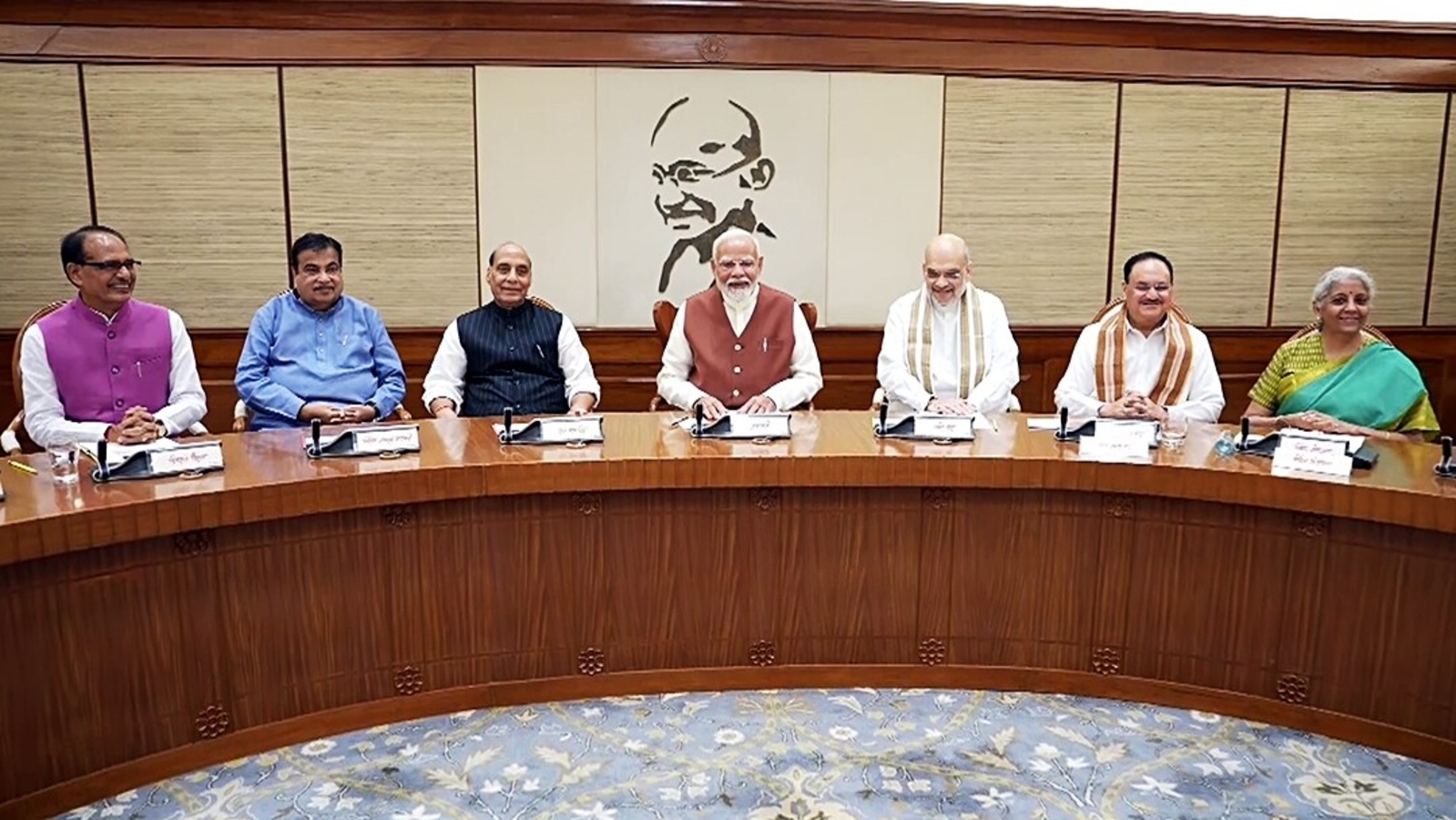
The Union Cabinet on Wednesday approved an ₹11,000-crore scheme to promote domestic manufacturing of construction and infrastructure equipment, along with a second container terminal at Kamarajar Port and a new greenfield airport in Silchar, Assam.
The Construction and Infrastructure Equipment (CIE) Manufacturing Ecosystem scheme, to be implemented by the ministry of heavy industries, will cover seven equipment categories, including tunnel boring machines, off-highway trucks, excavators, cranes, loaders, piling rigs and drilling machines. According to the Cabinet, the scheme seeks to encourage domestic manufacturing of such equipment and their components and establish dedicated CIE testing facilities in the country, promoting self-reliance and India's participation in the global CIE market. India's CIE industry is currently the third largest in the world, after China and the United States, the Cabinet said.
The second container terminal at Kamarajar Port in Tamil Nadu has been approved at a cost of ₹4,288 crore to meet rising cargo demand. To be developed under a public-private partnership model, the 900-metre-long terminal will have an annual cargo-handling capacity of 2 million twenty-foot equivalent units (TEUs). Union minister Ashwini Vaishnaw said India currently handles 25.7 million TEUs, up from 17.2 million in 2019-20, with traffic expected to touch 40 million TEUs by 2030. Cargo traffic at Kamarajar Port was also growing at 9-11% annually, he added.
The greenfield airport in Silchar, named Dolu airport, has been approved at an investment of ₹2,014 crore to address operational and space constraints at the existing airport, which is operating beyond capacity and cannot be expanded further. The proposed terminal building will cover 12,351 square metres, have a peak-hour passenger-handling capacity of 800 and be able to handle up to 1.01 million passengers annually, the Cabinet said. The Cabinet also cleared the continuation of two Department of Posts schemes with a combined outlay of ₹2,632 crore over five years to modernise the postal network and upgrade post office buildings, including the preservation of heritage structures.