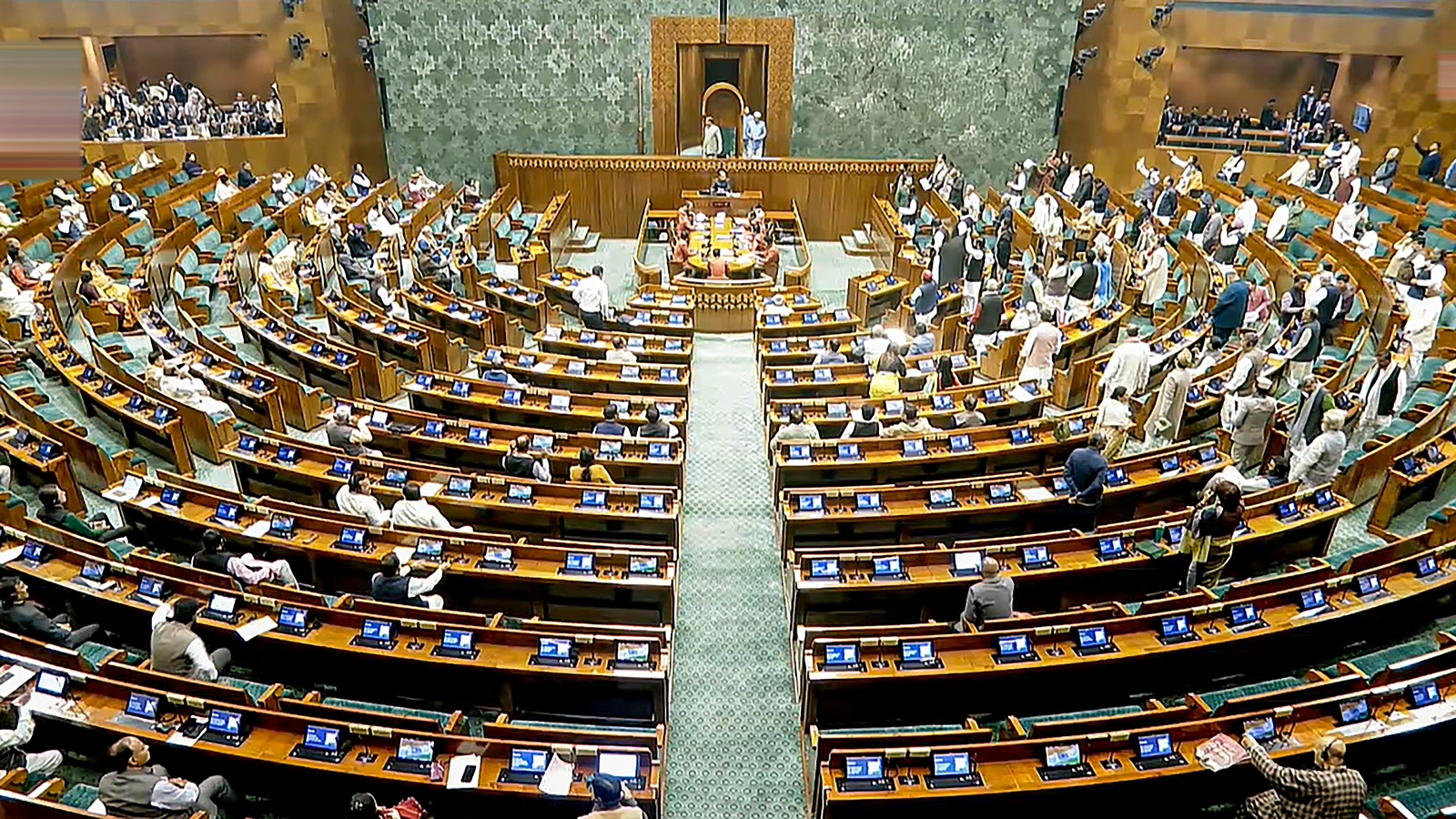
The delimitation of constituencies is likely to take a minimum of two years and may therefore not be in place for a clutch of assembly elections, possibly rolling out only in time for the 2029 general elections, government officials said on Saturday.
The development came a day after the Union Cabinet cleared the 132nd Constitution Amendment Bill and the Delimitation (Second) Bill, which together expand the Lok Sabha to a maximum of 850 seats, increase the seats of every state and Union Territory by 50%, and freeze the arrangement for the next 25 years. The bills also pave the way for implementing 33% reservation for women immediately after the delimitation exercise, set up delimitation commissions, and provide for a proportional 50% rise in the strength of state assemblies, with a cap of 650.
Union law minister Arjun Ram Meghwal said the final number of seats in the Lok Sabha will be 816 and attached a map detailing the possible seat share of each state, though it was not clear what calculation was used to arrive at the number. The map showed Delhi's share rising from 7 to 11 seats, Uttar Pradesh's from 80 to 120, Tamil Nadu's from 39 to 59 and Kerala's from 20 to 30. Hours after his comments, officials aware of the matter said another reading, with all half seats rounded up, would lead to a total of 824 seats, a scenario that is also likely.
According to the delimitation bill, the commission will comprise three primary members: a chairperson (a sitting or retired Supreme Court judge appointed by the central government), the chief election commissioner or an election commissioner nominated by the CEC, and the state election commissioner of the relevant state. The Union government will decide the period for which the commission will function through a notification, and an extension can be given if deemed necessary. A senior government official said there are special provisions for Jammu and Kashmir since it is now a Union Territory, with the Election Commission acting as the delimitation commission for deciding constituencies in the legislative assembly of the UT in the area currently occupied by Pakistan, if and when that area ceases to be under Pakistan's occupation.