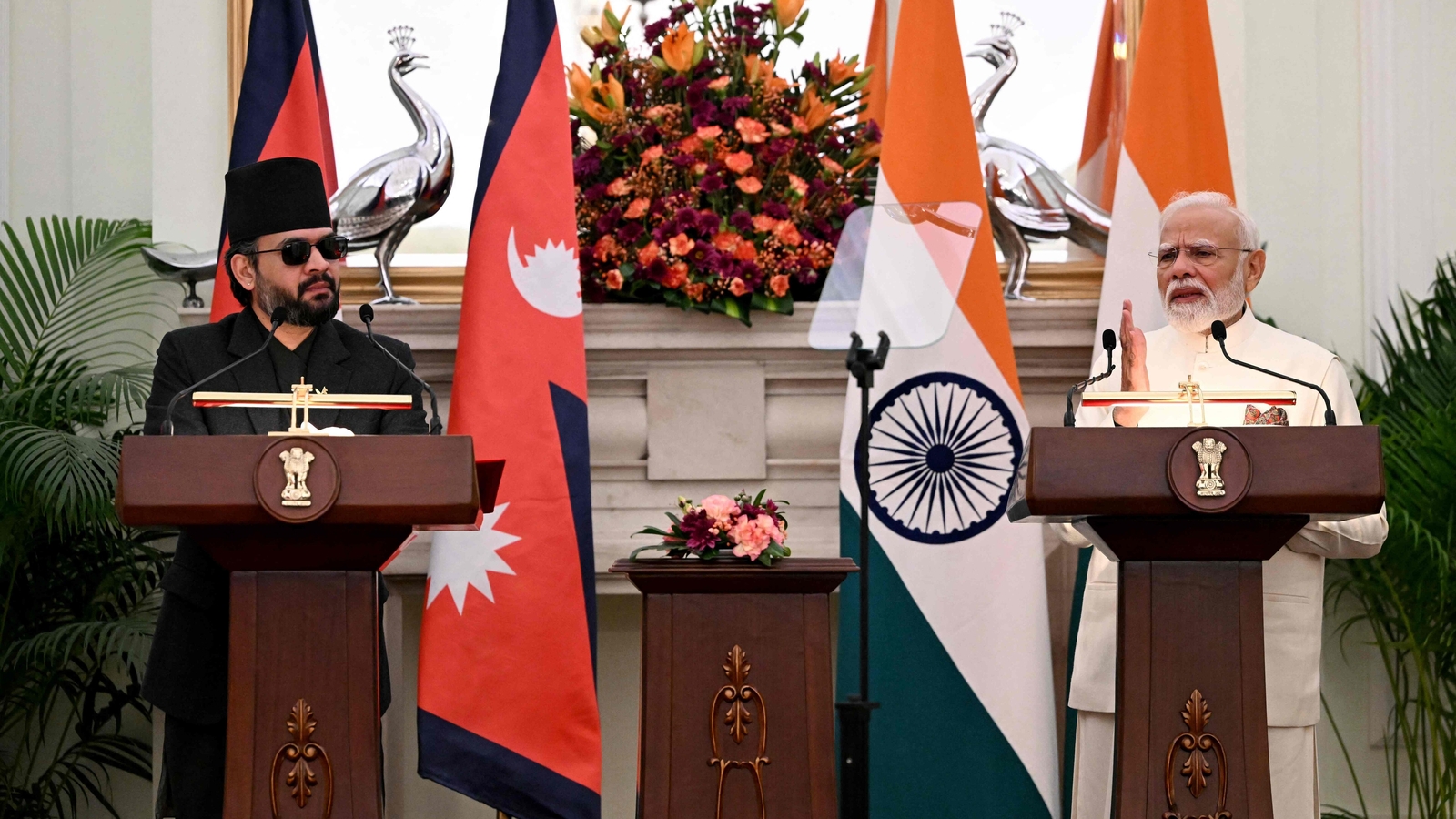
India and Nepal on Monday signed eight memorandums of understanding to widen bilateral cooperation across sectors, including satellite technology, governance, healthcare, urban development and traditional medicine, after talks between Prime Minister Narendra Modi and his Nepalese counterpart Balen Shah in New Delhi.
The agreements cover a SATCOM network using the South Asia Satellite between ISRO and Nepal's Ministry of Information and Communication; capacity building for Nepalese civil servants through the National Centre for Good Governance and Nepal Administrative Staff College; health and medicine cooperation; Ayurveda and traditional systems of medicine; sustainable urban development; livestock and fisheries development; forensic sciences research between National Forensic Sciences University, Gandhinagar, and Nepal Police's Crime Investigation Department; and cooperation between Rashtriya Raksha University and Nepal's National Police Academy.
The two sides also launched the Sarayu-Kamala Express rail service between Ayodhya and Janakpur, laid the foundation stone for an Integrated Check Post at Banbasa and for the 669 MW Lower Arun Hydroelectric Project, and inaugurated a cross-border motorable bridge between Dharchula and Darchula. Other projects included Phase II of the Motihari-Amlekhgunj Pipeline, a petroleum terminal at Jhapa for the proposed Siliguri-Jhapa pipeline, and progress on ICPs at Bhairahawa, Sunauli and Dodhara Chandani.
Modi announced a development cooperation package of 24,000 crore Nepali Rupees to support Nepal's post-flood reconstruction and long-term development. He said the two countries had taken several important decisions to strengthen ties, describing India and Nepal as partners in each other's progress and sources of support in difficult times, and praised Shah's vision for Nepal's development.