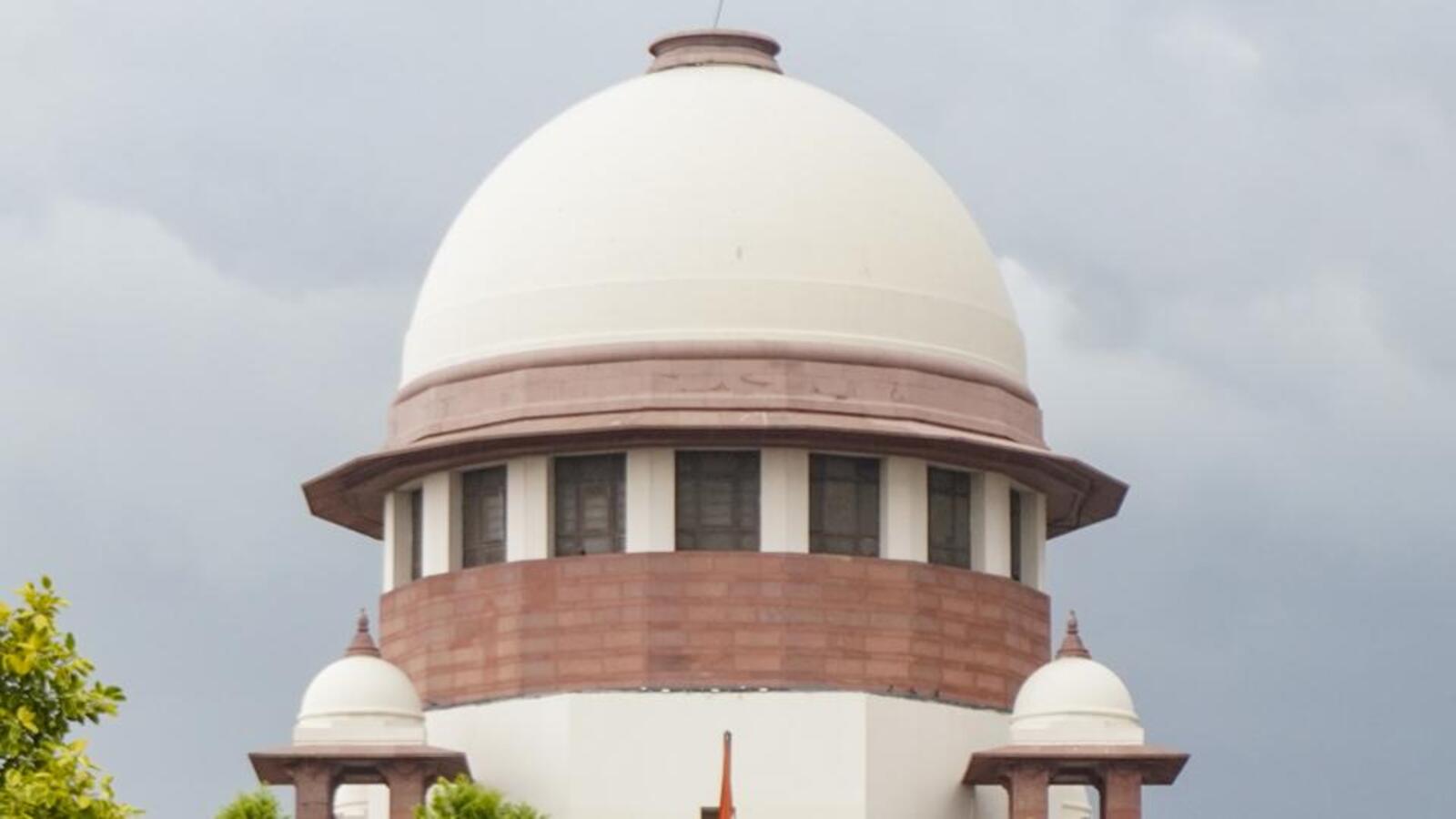
The Supreme Court on Monday cautioned a Bihar judicial officer against acting like "Robin Hood" or a "Bahubali", reminding him that a judge must know the limits of his jurisdiction, as it expressed dismay over the judge convicting a superintendent of police (SP) for failing to comply with his direction to register an FIR.
A bench comprising Chief Justice of India Surya Kant and justices Joymalya Bagchi and V Mohana questioned sessions judge Anil Kumar's decision to invoke the procedure for offences committed in the face of the court, pointing out that an official's failure to comply with a judicial direction to register an FIR could not be treated as contempt committed in the courtroom. The court observed that an offence committed in the face of the court would include acts such as slapping someone, abusing the court or refusing to leave the courtroom despite being directed to do so, but failure to register an FIR despite a court direction did not fall within that category. It described the judicial officer's understanding of the law as "appalling".
The top court was hearing a challenge to proceedings the sessions judge had initiated against the Rohtas SP over repeated delays in complying with his directions. Kumar had summoned the police officer, treated the non-compliance as an offence committed in the face of the court, convicted him and imposed a fine of ₹1 lakh. The case arose from a September 2025 sessions court order directing the police to register an FIR against the victim and the informant in a criminal matter, which the police complied with nearly 10 months later, in July 2026.
Kumar approached the top court against an October 8 order of the Patna High Court, which termed the situation "peculiar" and "unprecedented" and observed that the sessions judge was required to maintain "procedural integrity" since the underlying judgment, including its direction to register an FIR, was already under challenge before it. While acknowledging the judicial officer's intention to secure compliance with court orders, the Supreme Court made it clear that the desire to do justice could not justify bypassing the procedure prescribed by law. It disposed of the matter while requesting the Patna High Court to consider Kumar's response and any apology he may submit "considerately".