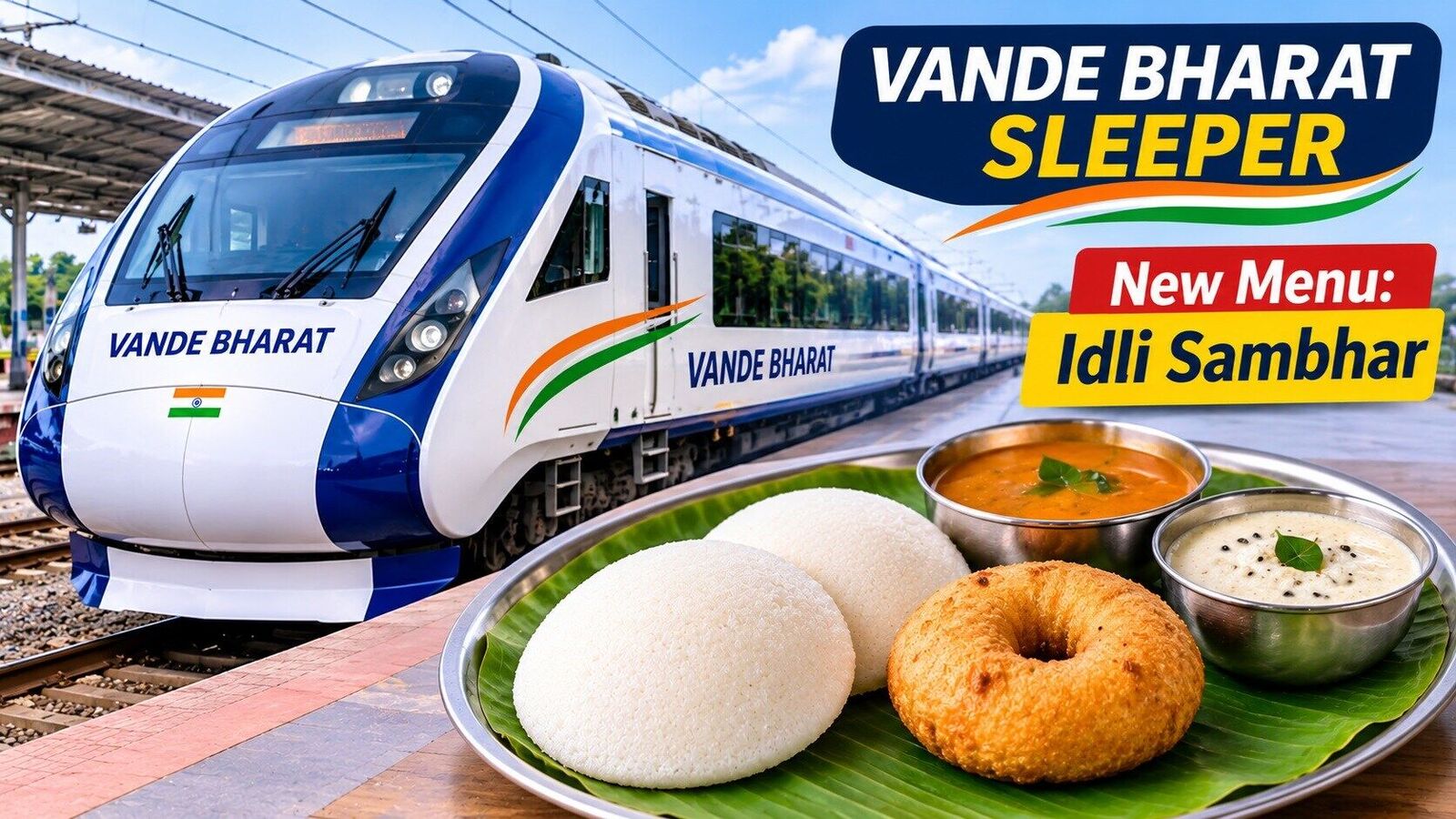
The Indian Railways is piloting a new catering model on select long-distance trains, with the Indian Railway Catering and Tourism Corporation (IRCTC) introducing compact breakfast, lunch and dinner menus on three Vande Bharat Sleeper routes. The initiative is aimed at addressing recurring passenger complaints about the quality and hygiene of food served on long-distance trains, with the new menus designed along the lines of airline meals featuring fewer dishes and a more streamlined preparation and delivery process.
According to a Hindustan Times report, meals under the pilot are being prepared by major cloud kitchens rather than by the Railways or its existing catering vendors. The compact menus are currently in place on the Mumbai-Bengaluru, Howrah-Kamakhya and New Delhi-Varanasi Vande Bharat Sleeper services. An official said the Railways is working with the Mayfair Group for the Kamakhya line, TajSATS in Howrah, and the Sarovar Portico Group for the other two trains, adding that cell kitchens supplying food to airlines and hotels have also been appointed.
On the Mumbai-Bengaluru service, breakfast options are now limited to idli and vada with chutney and sambhar, or poha or upma. Lunch and dinner consist of chapati, rice, dal and one main dish, with a choice between chicken and a vegetarian preparation. Several items have been removed from the earlier meal service, including soup, egg omelette, sandwiches, buttermilk and chocolates from the breakfast platter, and dry vegetables, curd, salad, pickle and sweets from lunch and dinner. IRCTC has also reduced the overall weight of an individual meal from approximately 700-750 grams to 450-500 grams, though officials clarified that portion sizes of individual items have not been cut.
IRCTC officials indicated the arrangement is already showing encouraging results, with the West Zone group general manager saying passenger complaints have declined by around 10% since cloud kitchens began supplying meals under the revised system. The compact menu model may be extended to other long-distance services, including premium trains, if the pilot delivers satisfactory results, with the broader objective of improving food quality, hygiene and consistency across the railway network.