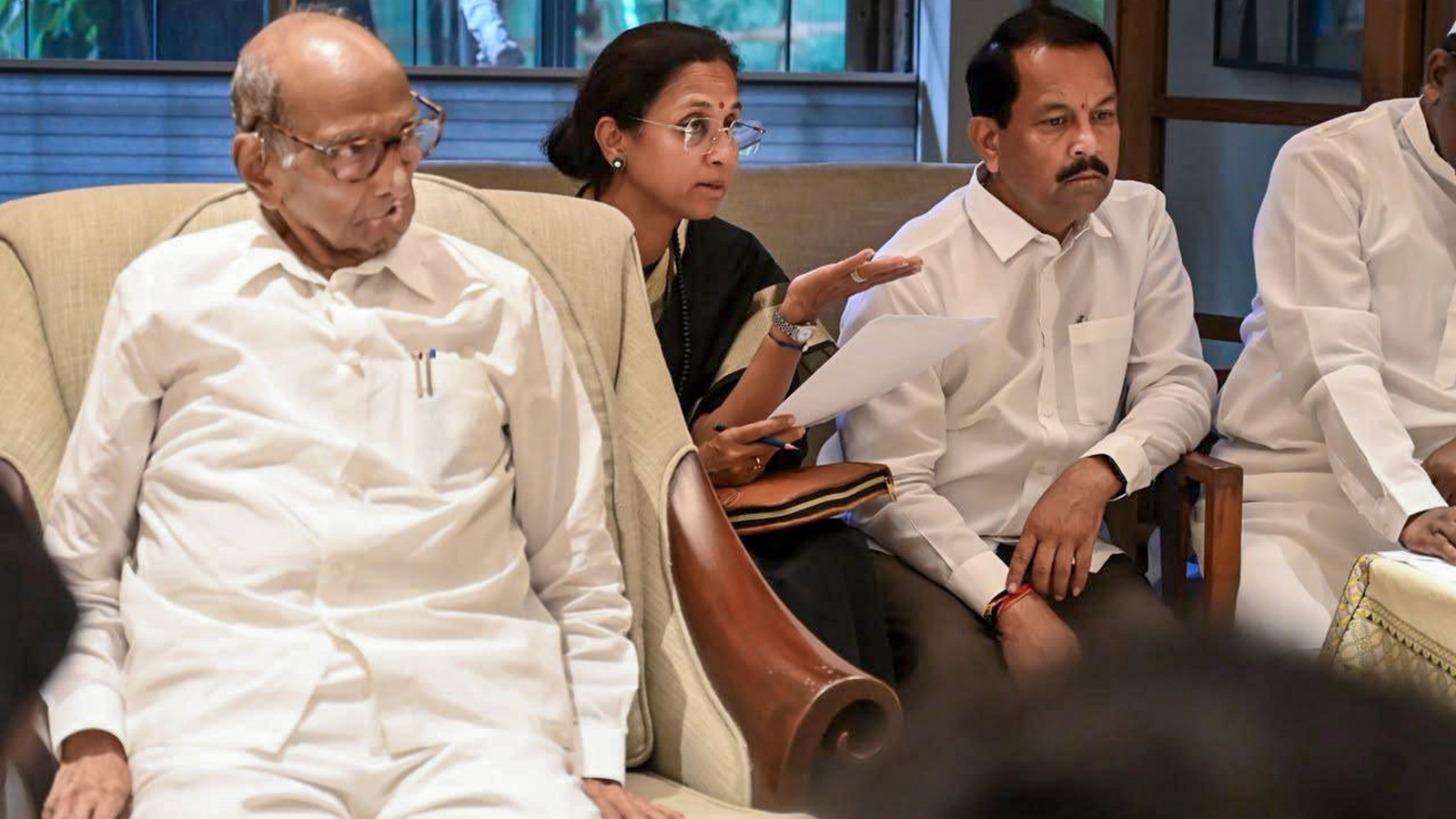
The Congress and Shiv Sena (UBT) on Saturday criticised the Sharad Pawar-led NCP (SP) after it appeared set to support the delimitation bill, accusing their Maha Vikas Aghadi ally of abandoning its ideological commitment and betraying Maharashtra's interests by aligning with the BJP-led Centre. The NCP (SP) stayed away from the INDIA bloc's discussion on its strategy against the bill, which is likely to be placed in the upcoming special session of Parliament commencing November 30.
Senior Congress leader Vijay Wadettiwar accused NCP (SP) chief Sharad Pawar of abandoning the progressive ideology he had championed throughout his political career, alleging the party was driven solely by the pursuit of power. He said he never imagined a leader like Pawar would join hands with communal and fundamentalist forces, and recalled that leaders across parties had supported Pawar's Rajya Sabha election at 85 in the hope that the ideologies of Mahatma Phule, Rajarshi Shahu Maharaj and Dr Babasaheb Ambedkar would be represented in the Upper House. He alleged Pawar was now working to undermine that legacy.
Shiv Sena (UBT) MP Sanjay Raut accused the NCP (SP) leadership of compromising Maharashtra's self-respect by strengthening the hands of Prime Minister Narendra Modi and Union home minister Amit Shah. He said the party's eight MPs were elected with the support of MVA constituents, including the Congress and Shiv Sena (UBT), and not the BJP, and that the opposition alliance had defeated BJP candidates in nearly five of those constituencies. He said the people of Maharashtra would not tolerate a unilateral decision to stand with the government, and warned that any NCP (SP) MP voting in favour of the Modi-Shah government would face political consequences.
Raut also referred to the role of Modi and Shah in the split in the undivided NCP and the break in the Pawar family, and said aligning with them would amount to mortgaging self-respect. Citing Pawar's health and hospitalisation, he refrained from directly questioning the veteran leader's decision and instead held his colleagues responsible, saying he felt they had betrayed him.