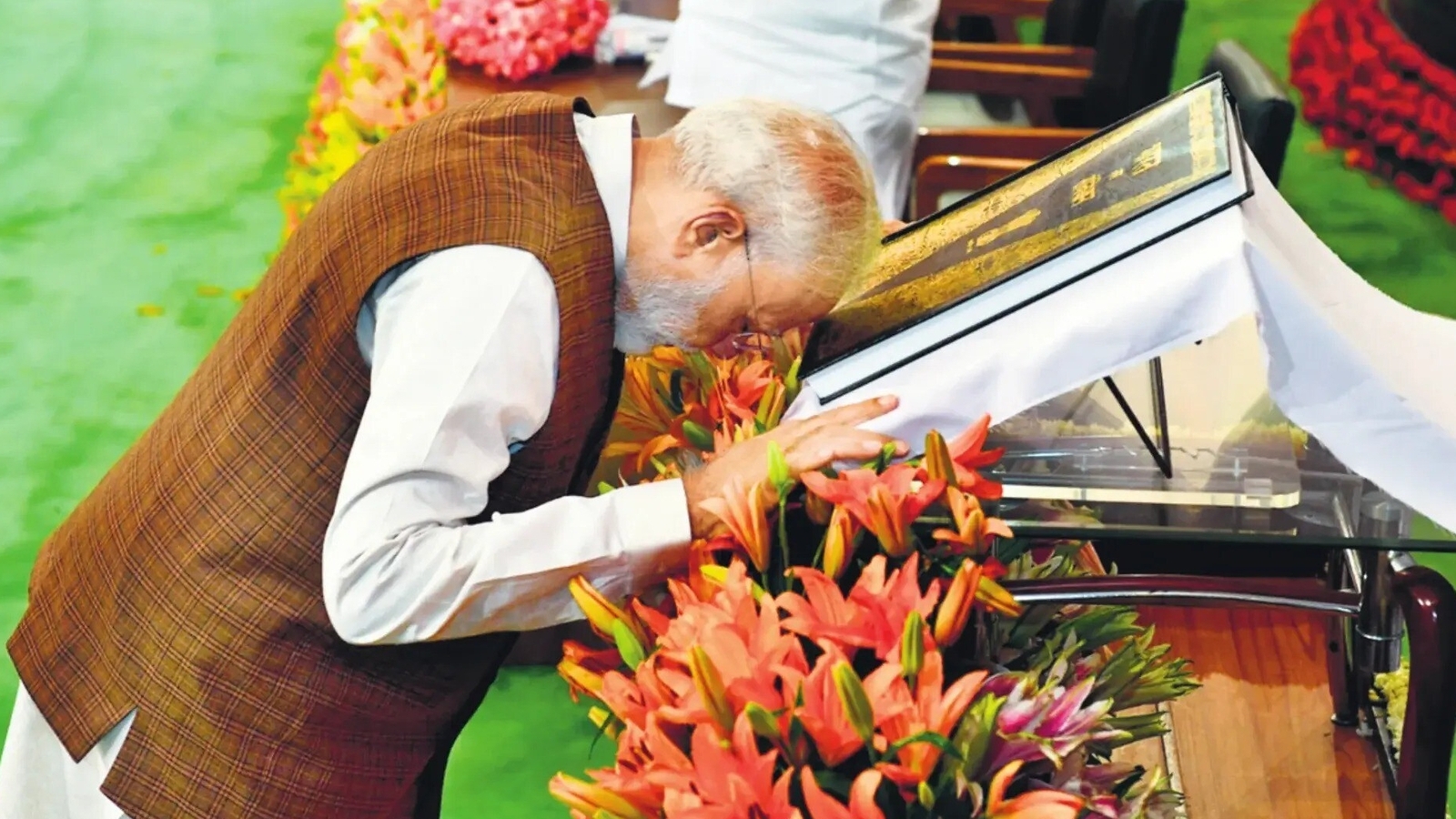
On Constitution Day, Prime Minister Narendra Modi said the Constitution must resonate far beyond Parliament and the courts, stressing the need to deepen its connection with the collective consciousness of the people, especially the youth. In a written piece, he paid tribute to Dr Rajendra Prasad, Dr Babasaheb Ambedkar and all members of the Constituent Assembly, noting that the Constitution was adopted on 26 November 1949.
Reflecting on his own journey, Modi said the Constitution is an inseparable part of the life journeys of crores of Indians, and that it ensures circumstances of birth no longer determine the limits of one's future. He cited a recent World Bank report stating that nearly 50 crore Indians have moved out of poverty, and linked schemes such as PM Awas Yojana, Ujjwala Yojana, Ayushman Bharat, MUDRA and PM-SVANidhi to the constitutional ideals of dignity, equality and social and economic justice.
The Prime Minister referred to constitutional scholar Granville Austin's description of the Constitution as "first and foremost a social document", and said his government's amendments, including the 101st (GST), 102nd (constitutional status to the National Commission for Backward Classes) and 103rd (reservation for Economically Weaker Sections), reflect the same vision. He also noted that an updated version of the Constitution is now available in all 22 languages of the Eighth Schedule, and that the Bharatiya Nyaya Sanhita seeks to shift the criminal justice system from colonial-era punishment to a citizen-centric pursuit of justice.
Modi said the past decade has laid special emphasis on Kartavya, or citizen duties, expressed through mass movements from Swachh Bharat to water conservation and environmental protection. He also said there have been occasions in history when those entrusted with upholding the Constitution chose to weaken it, and that this year marks 75 years since the First Amendment of 1951, when, he wrote, a government that was not popularly elected used its majority in the Provisional Parliament to restrict fundamental freedoms.