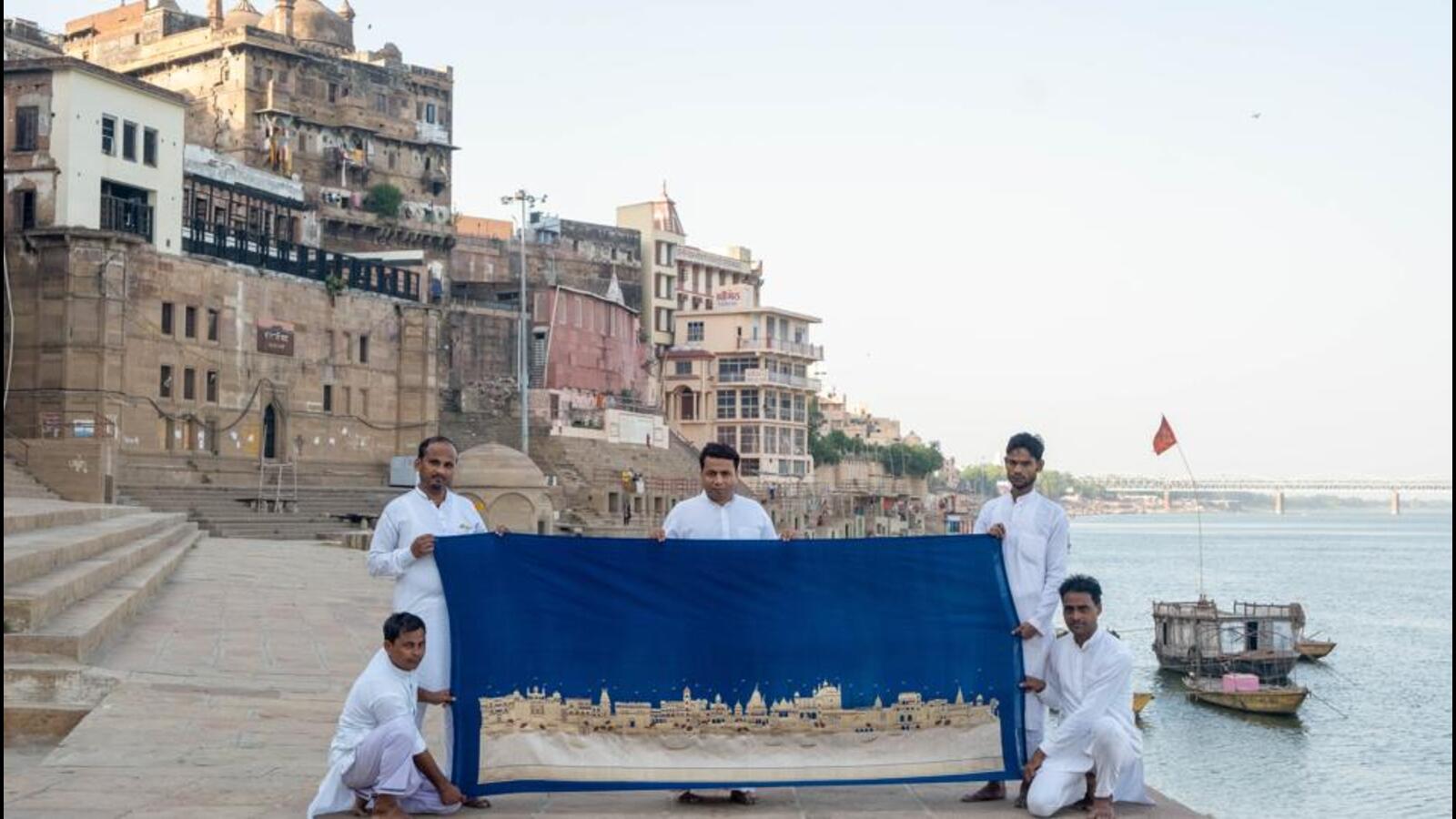
A textile exhibition at Bharat Kala Bhavan, part of the first Banaras Biennale, brings together more than 85 objects to show the range of weaving in Varanasi, from heirloom saris to contemporary designs.
The exhibition, Ek Dhaaga, Ek Duniya: Silk, Zari and the Light of Kashi, was curated by Pramod Kumar KG and opened last week at the 106-year-old museum, housed at Banaras Hindu University since 1950. It draws on the museum's century-old textile collection as well as contemporary pieces from local makers and designers. Among the exhibits are gold Baroque silks by national award-winning weaver Hasin Mohammed, heirloom Banarasis, meenakari textiles, Gyaser brocades, carpets and an installation by zari artisan Shyam Sundar. There are also garments by Sanjay Garg for Raw Mango and by Payal Khandwala, a Ladakh-meets-Banaras piece by Namza Couture, and an archival design by Bharat Shah of S&D Silks with Malayalam script woven into it.
Curator Pramod Kumar KG said there is no single Banarasi style, adding that "anything can be made in Banaras." A separate show earlier this month made a similar case: Aadyam Handwoven previewed 21 saris at the Peshwa Haveli on Bala Ghat, restored by INTACH, with classical singer Vidya Shah performing in a sindoor-red Banarasi sari. Curator Manish Saksena linked the city's architectural heritage and music to weaving. The haveli opens to Biennale visitors on November 29.
The shows also point to a loom economy beyond saris, with Gyaser looms and an Obeetee carpet woven in Varanasi on display. Weavers were credited by name at both exhibitions. Reports noted, however, that the visibility of the Banarasi repertoire does not by itself reflect a healthy weaving ecosystem, as the handlooms behind it are fewer than such displays suggest.